

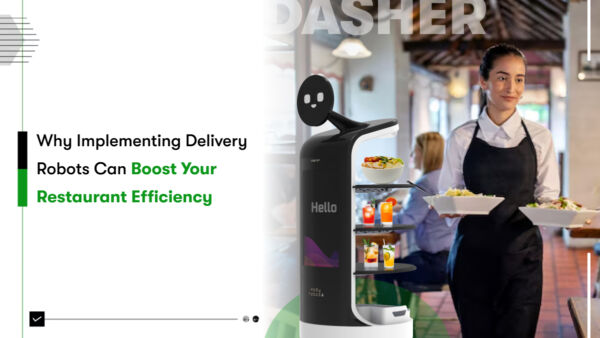
 Restaurants are under constant pressure to serve faster, reduce service delays, maintain consistency, and improve guest satisfaction without pushing labor costs out of control. Dining businesses also need service systems that can perform reliably during rush hours, support staff during repetitive floor movement, and help create a more organized customer experience. A well-designed Serving Robot answers many of those operational demands by assisting with food delivery, table support, and movement across busy dining spaces.
Automation in food service is no longer limited to kitchen equipment or billing systems. Floor operations have become a major area of interest, especially for restaurants that want to reduce unnecessary staff movement and improve table turnaround. Robotics has entered that space with practical use cases that support real service needs rather than novelty alone.
Dasher, a service-focused robot from Kody Robots, is one example often discussed in conversations around modern restaurant automation. From a third-party perspective, the value proposition is straightforward. Restaurants want technology that helps staff work faster, keeps service organized, and supports better guest handling during peak hours.
Why a Serving Robot Is Becoming Essential in Food Service
Restaurant operations involve repeated movement, time-sensitive delivery, coordination between kitchen and floor teams, and constant pressure on service staff. Manual service alone can create gaps during high footfall hours, especially when teams must manage multiple tables at once.
A Serving Robot introduces support where restaurants often need it most. Movement between tables, delivery of prepared dishes, and assistance with repetitive floor runs can be handled in a more structured way. That support allows restaurant teams to spend more time on customer interaction, issue resolution, and service quality.
Some of the most practical advantages restaurants look for include:
- Faster table-to-kitchen coordination
- Reduced staff fatigue during long shifts
- Better handling of rush-hour delivery cycles
- More organized floor movement
- Improved support for customer-facing teams
For restaurants focused on efficiency, robotics has moved from an experimental idea to a practical operational layer.
How a Serving Robot Improves Table Service and Staff Efficiency
One of the biggest challenges in restaurant service is maintaining speed without compromising customer attention. Staff members often spend a large part of each shift walking dishes across the floor, returning empty items, and coordinating repeated trips between service points. A Serving Robot helps reduce that operational burden.
When repetitive transport tasks are handled more efficiently, human staff can focus on welcoming guests, handling custom requests, and resolving service issues with better attention. That change improves both productivity and the customer experience.
Restaurants evaluating robotic service support usually pay attention to areas such as:
- Tray carrying capacity
- Smooth indoor navigation
- Obstacle detection in crowded environments
- Safe movement near guests and staff
- Stable performance during busy service windows
The most effective deployment is not about replacing people. The strongest use case is support. A robot handles repeated delivery movement while the team manages hospitality, communication, and service judgment.
Data Science and Customer Flow Insights From a Serving Robot
Operational value in restaurant robotics is not limited to movement alone. A robot-assisted workflow can also contribute to better service planning when paired with data science methods. Restaurants generate patterns every day through footfall changes, peak-hour pressure, route frequency, service bottlenecks, and delivery timing.
A Serving Robot working within defined routes can help teams understand where service time is lost and where floor planning needs improvement. Data science can support analysis of route performance, peak traffic windows, service load, and delivery frequency across tables or dining zones.
Such operational insight can help restaurants improve:
- Floor layout planning
- Staff allocation by time slot
- Delivery route efficiency
- Table turnaround strategy
- Rush-hour service readiness
For restaurant owners, operational visibility matters almost as much as automation itself. Better decisions come from measurable patterns, and data science helps make those patterns usable.
What Restaurants Expect From Modern Robotic Service Systems
Restaurants do not adopt robotic systems for visual appeal alone. A real purchase decision usually depends on how well the solution fits active service conditions. Dining spaces are dynamic. Guests move unexpectedly. Staff carry trays across narrow aisles. Tables turn over at different speeds. A reliable service robot must operate inside that complexity.
Decision-makers often look for features such as:
- Autonomous navigation for indoor dining spaces
- Stable tray transport for food and beverages
- Smart obstacle detection and movement adjustment
- User-friendly controls for restaurant staff
- Consistent operation across long service hours
A restaurant that chooses robotic assistance expects operational support, not distraction. The system must be easy to integrate into daily service routines and simple enough for staff to use without friction.
How Data Science Supports Smarter Restaurant Decisions
Restaurant automation becomes more valuable when managers can connect service performance to decision-making. Data science plays a useful role in that process because restaurant operations are filled with measurable variables. Delivery cycles, guest density, service timing, and staff movement all produce useful patterns.
With data science, restaurant teams can identify where service slows down, which time windows need extra support, and how automation should be deployed across the floor. Managers can also use data science to evaluate whether robotic support improves consistency, reduces delivery delays, or supports better staff utilization over time.
That analytical layer turns robotics from a simple hardware addition into a more strategic operating asset.
Why Kody Robots Dasher Stands Out in the Serving Robot Category
Among the solutions being discussed in hospitality automation, Kody Robots Dasher presents a strong example of what restaurants generally want from robotic floor support. In the middle of the market conversation, Kody Robots is often associated with practical autonomous robots built for real environments, and Dasher fits that expectation well.
From a third-party perspective, Dasher stands out because the use case is easy to understand. Restaurants need a robot that can support serving workflows, move reliably in indoor spaces, and reduce pressure on human staff during active service hours. Dasher addresses that need with a hospitality-oriented purpose rather than a vague automation promise.
For businesses exploring robotic service support, the appeal of Kody Robots Dasher is tied to operational practicality:
- Support for repeated table delivery tasks
- Better service coordination during busy hours
- Reduced unnecessary staff movement
- A more organized dining floor workflow
- A modern guest-facing service experience
The strongest robot products in hospitality are the ones that fit real service pressure. Dasher belongs in that discussion because the value proposition connects directly with daily restaurant needs.
Future Demand for Serving Robot Solutions and Data Science Operations
Restaurant businesses are moving toward more structured service models. Rising labor pressure, demand for better guest experiences, and the need for efficiency are all pushing operators to explore automation more seriously. A Serving Robot fits well into that shift because food service depends heavily on movement, coordination, and speed.
At the same time, restaurants are paying more attention to operational intelligence. Data science will continue to matter as dining businesses seek better visibility into service quality, staff deployment, customer flow, and floor productivity. A stronger mix of robotics and data science can help restaurant teams make more informed operating decisions over time.
Future adoption will likely be shaped by a few key priorities:
- Reliable service support in high-footfall dining spaces
- Better productivity without reducing hospitality quality
- Operational planning backed by measurable service data
- Scalable automation for growing restaurant chains
- Smarter floor management through data science insights
The restaurants that benefit most will be the ones that treat automation as an operational support system rather than a visual trend.
Conclusion
A Serving Robot can deliver real value when restaurants use automation to solve service pressure, improve floor efficiency, and support better guest handling. Hospitality teams still remain central to the dining experience, but robotic assistance can reduce repetitive movement and help service staff focus on higher-value interactions.
Dasher from Kody Robots represents the kind of practical restaurant automation many operators are now evaluating. From a third-party viewpoint, the interest is justified. Restaurants want solutions that improve consistency, support staff, and create smoother service workflows. When robotics is paired with thoughtful deployment and data science insight, restaurant operations become more organized, measurable, and ready for scale.
For the Information: Visit Here