
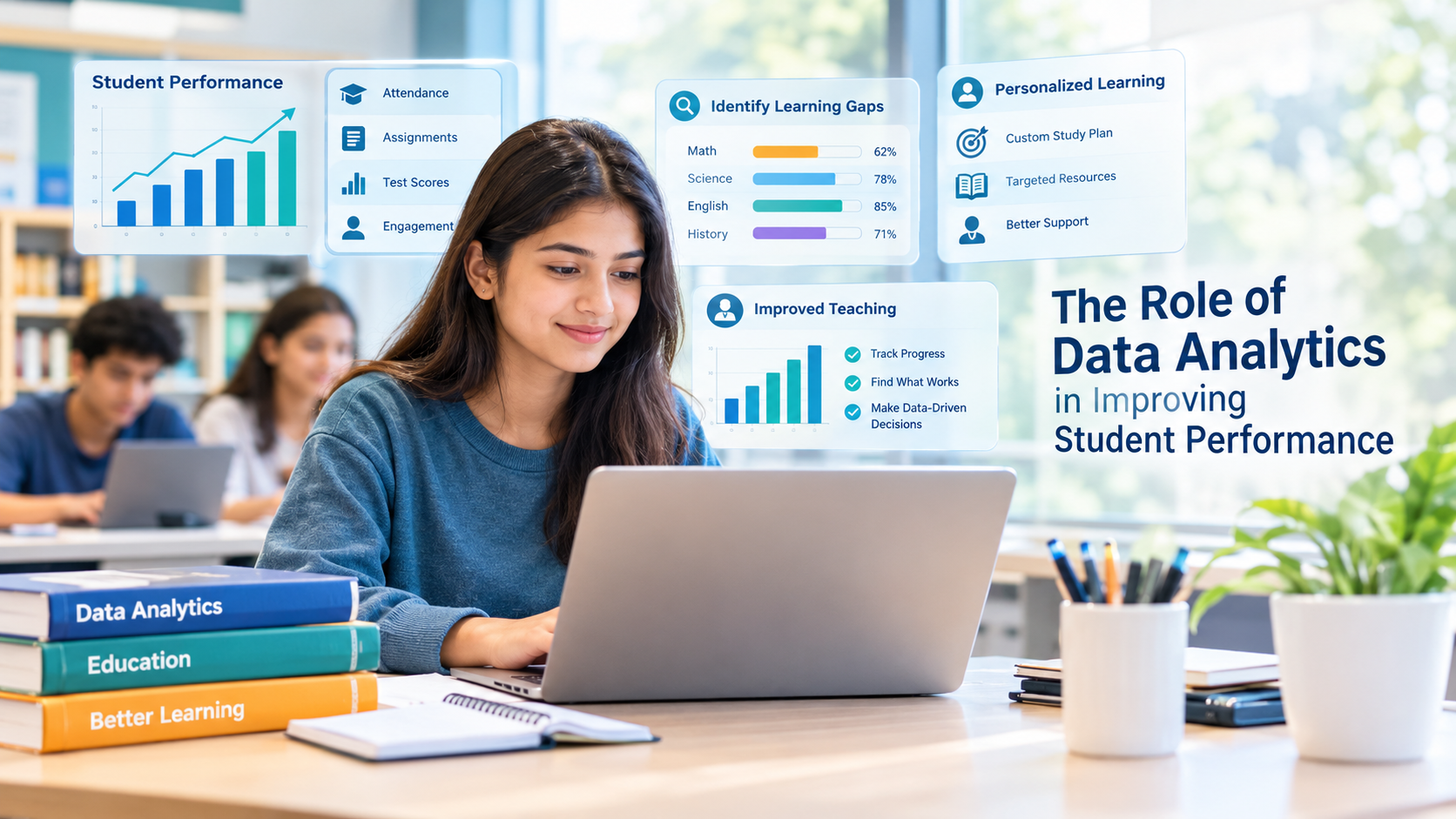
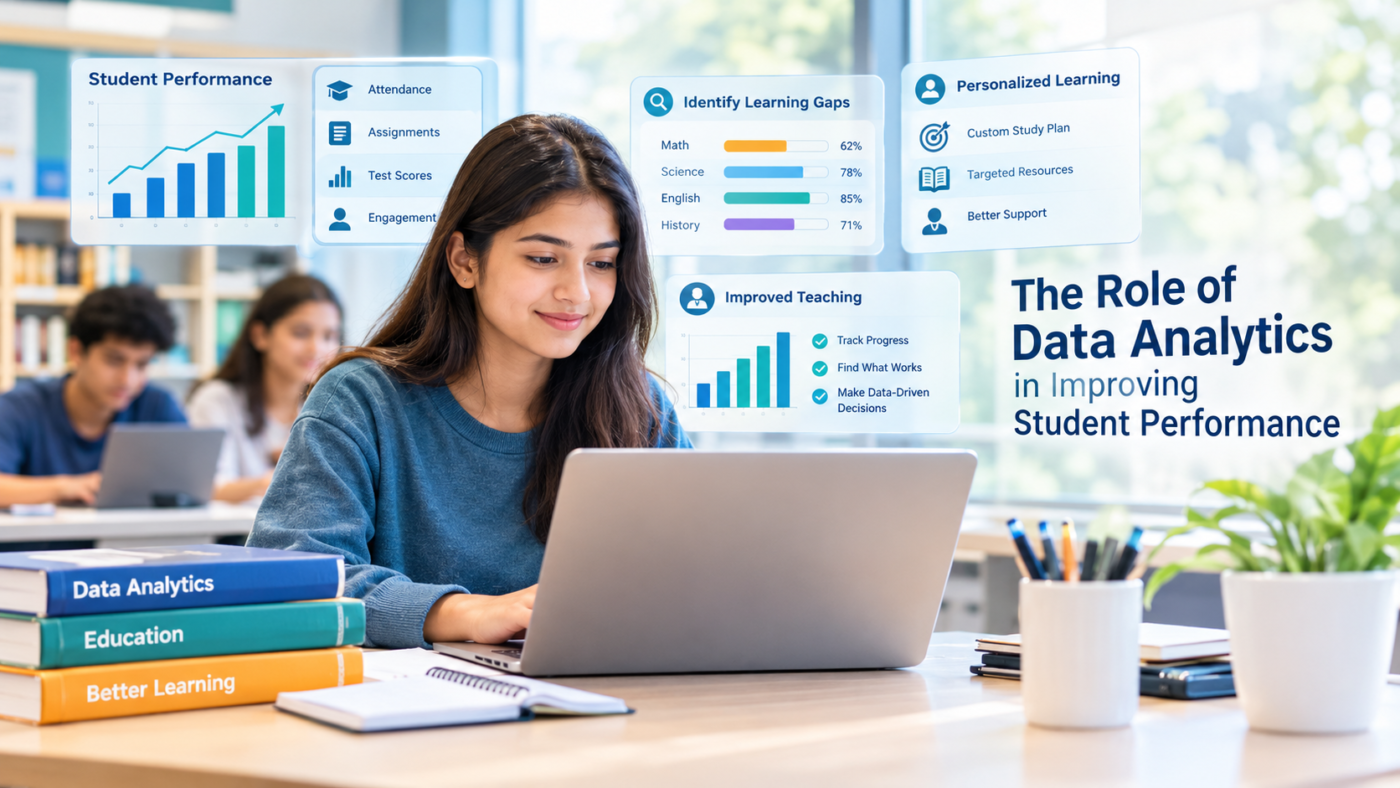
 Why do some students seem to understand a subject quickly while others struggle with the same lessons, even when they’re putting in similar amounts of effort? It’s a question teachers, parents, and education researchers have been trying to answer for years. Sometimes the problem isn’t a lack of ability or motivation. It might be the teaching approach, the pace of lessons, or a learning gap that nobody has noticed yet.
This is where data analytics is making a real difference in modern education. Schools and universities now have access to more information about student attendance, assessment results, online learning activity, and classroom engagement than ever before. When this information is used properly, it can help educators understand what’s working and what needs to change.
But collecting data alone won’t improve anyone’s grades. The real value comes from turning that information into practical decisions that support students. Let’s look at how data analytics is changing education, where it offers the most benefits, and what educators should keep in mind when using it.
1. Understanding Student Performance Beyond Exam Results
For a long time, exam scores were one of the main ways to measure academic performance. They’re still important, of course, but a single result doesn’t always tell the whole story.
Imagine a student who receives a low mark in a mathematics exam. Does that mean they haven’t studied enough? Perhaps. But maybe they understand most of the material and struggle with just one particular topic. Or perhaps they’ve been absent from several lessons and missed some important concepts.
Data analytics allows teachers to look at a wider range of information before making assumptions.
By reviewing assessment results, attendance records, assignment submissions, and participation patterns, educators can build a clearer picture of how students are progressing. Learning management systems can also show which lessons students revisit, where they spend more time, and which online activities they complete.
For example, if several students consistently perform poorly on questions involving a particular concept, the teacher might need to explain that topic differently. Rather than repeating the entire lesson, they can focus on the exact area causing difficulties.
This approach benefits students because it makes support more specific. Instead of treating everyone as if they have the same learning needs, teachers can respond to the challenges students are actually experiencing.
2. Identifying Learning Gaps Before They Become Bigger Problems
One of the most useful applications of educational data analytics is identifying potential problems early.
Students don’t usually fall behind overnight. Academic difficulties often develop gradually. They might miss a few classes, start submitting assignments late, or receive slightly lower marks over several weeks. Individually, these signs may not look particularly serious. Together, however, they could indicate that a student needs additional support.
Data analysis helps educators notice these patterns before the situation becomes harder to manage.
Schools can use simple dashboards to monitor changes in attendance, assessment performance, and assignment completion. Some institutions also use predictive analytics to estimate which students may be at risk of falling behind.
Let’s say a university notices that a group of first-year students has lower attendance and declining quiz scores during the first semester. Staff could investigate whether these students are struggling with the course material, adjusting to university life, or managing competing responsibilities.
The important part is what happens next. A teacher might arrange a short meeting, recommend additional learning resources, or suggest a study group. Even a small intervention at the right time can make a difference.
Of course, a warning sign isn’t proof that a student will fail. Predictive systems can make mistakes, and personal circumstances aren’t always visible in the data. Analytics should help educators ask better questions, not make final decisions about students without speaking to them.
3. Creating More Personalised Learning Experiences
Not every student learns in the same way or at the same speed. Some understand a concept after one explanation, while others need more examples and time to practise. A classroom teacher knows how challenging it can be to meet all these needs at once.
Data analytics can make this process more manageable.
When educators understand how students perform across different activities, they can adapt teaching materials, recommend suitable exercises, and provide additional guidance where necessary. Digital learning platforms may even adjust the difficulty of questions according to a student’s previous answers.
Consider two students studying the same science module. The first consistently answers questions about basic concepts correctly but struggles with advanced applications. The second has difficulty with the fundamentals themselves.
Giving both students exactly the same revision material might not be the best use of their time. Analytics can help identify these differences so the first student receives more challenging exercises while the second gets additional practice with the basics.
Students can also use their own performance data to make better study plans. Instead of spending equal time on every chapter, they can focus on subjects where their results show a genuine need for improvement.
For university students, this can be especially helpful when managing multiple deadlines, independent research, and assessments. Reviewing feedback, planning revision sessions, and seeking Coursework Help when they genuinely need academic guidance can all form part of a more organised approach to learning.
Personalisation doesn’t mean technology should decide everything. Teachers still need to consider individual circumstances, student preferences, and the learning objectives of each course. Data is a useful guide, but human judgement remains essential.
4. Helping Teachers Improve Their Teaching Methods
Student performance data isn’t only useful for identifying struggling learners. It can also help educators evaluate their own teaching methods.
Sometimes a class performs poorly because the material is difficult. In other cases, the way the material is presented might be contributing to the problem. Without useful evidence, it can be difficult to tell the difference.
Suppose a lecturer introduces a new online learning resource and notices that students who use it regularly perform better in weekly assessments. That’s a useful observation, although it doesn’t automatically prove that the resource caused the improvement. Students who use it might also spend more time studying generally.
The lecturer can investigate further by collecting student feedback, comparing results across different activities, and reviewing performance over time.
Data can also help teachers answer questions such as:
- Which topics consistently cause the most difficulty?
- Are students completing assignments within the expected timeframe?
- Do particular teaching resources appear to support better understanding?
- Are assessment instructions clear enough for students?
- Which students may benefit from additional feedback or classroom support?
These insights can encourage teachers to experiment with different approaches and evaluate the results.
For instance, an instructor might introduce short quizzes throughout a module instead of relying entirely on one final examination. If students perform better and report greater confidence with the material, the approach may be worth continuing.
The aim isn’t to turn teaching into a competition between numbers. It’s to give educators useful evidence that supports reflection, experimentation, and continuous improvement.
5. Using Educational Data Responsibly
Despite its benefits, data analytics also raises some important concerns. More information doesn’t automatically mean better decisions, especially when the data is incomplete or interpreted incorrectly.
Student privacy is one of the biggest issues. Educational records may contain sensitive information about academic performance, attendance, personal circumstances, and online activity. Institutions need clear rules about what they collect, why they collect it, and who can access it.
Students should understand how their information is being used. Schools and universities should also follow applicable data protection laws, restrict access to authorised people, and avoid collecting information that isn’t genuinely necessary.
Another concern is bias. If an analytical system is trained on historical data that reflects existing inequalities, its predictions may unfairly disadvantage certain groups. For example, students with limited internet access might appear less engaged on an online platform even though they are working hard using other resources.
To reduce these risks, institutions should regularly review their systems, check for unfair outcomes, and involve teachers in decisions that affect students.
It’s also important to remember that academic performance has many influences. Family responsibilities, financial pressure, language barriers, disability, and personal wellbeing can all affect a student’s results. A spreadsheet can’t fully explain these experiences.
The best approach combines reliable data with open communication. Analytics can highlight a possible issue, but educators should speak with students before deciding what kind of support is appropriate.
Conclusion
Data analytics is giving schools and universities new ways to understand student performance, identify learning gaps, personalise educational experiences, and improve teaching methods. When used thoughtfully, it can help educators move beyond exam scores and respond to the actual challenges students face.
Still, the technology itself isn’t the solution to every educational problem. Its effectiveness depends on the quality of the information, the judgement of educators, and the willingness of institutions to act on what they learn.
For teachers, researchers, and education leaders, the next step is to start with a clear question, use relevant evidence, and evaluate whether their decisions genuinely improve learning outcomes.