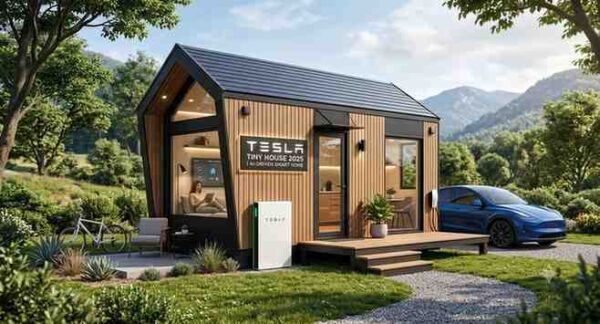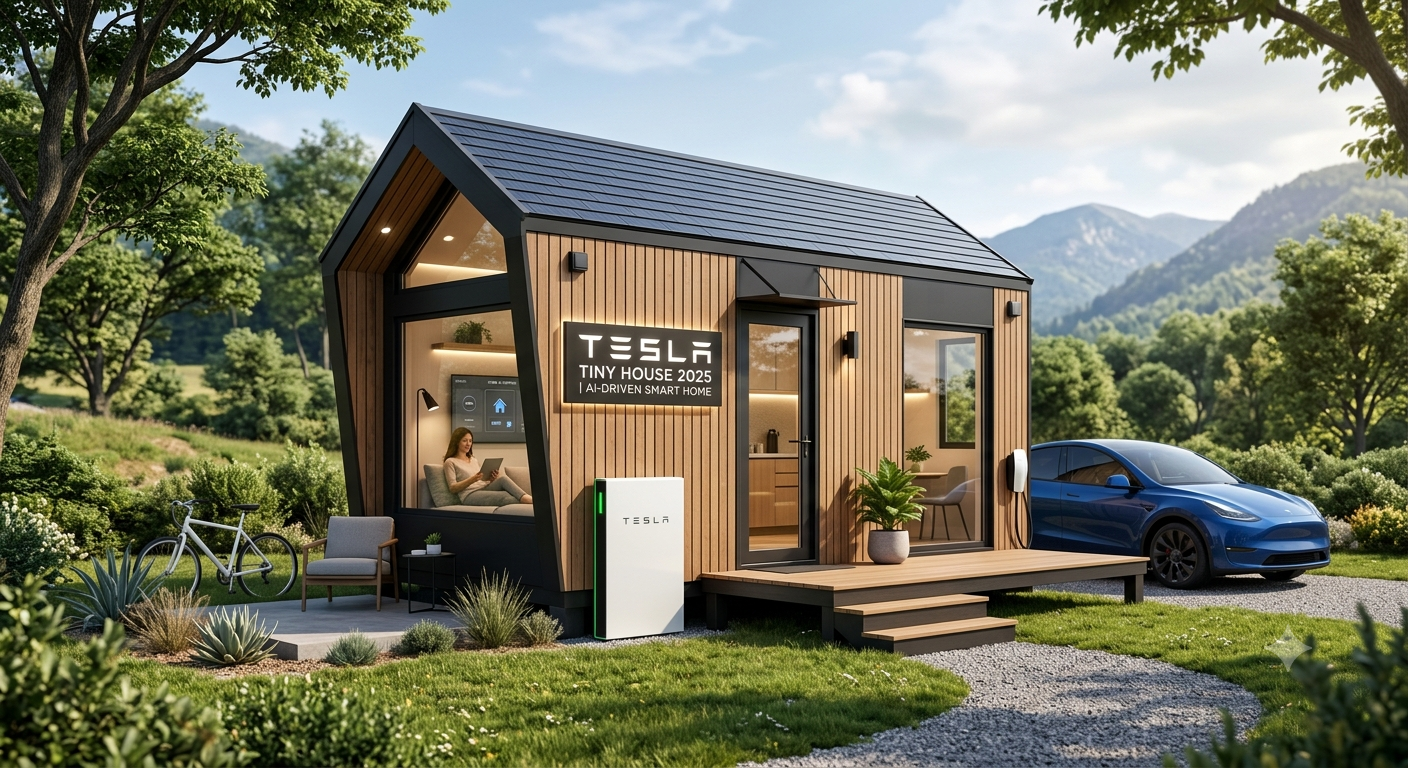
How the Tesla Tiny House Is Inspiring Eco-Friendly Homes
In recent years, the concept of sustainable living has gained significant attention around the world. Rising energy costs, environmental concerns, and the need for efficient housing have encouraged people to look for smarter alternatives to traditional homes. One idea that has captured public interest is the Tesla Tiny House, a modern housing concept that combines renewable energy, compact design, and eco-friendly technology. Although it is a small structure, its influence on the future of housing is much larger than its size.
The Tesla Tiny House demonstrates how a home can be energy-efficient without sacrificing comfort. Built with sustainability in mind, it uses solar panels and battery storage systems to generate and store electricity. This approach reduces dependence on fossil fuels and lowers the overall carbon footprint of the household. For many people, the idea of living in a home powered by clean energy represents an important step toward a greener lifestyle.
A New Approach to Sustainable Living
Traditional homes often consume large amounts of energy for heating, cooling, lighting, and daily activities. In contrast, the Tesla Tiny House is designed to maximize efficiency. Its smaller size naturally requires less energy, while smart technologies help optimize power usage throughout the day. By integrating renewable energy systems, the home becomes a practical example of how sustainable living can be achieved in real life.
Many architects and environmental experts see tiny homes as a solution to growing urban and environmental challenges. As land prices increase and cities become more crowded, compact housing offers an affordable and resource-efficient alternative. The Tesla Tiny House has inspired designers to explore new ways of creating homes that are both functional and environmentally responsible.
The Role of Solar Energy
One of the most impressive aspects of the Tesla Tiny House is its use of solar energy. Solar panels capture sunlight and convert it into electricity, while battery systems store excess power for later use. This allows the home to operate efficiently even when sunlight is limited.
The integration of renewable energy has encouraged homeowners to consider solar solutions for their own properties. Many people who were previously unfamiliar with clean energy technologies have become interested in solar panels after learning about the Tesla Tiny House. As a result, the concept has helped increase awareness of renewable energy and its potential benefits.
Inspiring Eco-Friendly Home Design
Beyond its energy system, the Tesla Tiny House has also influenced the way people think about home design. Modern eco-friendly homes often focus on:
- Efficient use of space
- Natural lighting
- High-quality insulation
- Energy-saving appliances
- Sustainable building materials
These features help reduce energy consumption while creating a comfortable living environment. The tiny house movement has shown that a home does not need to be extremely large to meet the needs of its occupants. Instead, thoughtful design and smart technology can provide both convenience and sustainability.
Reducing Environmental Impact
Environmental protection is one of the main reasons why the Tesla Tiny House has attracted attention. Smaller homes generally require fewer construction materials and produce less waste during the building process. They also consume less water and energy over time.
By encouraging people to live more efficiently, the concept promotes a lifestyle that places greater value on resource conservation. This shift in mindset is important because residential energy use contributes significantly to global greenhouse gas emissions. Eco-friendly homes inspired by the Tesla Tiny House can help reduce that impact.
The Growing Popularity of Tiny Homes
The tiny home movement has expanded rapidly in recent years. Many individuals are choosing smaller homes to reduce living expenses, simplify their lifestyles, and minimize their environmental footprint. The Tesla Tiny House has become a symbol of this trend because it combines minimalism with advanced technology.
People are increasingly attracted to homes that offer financial flexibility and lower utility costs. A smaller, energy-efficient home can provide long-term savings while supporting sustainable living goals. This practical combination of affordability and environmental responsibility is one reason the concept continues to gain popularity.
Challenges and Future Opportunities
Despite its advantages, the Tesla Tiny House concept also faces challenges. Local building regulations, zoning laws, and the availability of suitable land can affect the adoption of tiny homes in some areas. Additionally, the initial investment in solar panels and battery systems may be higher than that of conventional housing.
However, technological advancements are gradually making renewable energy systems more affordable. As battery storage improves and solar technology becomes more efficient, eco-friendly homes are likely to become accessible to a larger number of people. The ideas demonstrated by the Tesla Tiny House may eventually influence mainstream residential construction.
A Model for Future Housing
The Tesla Tiny House is more than just a small home; it represents a vision for the future of sustainable housing. By combining renewable energy, efficient design, and smart technology, it has inspired homeowners, architects, and environmental advocates around the world. Its influence can already be seen in the growing demand for eco-friendly homes that prioritize energy efficiency and environmental responsibility.
As concerns about climate change and resource conservation continue to grow, innovative housing concepts will play an increasingly important role in shaping the future. The Tesla Tiny House demonstrates that sustainable living is not only possible but also practical, comfortable, and inspiring for the next generation of homeowners.
You have not enough Humanizer words left. Upgrade your Surfer plan.
A New Era of Sustainable Housing
The idea behind the Tesla Tiny House 2025 continues to attract attention as more people search for eco-friendly housing solutions. While Tesla has showcased innovative concepts that combine renewable energy with compact living, many homeowners are now exploring whether similar homes could become widely available in the near future. The growing interest reflects a broader shift toward energy-efficient lifestyles and smarter home designs.
Many online searches for Tesla Tiny House for sale have increased because buyers are curious about whether they can purchase a fully functional home powered by Tesla’s clean energy technology. Although there is no official mass-market product currently available, the concept has inspired several companies to develop similar sustainable housing options.
Understanding the Tesla House Concept
The term Tesla House is often used to describe a home that incorporates Tesla’s renewable energy ecosystem, including solar panels, battery storage, and smart energy management. Instead of referring to a single commercial product, it represents a vision of modern living where homes generate and store their own electricity while reducing dependence on the traditional power grid.
This innovative approach has encouraged architects and builders to rethink how future homes should be designed for efficiency, sustainability, and long-term savings.
Growing Interest in Tesla Homes
Interest in Tesla Homes has grown rapidly as more homeowners seek environmentally friendly alternatives to conventional houses. People appreciate the possibility of combining renewable energy with intelligent home technology to create a comfortable and cost-effective living space.
Many prospective buyers also search online for Tesla Homes for sale, hoping to find properties equipped with Tesla’s energy products. While official Tesla-built residential homes are not currently available, several custom builders are designing homes that integrate Tesla Solar Roofs and Powerwall systems.
What Is the Expected Tesla Homes Price?
One of the most common questions people ask concerns the Tesla Homes price. Since Tesla does not officially sell complete residential homes, there is no standard price available. However, the total cost depends on factors such as land value, construction materials, home size, and the installation of Tesla energy products like solar panels and Powerwall batteries.
Although the initial investment may be higher than that of traditional homes, many homeowners believe the long-term savings on electricity and maintenance make sustainable housing an attractive option.
Why the Tesla Tiny Home Continues to Inspire Innovation
The concept of a Tesla Tiny Home demonstrates that smaller living spaces can still offer comfort, convenience, and energy independence. By maximizing every square foot and utilizing renewable energy technologies, these compact homes provide an environmentally responsible alternative to larger houses.
As awareness of climate change and rising utility costs continues to grow, the popularity of tiny homes is expected to increase. The Tesla Tiny Home concept has become an inspiration for homeowners, designers, and builders who want to create sustainable communities without sacrificing modern comfort.
Note: The keyword “letflix” appears unrelated to the Tesla Tiny House topic. SEO ke liye is keyword ko article mein include karna recommended nahi hai, kyun ke yeh topical relevance ko kam karta hai aur search engine optimization ko negatively affect kar sakta hai. If it is a brand name or typo that you intentionally want to target, let me know its context and I can incorporate it naturally.
Conclusion: Driving the Future of Living
The Tesla Tiny House 2025 concept is more than just a trend—it is a blueprint for the evolution of modern residential architecture. By marrying the core principles of minimalism with cutting-edge renewable energy, it proves that reducing our physical footprint does not mean compromising on comfort or technological convenience.
While a standardized, mass-produced “Tesla Home” might not be sitting on a commercial lot waiting for a buyer today, the ecosystem to build one already exists. Through the integration of solar roofs, smart energy storage, and efficient architectural planning, independent builders and forward-thinking homeowners are turning this eco-friendly vision into a daily reality. As technology advances and sustainable systems become more financially accessible, the principles behind the tiny house movement will undoubtedly continue to reshape our neighborhoods and our relationship with the planet.
Frequently Asked Questions (FAQs)
Can you actually buy a Tesla Tiny House for sale right now?
Currently, Tesla does not manufacture or sell turnkey, mass-produced tiny homes directly to consumers. Most projects showcasing a “Tesla Tiny House” are mobile design labs built by Tesla to demonstrate their energy products, or custom builds by independent contractors utilizing Tesla’s official solar panels, Solar Roofs, and Powerwall batteries.
What is the expected Tesla Homes price?
Because Tesla does not sell standalone residential homes, there is no fixed market price. However, if you are looking to build a custom eco-friendly tiny home integrated with Tesla energy technology, costs generally range from $50,000 to $150,000+. This variance depends heavily on the cost of the land, local labor rates, construction materials, and the specific number of solar panels or Powerwall units installed.
How does a Tesla-powered home achieve energy independence?
These homes achieve grid independence by pairing solar collection with smart storage. Solar panels or a Solar Roof convert sunlight into electricity during peak daytime hours to power the home. Any excess energy generated is automatically directed to a Tesla Powerwall battery system, which stores the power to keep the home running seamlessly at night or during cloudy days.
Are tiny homes allowed under local zoning laws?
Zoning laws and building regulations vary significantly by city and state. Some areas have strict minimum square-footage requirements for permanent structures, while others classify tiny homes on wheels as recreational vehicles (RVs). If you are looking to build or park a sustainable tiny home, it is essential to check your local municipal codes and zoning ordinances first.