
Introduction
Telecommunications networks depend on reliable infrastructure, from cell towers to fiber routes and rooftop equipment. Traditional inspections can be expensive, slow, and risky. Today, AI-powered drone services are changing how telecom providers monitor, inspect, and maintain their assets using real-time aerial data and predictive insights. This shift is helping operators improve uptime, worker safety, and maintenance efficiency.
The Biggest Challenges in Telecom Infrastructure Maintenance
Telecom operators face mounting pressure to keep networks running 24/7 while managing thousands of assets spread across urban, suburban, and remote locations. Legacy inspection methods—manual climbs, bucket trucks, and ground-based surveys—simply can’t keep pace with modern demands.
Key challenges include:
- Remote tower locations that require long travel times and specialized logistics.
- Worker safety risks during climbs, where technicians face heights, weather, and structural hazards.
- High inspection costs driven by labor, equipment rental, and extended downtime.
- Delayed fault detection, often leading to unplanned outages.
- Network downtime impacting customers, resulting in lost revenue and reputational damage.
- Difficulty managing large-scale assets, especially with rapid 5G and fiber expansions.
These issues create a perfect storm: higher operational expenses, increased safety liabilities, and slower response times. Legacy methods no longer meet the speed, scale, or precision that today’s competitive telecom market requires.
Why Drone Technology Is a Game Changer for Telecom Companies
Telecommunication drone services equipped with high-resolution cameras, thermal sensors, and LiDAR have emerged as a transformative solution. They deliver faster, safer, and more cost-effective inspections while generating rich datasets that feed directly into AI analytics platforms.
Faster Tower Inspections
Drones can inspect a full cell tower in minutes instead of the hours (or even days) required for traditional rope-access or crane methods. This speed allows operators to cover more sites per day and respond quickly to emerging issues.
Improved Safety
By keeping technicians on the ground, drones eliminate the need for hazardous climbs. Industry reports show up to 40% fewer workplace injuries after drone adoption, and 87% of stakeholders cite safety risk mitigation as their top motivator for switching to aerial inspections.
Lower Operational Costs
Drone programs typically deliver 30-50% cost savings on inspections by reducing labor hours, travel expenses, specialized equipment rentals, and revenue lost to downtime. Some operators report even higher savings—up to 70%—when combining drones with streamlined workflows.
Better Data Accuracy
High-resolution imagery, 360° video, and thermal scans provide precise, repeatable data that manual inspections simply cannot match. This level of detail enables earlier detection of subtle problems like corrosion or overheating.
The Role of AI and Data Science in Telecom Drone Operations
Raw drone footage is powerful, but AI turns that data into actionable intelligence. Machine learning models process thousands of images in minutes, spotting patterns invisible to the human eye and enabling truly predictive operations.
Predictive Maintenance
AI analyzes drone-captured data over time to identify wear, corrosion, loose components, or structural issues before failure occurs. This shifts telecom maintenance from reactive repairs to condition-based strategies, dramatically reducing unplanned outages.
Automated Defect Detection
Machine learning models trained on telecom-specific imagery can automatically flag damaged antennas, cracked mounts, rust, bird nests, or overheating equipment. Alerts are generated instantly, allowing crews to prioritize fixes with surgical precision.
Asset Performance Analytics
Collected drone data feeds into dashboards that help operators optimize maintenance schedules, allocate budgets more effectively, and forecast long-term infrastructure needs.
Digital Twin Creation
High-accuracy drone mapping creates digital replicas of entire telecom sites. These virtual models support planning for upgrades, 5G densification, and network expansions without repeated physical site visits.
Real-World Use Cases of Telecommunications Drone Services
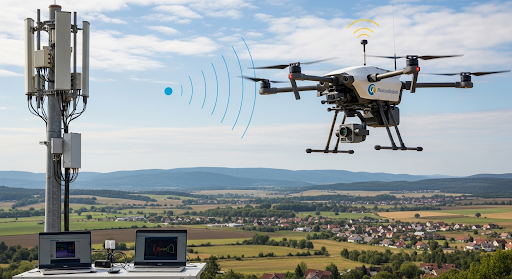
AI-powered drone services are already delivering measurable results across the telecom sector:
- Cell tower inspections — Routine visual and thermal scans of towers, antennas, and cabling.
- 5G rollout site surveys — Rapid topographic mapping and coverage analysis for new deployments.
- Fiber line route monitoring — Identifying vegetation encroachment, erosion, or construction threats along long-haul routes.
- Rooftop antenna inspections — Safe assessment of urban equipment without rooftop access risks.
- Disaster recovery assessments — Quick damage evaluation after storms or fires to accelerate restoration.
- Rural network expansion planning — Efficient site scouting and feasibility studies in hard-to-reach areas.
Leading operators have used drone fleets to restore service faster after major weather events and to accelerate 5G buildouts while keeping costs under control.
Why Telecom Operators Should Outsource Drone Services
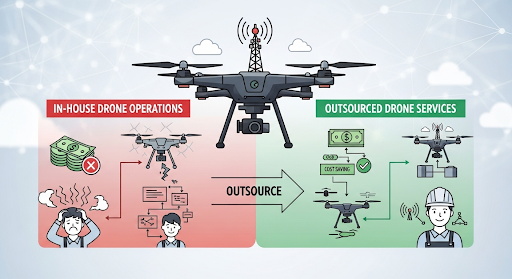
Building an in-house drone program requires certified pilots, FAA compliance, expensive equipment, data processing tools, and ongoing training. Outsourcing removes these barriers and delivers immediate ROI.
Benefits include:
- Access to certified pilots and specialized telecom inspectors.
- No equipment investment—operators pay only for completed missions.
- Faster deployment with pre-vetted fleets ready to fly nationwide.
- Compliance support for Part 107, BVLOS waivers, and telecom-specific regulations.
- Scalable nationwide coverage for operators with assets in multiple states.
- Advanced reporting and analytics delivered through secure, cloud-based platforms.
Professional telecommunications drone services help operators modernize inspections while improving network resilience and customer experience.
Choosing the Right Telecommunications Drone Service Provider
Not all drone providers are created equal. Telecom operators should evaluate partners based on proven capabilities:
- Telecom-specific experience — Deep familiarity with towers, antennas, fiber, and regulatory nuances.
- AI analytics capabilities — Integrated machine learning for defect detection and predictive insights.
- High-quality reporting — Clear, actionable deliverables with 3D models, thermal overlays, and digital twins.
- Regulatory compliance — Full FAA authorization and insurance coverage.
- Fast turnaround times — Same-day or next-day data processing for urgent needs.
- Proven case studies — Demonstrated results with major carriers or similar infrastructure projects.
Conclusion
As telecom networks expand and customer expectations rise, operators need smarter ways to manage infrastructure. AI-powered drone services combine speed, safety, and data intelligence to solve critical inspection challenges. Businesses that adopt this technology today will build stronger, more reliable networks for tomorrow.