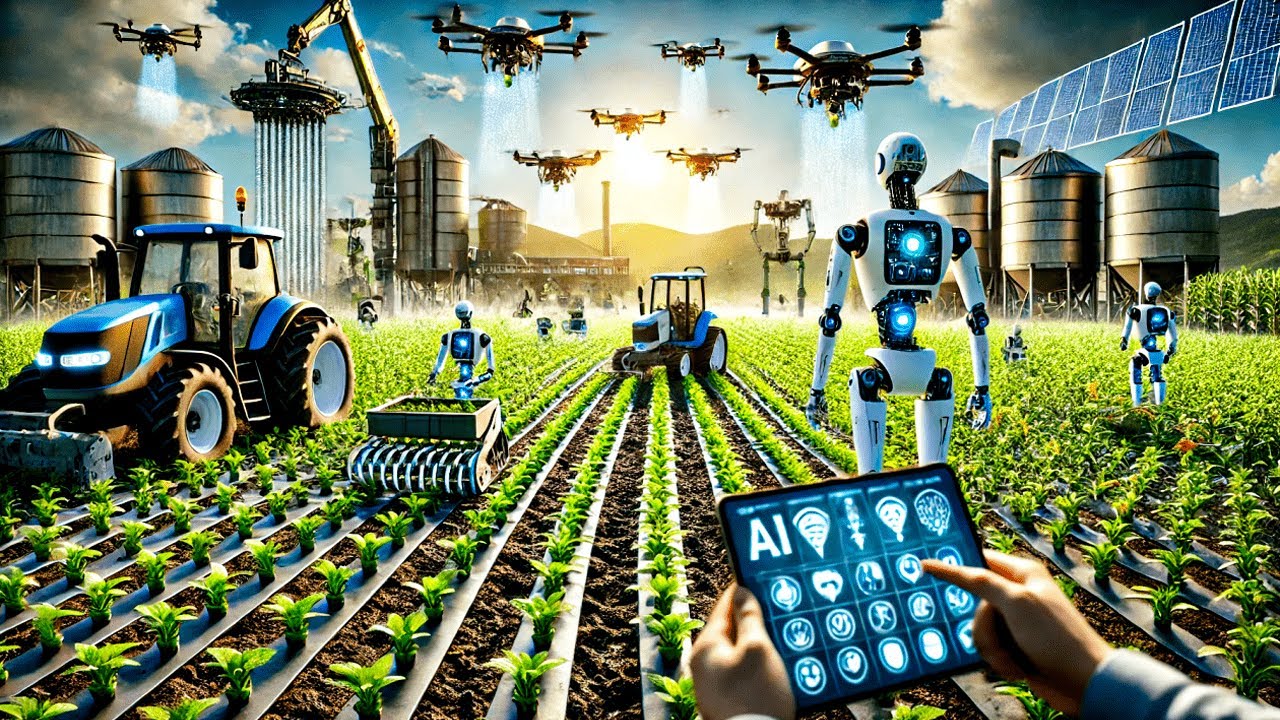
Artificial intelligence is changing modern agriculture by helping farmers make faster, more informed decisions. From monitoring crops and predicting weather patterns to tracking livestock health and improving farm efficiency, AI-powered technologies are becoming valuable tools across the agricultural industry.
Farming has always required careful observation, planning, and experience. However, modern farms generate large amounts of information from sensors, cameras, weather systems, animal records, and other technologies. AI can analyze this information and identify patterns that may be difficult to recognize manually.
As agricultural technology continues to develop, AI is helping farmers improve productivity while managing resources more efficiently.
AI and Precision Agriculture
Precision agriculture uses technology to understand exactly what is happening across different parts of a farm. Instead of treating an entire field in the same way, farmers can use data to determine where crops need more water, fertilizer, or attention.
AI can analyze information collected from satellites, drones, sensors, and farm equipment. These systems can identify variations in soil conditions, crop growth, moisture levels, and potential problems.
This allows farmers to make more targeted decisions and potentially reduce unnecessary use of water, fertilizers, and other resources.
Monitoring Livestock With AI
AI is also becoming increasingly useful in livestock management. Traditionally, farmers have relied heavily on regular physical observation to monitor animals.
Modern systems can use cameras, sensors, and wearable devices to track animal movement, feeding behavior, activity levels, and other indicators.
Changes in normal behavior may indicate that an animal requires attention. Early identification can allow farmers to investigate potential health or management issues before they become more serious.
This can be particularly valuable on larger farms where monitoring every animal manually can be challenging.
Improving Breeding and Reproductive Management
Reproductive management is an important part of successful livestock production. Farmers need to track breeding dates, pregnancy periods, expected births, and other important milestones.
Digital tools can help organize this information and make reproductive planning easier. For example, a goat due date calculator can help farmers estimate an expected kidding date based on the breeding date.
AI can take this type of recordkeeping further by analyzing historical reproductive data and helping identify patterns related to breeding success, herd performance, and animal management.
Accurate records remain important because individual animals can vary, and calculated dates should be treated as estimates rather than guaranteed delivery dates.
Predicting Livestock Health Problems
One of the promising applications of AI in livestock management is predictive health monitoring.
Machine learning systems can analyze behavioral and physiological data to identify changes that may indicate potential health problems. Reduced movement, changes in feeding habits, unusual activity, or altered social behavior can sometimes provide useful early signals.
AI does not replace veterinarians or experienced farmers. Instead, it can act as an additional monitoring layer that helps identify animals that may need closer observation.
Early attention can potentially reduce complications and support better animal welfare.
Automating Routine Farm Tasks
Agriculture involves many repetitive activities, and automation can reduce the amount of manual labor required for certain tasks.
AI-powered systems can assist with automated feeding, milking, environmental monitoring, irrigation, and equipment management.
Robotic systems can perform specific tasks according to programmed conditions, while AI can help determine when certain actions may be appropriate.
Automation can be especially useful when labor availability is limited or when farms operate at a large scale.
AI and Weather Forecasting
Weather has always been one of the biggest uncertainties in agriculture. Rainfall, temperature, storms, droughts, and changing seasonal patterns can significantly affect farming operations.
AI can analyze historical weather information alongside current environmental data to help farmers identify potential trends and risks.
This information can support decisions about planting, irrigation, harvesting, and livestock management.
Although weather predictions are never completely certain, improved forecasting can give farmers additional information for planning their operations.
Smarter Resource Management
Efficient resource use is becoming increasingly important as farmers face rising costs and environmental challenges.
AI can help optimize the use of water, feed, fertilizer, energy, and other resources.
For example, smart irrigation systems can use sensor data and environmental information to determine when crops may require water. Livestock systems can analyze feeding data to support more efficient feed management.
By using resources according to actual conditions rather than fixed schedules, farms may be able to reduce waste and improve efficiency.
Data-Driven Farm Decisions
Farmers have always made decisions based on experience, but AI provides another source of information.
Agricultural platforms can combine information from multiple sources and present it through dashboards or reports. Farmers can use this information to compare production levels, monitor animal records, evaluate costs, and identify potential areas for improvement.
The value of AI depends on the quality of the data being collected. Accurate records and properly maintained equipment are essential for producing useful insights.
Challenges of AI in Agriculture
Despite its potential, AI adoption comes with challenges. Advanced agricultural technology can require significant investment in hardware, software, connectivity, and training.
Smaller farms may find some systems difficult to afford or maintain. Farmers also need appropriate technical knowledge to interpret AI-generated recommendations.
Data privacy and ownership can be additional concerns, particularly when agricultural platforms collect large amounts of farm information.
AI should therefore be introduced according to the specific needs and resources of each farming operation.
The Future of Smart Farming
The future of agriculture is likely to involve increasing cooperation between farmers, AI systems, robotics, and connected devices.
Livestock management may become more data-driven, with systems continuously monitoring animals and notifying farmers about important changes. Crop management may become more precise as AI combines information from soil sensors, satellite imagery, weather systems, and farm machinery.
These technologies will not eliminate the need for agricultural expertise. Instead, they can give farmers additional tools for making informed decisions.
Conclusion
Artificial intelligence is transforming modern farming by improving precision agriculture, livestock monitoring, reproductive management, resource efficiency, automation, and predictive decision-making.
Simple digital tools, such as a goat due date calculator, can already make everyday farm recordkeeping easier. More advanced AI systems can build on these capabilities by analyzing large datasets and identifying patterns that support better farm management.
The future of agriculture will likely combine traditional farming knowledge with increasingly intelligent technology. When implemented thoughtfully, AI can help farmers manage their operations more efficiently while supporting productivity, animal welfare, and sustainable resource use.