
For quite some time now, we have been engaging with AI that can speak, listen, and respond. Virtual assistants have been setting reminders, chatbots have been answering questions, and recommendation systems have been working. Up to now, these tools were more responsive than intelligent, however. They just followed orders and did not question anything. They were not involved in any way but simply executed commands.
Agentic AI that takes action instead of just answering. It prepares its agenda rather than waiting for humankind to give it cues. The once quiet and limited robots, thanks to their abilities to think, reason, and adapt instantly, now mingle with humans as if they were their partners. Let us start learning the impacts of Agentic AI.
What Is Agentic AI?
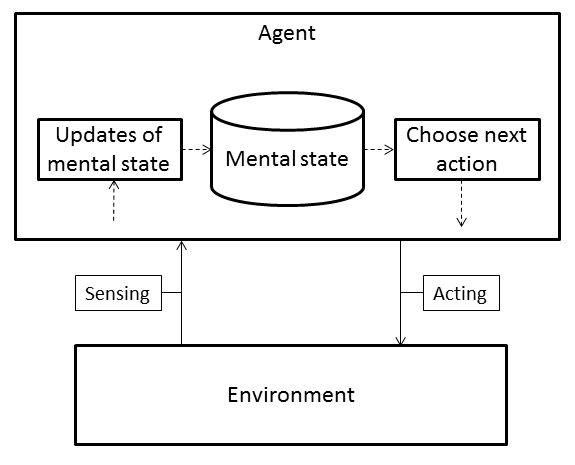
Intelligent systems to reason, plan, and act on their own to accomplish a task like a human assistant. An agentic AI comprehends your intent and performs several tasks for comparing prices, checking the calendar, and completing bookings.
Three pillars of definition:
- Goal orientation: Agentic AI comprehends goals in place of clear instructions.
- Autonomy of action: It can send emails, update CRMs, file reports, and deploy code, among other interactions.
- Reflection and reasoning: It learns from results, fixes errors, and gets better the following time.
What Makes Agentic AI Different?
- Think about how computing has evolved.
- Early computers followed line-by-line instructions.
- Machine learning models used data to forecast outcomes.
- Agentic AI now reasoned, connecting goals to behaviors across systems.
Suppose you ask it to “plan my business trip.” A chatbot would suggest flight possibilities. However, agentic AI will check your loyalty points, weather forecasts, hotel availability, and meeting schedules.
And it is possible in three ways:
- Reasoning: The reason is that AI recognizes your needs and designs a plan to accomplish them.
- Memory: It keeps the previous talks in mind and stores your preferences for the following interactions.
- Connectivity: It links to your electronic resources such as emails, calendars, and customer relationship management systems.
Why This Agentic AI Moment Matters?
The rise of agentic AI is more than just a trend and convergence in technology, data, and accessibility.
- Computing power will become tremendously cheaper and faster.
- Cloud APIs and open frameworks such as LangChain and AutoGPT for AI integration, even for SMBs.
- Persistent memory and reasoning layers now enable AIs to “remember” activities over multiple sessions.
- All of this helps AI feel less like an algorithm and more like a collaborator. It can finish projects, analyze results, and improve its performance.
We’ve evolved beyond assigning duties to robots and into affording them trust. And this transformation affects everything in how businesses operate.
How Consumers Will Experience the Shift?
For ordinary users, agentic AI is gradually transforming personal productivity.
- Imagine waking up and discovering that your AI assistant has already
- Review your inbox and write prioritized responses in your tone.
- To avoid scheduling conflicts, sync your calendar.
- It ordered goods since it detected your supply was running low.
This is not about replacing human work; rather, it is about returning time and focus to humans. Agentic AI decreases decision fatigue, the invisible exhaustion induced by continuous micro-decisions.
However, with autonomy comes responsibility. AI has the access it needs, like emails, calendars, finances, and habits.
Inside the Enterprise: From Efficiency to Intelligence
While consumers benefit from convenience, organizations are seeing a capabilities revolution.
- Traditional automation saves time. Agentic AI generates intelligence. It is not just a performer, but also an analyzer, a chooser, and an adjuster.
- Take, for example, a medium-sized firm that processes a huge volume of customer inquiries each day, say thousands of them.
- The AI agent service not only sorts but also assesses the customer’s emotions, looking at the interaction history, and composing replies.
- In finance, agents reconcile invoices and identify irregularities. HR screens candidates and schedules interviews. Marketers create and launch personalized campaigns based on real-time engagement.
Organizations that use agentic AI report up to 30% faster decision cycles and double-digit productivity benefits. The actual transformation, however, is not speed, but clarity.
The Hidden Challenge: Security and Accountability
To let AI act freely is like walking on a tightrope. This kind of intelligent tool can easily get access to confidential matters such as financial statements, customer information, and data stored in the cloud. In case of a bad input to the system or a hacker breaking into the system, things will go very wrong indeed. An AI agents development company should be treated in the same way as ordinary workers, with identity verification, access controlled according to their role, and their activities monitored. While incorporating AI, always grant it the least access necessary to perform its function.
For everyone, it’s now super important to practice good cybersecurity:
- Use multifactor authentication.
- Keep your personal and work stuff separate.
- Check your AI’s permissions often
- Too much freedom without enough control is a recipe for trouble.
The Road Ahead: Digital Teammates, Not Tools
Agentic AI is here, and it’s like having a new teammate. Digital project managers can now monitor project activities, have the meetings summarized, and get the workflows improved continuously. HR will need ways to measure how well both are doing. Companies will form AI committees to ensure things are open, ethical, and responsible. As personal and work AI mix, we’ll need clearer rules about who owns data and digital identities. Success with agentic AI isn’t about automating everything, but about working together well.
Conclusion
Agentic AI signals the transformation of the relationship between humans and technology. It frees up time and attention, but only if we are cautious. The main point is to keep our human thinking modes of being creative, ethical, and empathetic.