
Introduction
Data permeate the modern workplace. This ranges from understanding customer behavior to managing and optimizing internal processes. Therefore, organizations rely heavily on data-driven decisions. This growing dependence has propelled two roles to the center of activity: Data Analytics and Data Science. While these terms are often used interchangeably, they represent different skill sets, responsibilities, and career paths.
Many people who are researching a data science and machine learning course or contemplating an IIT data science course for themselves might be unsure whether a data science path is more suited to them or a data analytics one. An understanding of the distinctions between data analytics and data science can assist an individual in making an informed decision for themselves or in directing candidates for a career change. The following points discuss data analytics and data science in an easy-to-understand manner with examples.
What is Data Analytics
Data Analytics is all about analyzing existing data to reveal hidden patterns, trends, and insights,” said Yeaneth Solano, a data scientist at IBM AS/400 training specialist Core Technologies. “A data analyst spends most of their time with business teams trying to answer specific questions, like ‘Why did sales decline last year, or which marketing campaign performed better?
Now, think of a retail business’s management detecting a reduction in foot traffic at the stores. Then, a data analyst analyzes sales data, customer feedback, or seasonal patterns to understand why there was a shift in this manner. The function isn’t predictive but rather for understanding.
Key characteristics of Data Analytics
- Works mainly with structured data such as spreadsheets and databases
- Focuses on descriptive and diagnostic analysis
- Helps businesses understand past performance
- Strong connection with business operations and reporting
- Uses tools like dashboards, queries, and visualization platforms
Data Analytics is ideal for professionals who enjoy problem solving, storytelling with data, and working closely with decision makers.
What is Data Science
With Data Science, prediction of the future course of events and intelligent systems building is possible. A data scientist applies statistics, programming, and domain knowledge to create models that learn from the data.
Think about a streaming platform recommending shows based on viewing history. Behind this experience is the data scientist who creates models that analyze behavior and adapt over time. This role is more experimental and often deals with large and complex datasets.
This often means that a lot of learners coming to a Data Science and Machine Learning Course are looking to attain these advanced capabilities. And an IIT data science course often focuses on this deeper technical foundation along with real-world applications.
Key characteristics of Data Science
- Works with both structured and unstructured data
- Focuses on predictive and prescriptive analysis
- Builds models that learn and improve
- Involves machine learning and advanced algorithms
- Requires strong coding and statistical skills
Data Science suits those who enjoy research, experimentation, and building intelligent solutions.
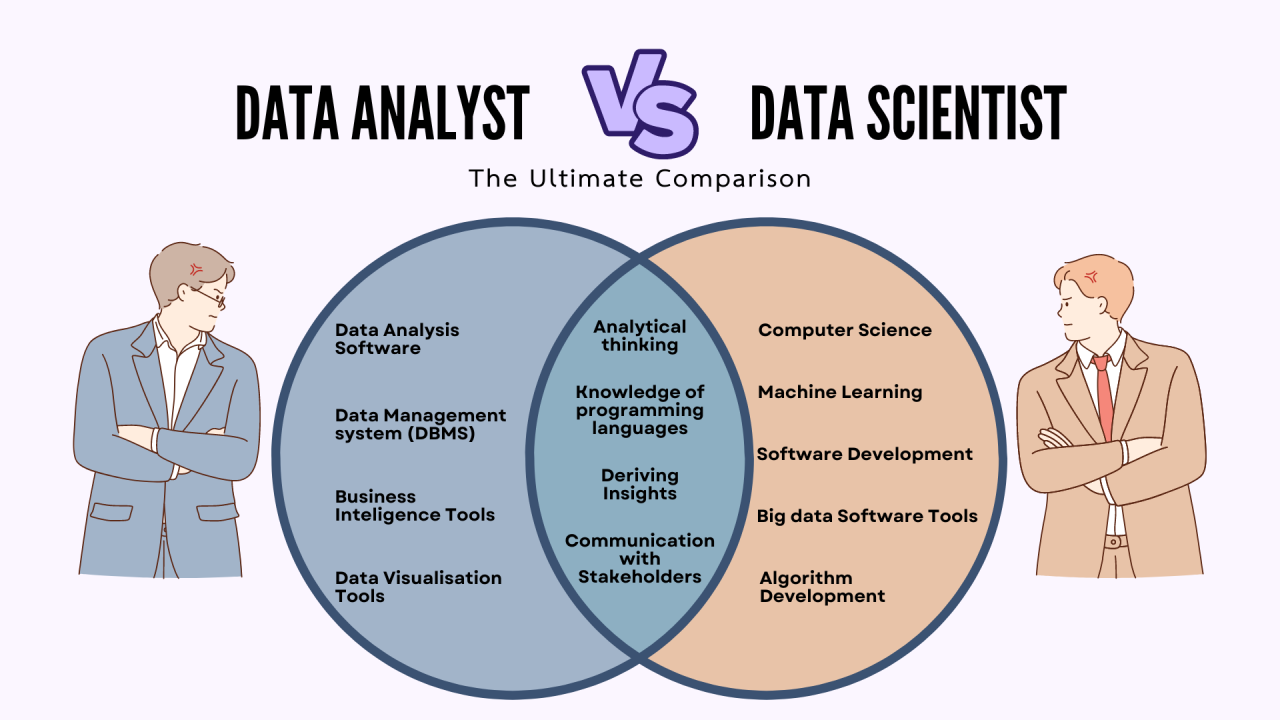
The Key Differences
| Data Analytics | Data Science |
| Main focus is understanding what happened and why | Main focus is predicting what may happen next |
| Common tasks include reporting and trend analysis | Common tasks include model building and experimentation |
| Output is insights that guide business decisions | Output is algorithms and data driven systems |
| Interaction is frequent with business stakeholders | Interaction often includes technical and research teams |
| Tools focus on visualization and querying | Tools include programming frameworks and machine learning libraries |
Real Life Work Scenarios
On the banking side, a data analyst could analyze data on the closing of accounts based on the reasons why they are commonly closed and help the customer service team thereby.
A data scientist working in the same bank could design and develop a predictive model on who would leave the bank in the future. This would enable them to take remedial measures in advance.
Both jobs involve data, but their day-to-day tasks and results differ. It is the main reason why some organizations find themselves needing the skill sets for both jobs to establish a data-driven culture.
Skills and Learning Path
Choosing between Data Analytics and Data Science often depends on personal interests and career aspirations.
If you prefer Data Analytics
- Enjoy working with business problems
- Like explaining insights in simple language
- Are comfortable with reports and dashboards
- Want quicker entry into data focused roles
If you prefer Data Science
- Enjoy coding and complex problem solving
- Are curious about how machines learn
- Like experimenting with data
- Want to work on advanced predictive systems
Programs such as a Data Science and Machine Learning Course or an IIT data science course often cover both areas initially, allowing learners to explore before specializing.
Career Outlook and Collaboration
In a real-world setting, data analysts and data scientists also work together. For example, an analyst may spot a trend that is of interest, or a data scientist may use a model to predict such a trend.
Instead, they are more like non-competing roles. It is easier to comprehend the distinctions among them so that the right tasks are delegated to the right people, and the right path is chosen based on the strengths.
Conclusion
Data Analytics and Data Science might appear the same but perform two different tasks when it comes to extracting value from data. Data Analytics is concerned with analyzing the past and the handling the present, whereas Data Science involves the future.
For professionals interested in available opportunities through a Data Science and Machine Learning Course or an IIT Data Science Course, a proper understanding of these aspects is very important. Both have the potential to offer lucrative careers with a lot of learning possibilities. This decision depends upon whether you are more into explaining things or creating systems that can learn from data.
A better understanding of these differences can ensure your learning process meets your area of interest and helps you enter the ever-changing realm of data with confidence.