Agentic AI Development Hub

Best AI Coding Assistant Development Companies for Enterprise Software Teams (2026)

In 2026, AI coding assistants have become a core part of enterprise software development, transforming how engineering teams design, build, test, and deploy applications. These tools go far beyond simple autocomplete—they now act as intelligent development partners capable of understanding large codebases, generating production-ready code, detecting vulnerabilities, and even managing multi-step workflows across complex systems.

As demand grows for faster release cycles and higher code quality, enterprises are increasingly turning to specialized AI coding assistant development companies that build tailored solutions for large-scale engineering environments. These companies focus on deep code intelligence, secure enterprise integration, private model deployment, and support for multi-language and multi-repository ecosystems.


The Complete Guide to Developing a Bigo Live Clone App

Live streaming has rapidly evolved into a major segment of the digital entertainment and creator economy, enabling real-time interaction between creators and audiences across the globe. This growth has led to increasing demand for scalable and feature-rich platforms similar to Bigo Live, driving businesses to explore Bigo Live clone app development as a strategic opportunity. A Bigo Live clone is not merely a replication of an existing platform but a customizable live streaming solution that allows businesses to build their own branded ecosystem with unique features, monetization models, and user experiences.

This article explores the complete development lifecycle of a Bigo Live clone, including market analysis, feature planning, technology selection, user experience design, and scalability considerations. It highlights how modern live streaming platforms integrate interactive tools, creator monetization systems, AI-driven recommendations, and secure payment infrastructures to meet evolving user expectations. Additionally, it examines key challenges such as scalability, content moderation, and creator acquisition, along with strategies for successful platform launch and long-term growth.

Top AI Therapy Chatbot Development Companies for Building AI Mental Health Chatbots

AI therapy chatbots are reshaping digital mental healthcare by providing accessible, personalized, and around-the-clock emotional support. However, developing an effective AI-powered mental health chatbot requires more than advanced language models—it demands expertise in conversational AI, healthcare compliance, data security, user experience, and scalable software architecture. This article explores the key considerations for building AI therapy chatbot solutions and highlights eight leading development companies with proven expertise in AI and healthcare technology. Each company is evaluated based on its capabilities, core services, and ideal use cases to help businesses identify the right technology partner. Whether you’re a healthcare provider, wellness startup, or digital health enterprise, this guide offers valuable insights into selecting a development company that can deliver secure, intelligent, and user-centric AI mental health solutions while supporting long-term product growth and innovation.

App Development Team For AI SaaS Products

Before You Start AI SaaS App Development, Know Who You Actually Need

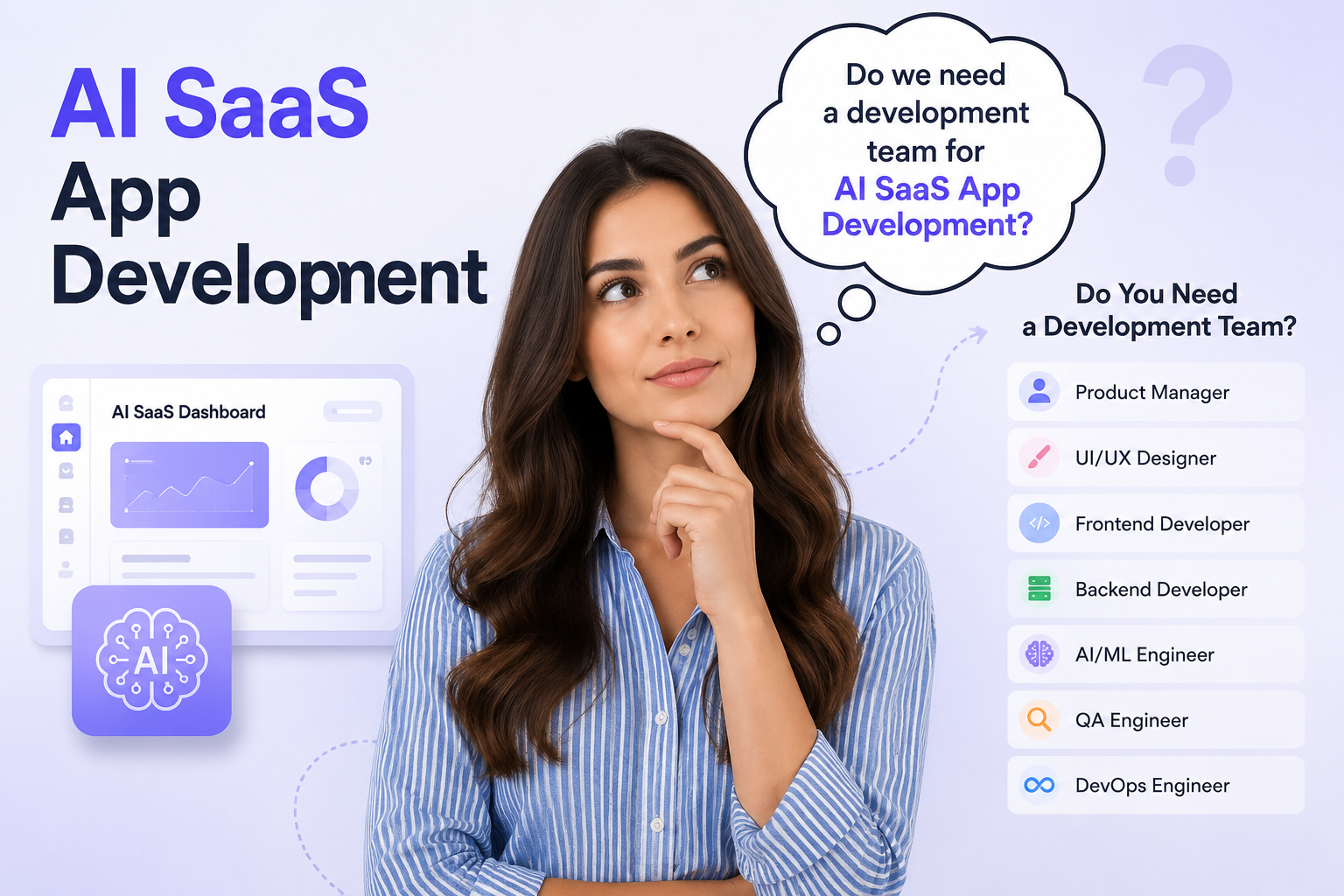
Building a successful AI SaaS product is not about hiring the largest development team or adopting the latest AI technology from the start. It begins with clearly defining the business problem, understanding customer needs, and creating a product roadmap before making hiring decisions. This article explains why every AI SaaS project requires a different team structure based on its goals, complexity, and stage of development. It explores the roles needed during different phases, compares in-house teams with development partners, highlights common hiring mistakes founders make, and explains when it’s the right time to expand a team. By focusing on solving real customer problems instead of chasing technology trends, founders can build more efficient products, control development costs, and create a stronger foundation for long-term growth.