
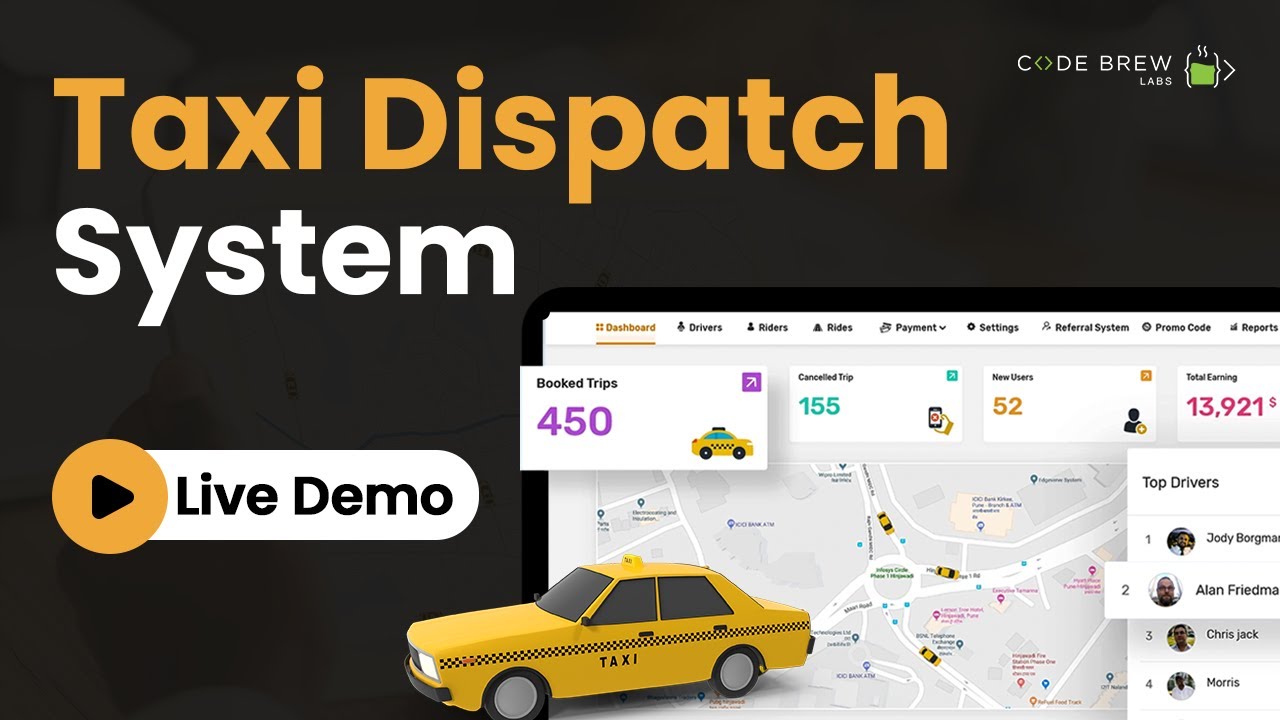
How AI Agents Could Automate Taxi Dispatch Operations
Discover how AI agents could transform taxi dispatch operations. Learn about supply-demand monitoring, intelligent driver matching, predictive repositioning, surge handling, and human oversight.
Discover how AI agents could transform taxi dispatch operations. Learn about supply-demand monitoring, intelligent driver matching, predictive repositioning, surge handling, and human oversight.

This guide explains how long it takes to develop a towing service app using AI, emphasizing that the timeline can range from a few weeks to several months depending on the application’s features, business model, integrations, and technical complexity. A basic app that allows drivers to request towing assistance may be developed much faster than a complete platform with customer and service provider apps, technician management, live GPS tracking, automated dispatching, AI-powered recommendations, and an administrative dashboard. For businesses entering the roadside assistance market, the development timeline isn’t determined by coding alone—planning the service workflows, designing the user experience, integrating maps and payment gateways, training or configuring AI models, testing real-world scenarios, and preparing for launch all require time. A white-label solution can provide a starting point for businesses that want to enter the market without building every component from scratch, but the actual timeline depends on how much of the existing platform can be reused and how much customisation is required.
The article covers the key stages and timeline estimates for AI-powered towing app development: what an AI-powered towing service app is and how AI can support dispatching, customer communication, demand forecasting, and service recommendations; estimated timeline ranges for each development stage, from requirements and technical planning (1–2 weeks) through UI/UX design (2–3 weeks), basic booking app (4–8 weeks), customer and provider apps with GPS (8–14 weeks), complete platform with admin and technician panels (12–20 weeks), AI features and external integrations (2–6 additional weeks), and final testing and launch preparation (2–4 weeks); requirements gathering and project planning; UI/UX design and prototyping; core app development; integrating AI features including AI-assisted dispatching, conversational booking assistants, demand forecasting, customer support automation, and vehicle problem classification; GPS, maps, payments, and other integrations; testing, security, and deployment; factors that can increase development time including complex AI requirements, multiple applications, geographic expansion, custom dispatch logic, changing requirements, and limited data; how to reduce the development timeline through clear decisions, existing APIs, white-label foundations, and parallel work; and a practical development roadmap with phased deliverables. The guide concludes that developing an AI-powered towing service app can take approximately 2–3 months for a relatively simple first release and around 4–6 months for a more complete platform—and that the most important factor isn’t the number of AI features included but how well the application solves real roadside assistance problems.

This guide profiles ten AI agent development companies in Dubai worth considering for business operations, emphasizing that AI agents are becoming an important part of business automation—helping companies handle repetitive tasks, analyze information, manage customer interactions, and improve operational efficiency. Businesses in Dubai are increasingly exploring these solutions to reduce manual workloads and create more responsive digital services. However, developing an effective AI agent involves more than connecting a language model to an application—businesses need to consider workflow design, data integration, security, system reliability, and how the agent will operate within existing processes. Choosing a suitable development partner can make a significant difference in turning an AI concept into a practical business solution.

This guide profiles eight AI development companies in Dubai and the UAE that are worth watching in 2026 as artificial intelligence shifts from experimentation into everyday business use. It explains that companies across the region are increasingly using AI to automate internal processes, improve customer experiences, analyze data, develop intelligent applications, and create new digital products. The focus in 2026 is moving beyond simple experimentation toward building systems that deliver measurable business value—including AI agents that perform multi-step tasks, generative AI applications that work with company data, predictive systems that support decision-making, and AI-powered software integrated into existing business infrastructure.
The article evaluates each company based on its AI capabilities, industries served, engagement models, and what makes it relevant for the year ahead. Burj Code is highlighted for production-ready AI systems with UAE data residency, PDPL alignment, and bilingual Arabic-English capabilities. Triple Minds is noted for combining AI development with consulting and product strategy. SoluLab, LeewayHertz, and Markovate are recognized for enterprise AI, generative AI, AI agents, and multi-agent systems. HatchWorks AI is positioned for consulting-led AI transformation, while Code Brew Labs and Riseup Labs bring broader software and mobile development expertise. The guide also outlines what makes an AI development company worth watching in 2026—including production-ready AI, AI agents, generative AI, enterprise integration, security and governance, Arabic AI capabilities, MLOps, and scalability—and provides practical guidance on choosing the right partner based on technical requirements, budget, industry, and expected scale.
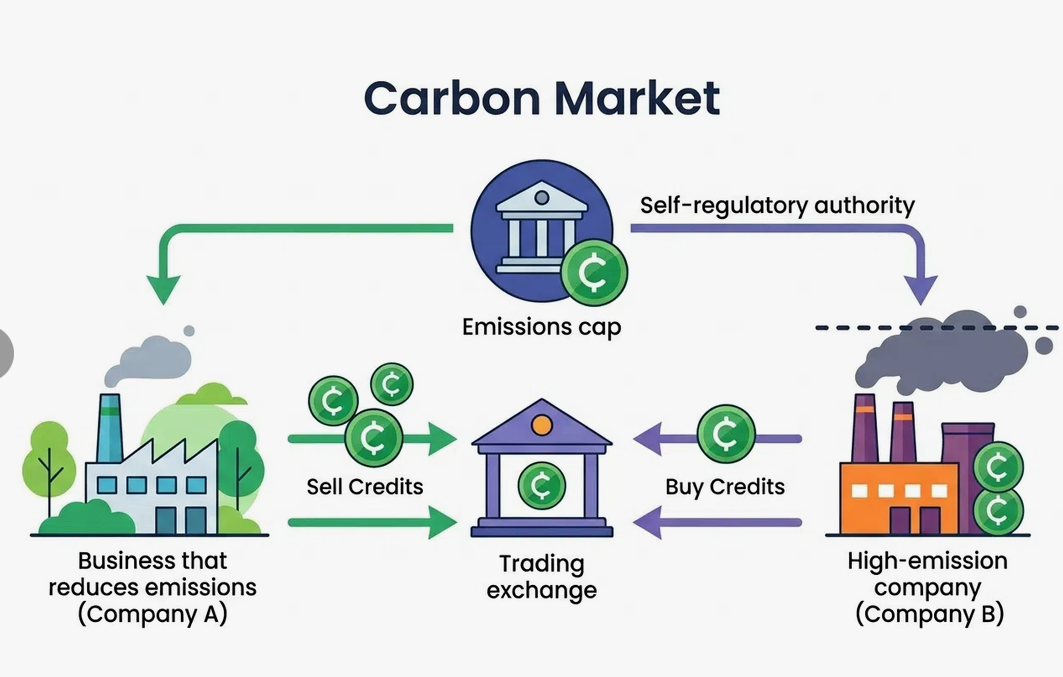
This guide explores how artificial intelligence is transforming carbon credit marketplaces from basic trading platforms into intelligent, efficient, and secure ecosystems. It explains that as carbon markets grow in complexity and transaction volume, manual processes become increasingly difficult to scale, making AI a strategic necessity rather than a luxury. The article highlights how AI addresses key operational challenges by automating repetitive tasks, analyzing vast datasets in real time, and providing actionable insights that improve decision-making for buyers, sellers, and administrators.
The guide provides a comprehensive overview of essential AI features, including personalized carbon credit recommendations, intelligent search and filtering, predictive pricing analytics, automated fraud detection, and AI-powered verification processes. It also covers AI chatbots for customer support, ESG analytics for sustainability reporting, workflow automation, and risk management capabilities. Additionally, the article discusses implementation challenges such as data quality, regulatory compliance, and integration complexity, while offering best practices for successfully integrating AI into carbon marketplaces. It concludes by examining future trends, including generative AI, autonomous trading assistants, and blockchain integration, positioning AI as a key enabler for scalable, transparent, and future-ready carbon trading platforms.

🤖 Artificial intelligence is reshaping eCommerce, but its effectiveness depends on secure, structured access to live store data. Traditional Shopify APIs, while powerful, were designed for applications rather than autonomous AI agents—requiring custom middleware, complex orchestration, and extensive development before AI can perform even basic business tasks.
🔌 Shopify MCP Servers introduce a new approach. Built on the Model Context Protocol (MCP), they create a standardized communication layer between AI applications and Shopify stores. Instead of building custom integrations for every AI workflow, businesses can provide AI agents with structured, secure access to products, inventory, orders, customer data, and store operations through a consistent protocol.
🛒 This enables intelligent customer experiences—AI shopping assistants that understand natural language, provide personalized recommendations, compare products, track orders, and answer support questions using real-time Shopify data. Behind the scenes, MCP Servers automate inventory management, streamline order processing, simplify product catalog updates, and reduce repetitive manual tasks.
👨💻 For developers, MCP offers standardized communication, faster integration, better security controls, and easier maintenance. As AI agents become more capable, Shopify MCP Servers provide the infrastructure needed for AI-first commerce—where intelligent systems assist customers, automate operations, and help merchants make better decisions using live business data.
🚀 Businesses that adopt MCP-powered Shopify solutions today are better positioned to deliver conversational shopping experiences, improve operational efficiency, and prepare for the next generation of autonomous AI commerce.

🎯 Live commerce has transformed online shopping by combining live video, community interaction, and real-time purchasing into a single engaging experience. Platforms like Whatnot have demonstrated the potential of this model, but as marketplaces grow—with hundreds of sellers, thousands of products, and millions of interactions—managing discovery, personalization, moderation, and seller productivity becomes increasingly complex.
🤖 Artificial intelligence offers a solution. An AI-powered Whatnot clone can use intelligent systems to help customers discover relevant products, recommend live events, answer questions, support sellers, moderate conversations, analyze audience behavior, and automate repetitive marketplace tasks. Instead of treating AI as a separate feature, businesses can integrate it across the entire live commerce journey—from personalized recommendations and intelligent search to AI shopping assistants, seller productivity tools, automated content creation, and marketplace safety.
🛠️ This guide explores how businesses can approach the development of an AI-powered live commerce platform, where AI can create the most value, what technology is required, and what considerations matter before investing in development. It also provides planning cost ranges for different platform complexities—from basic AI-powered applications starting around $60,000–$100,000 to enterprise-level marketplaces exceeding $200,000–$350,000.
🔑 The most valuable AI-powered platforms will not use artificial intelligence simply as a marketing feature. They will integrate it into areas where it solves genuine business and customer problems. For customers, that means faster product discovery and real-time assistance. For sellers, it means less time on repetitive tasks and more time engaging audiences. For marketplace operators, AI provides the intelligence needed to scale personalization, moderation, and operations without proportional increases in manual effort.
🚀 The future of live commerce is unlikely to be based only on streaming products and processing orders. It will increasingly involve intelligent systems that understand customer interests, assist sellers, personalize experiences, and help marketplaces operate at scale. A thoughtfully designed Whatnot clone with AI can provide the foundation for that next generation of live commerce.

The way people shop online is entering a new phase. For years, ecommerce platforms focused on making shopping faster and more convenient […]

Multi-location dealership groups face a fundamental challenge: maintaining operational consistency, customer visibility, and intelligent decision-making across an expanding network of branches. As dealerships acquire new locations, manage larger inventories, and serve increasingly diverse customer bases, traditional CRM systems often struggle to provide the centralized intelligence required for effective leadership. This article examines how AI-powered White Label Car Dealer CRM Software is transforming multi-location dealership operations by combining traditional customer management with predictive analytics, workflow automation, intelligent lead scoring, conversational AI, and real-time multi-location reporting. It profiles eight providers—Triple Minds, Fullpath, Elead CRM, DealerSocket, VinSolutions, AutoRaptor, and ProMax Unlimited—that are helping dealership groups centralize customer data, automate routine activities, and gain predictive insights across every location. The piece explores critical AI capabilities including lead prioritization, inventory forecasting, sales performance monitoring, customer sentiment analysis, and personalized marketing recommendations. It also discusses the importance of scalability, consistency, and real-time visibility for dealership groups planning future expansion through acquisitions or new market entry. Ultimately, the article argues that the most successful multi-location dealerships will be those that embrace AI-powered CRM platforms as strategic assets—transforming fragmented operations into intelligent, connected ecosystems capable of delivering exceptional customer experiences and sustainable long-term growth.
Recommended Use: This abstract captures the operational complexities of multi-location dealerships, the transformative role of AI-powered CRM, and the strategic importance of intelligent platforms for scaling—making it suitable for automotive industry publications, dealership management guides, and AI adoption resources for the automotive sector.
Businesses are moving beyond isolated AI tools and chatbots toward a more ambitious vision: autonomous AI platforms—intelligent ecosystems composed of multiple AI agents that collaborate, coordinate, and make decisions in support of broader business objectives. This article examines how organizations are leveraging autonomous platforms to transform operations across sales, customer service, business intelligence, marketing, human resources, and enterprise productivity. Unlike traditional automation systems that execute predefined tasks, these platforms enable intelligent agents to communicate with one another, integrate with existing CRMs and ERPs, adapt to changing requirements, and scale alongside business growth. The piece profiles eight companies—Triple Minds, Sell My Code, LeewayHertz, IBM, HatchWorks AI, C3 AI, Scale AI, and Accenture—that are helping organizations design, develop, and deploy autonomous AI platforms through custom development, enterprise solutions, strategic consulting, and data infrastructure. It explores the defining characteristics of autonomous platforms, including multi-agent collaboration, tool integration, context awareness, and adaptability. The article also provides guidance for businesses considering autonomous AI adoption, emphasizing the importance of strategic alignment, data readiness, integration capabilities, security, and scalability. Ultimately, it argues that autonomous AI platforms represent the next evolution of enterprise technology—shifting from isolated automation to intelligent, connected systems that function as digital workforces capable of improving efficiency, accelerating decision-making, and supporting sustainable long-term growth.

Enterprise social platforms have evolved far beyond internal communication tools, emerging as strategic assets for customer engagement, employee collaboration, and partner ecosystems. This article examines how artificial intelligence is transforming enterprise social experiences, enabling organizations to build proprietary communities that offer greater control over branding, data, and user relationships. It identifies key drivers behind this shift—including pressure to improve engagement, retain customers, and create personalized digital experiences—and outlines essential platform features such as AI-powered recommendations, intelligent moderation, virtual assistants, real-time analytics, and enterprise-grade security. The piece then profiles seven development firms—Triple Minds, BairesDev, Intellectsoft, Vention, Simform, STX Next, and Kellton—each offering distinct strengths in AI integration, scalable engineering, cloud infrastructure, and digital transformation consulting. It provides guidance on selecting a development partner, emphasizing the importance of enterprise experience, AI expertise, scalability, and long-term support. The article concludes that enterprises investing in AI-powered social ecosystems today will gain significant competitive advantages in engagement, loyalty, and operational efficiency, as intelligent, personalized experiences become the standard for digital interaction in the coming years.