
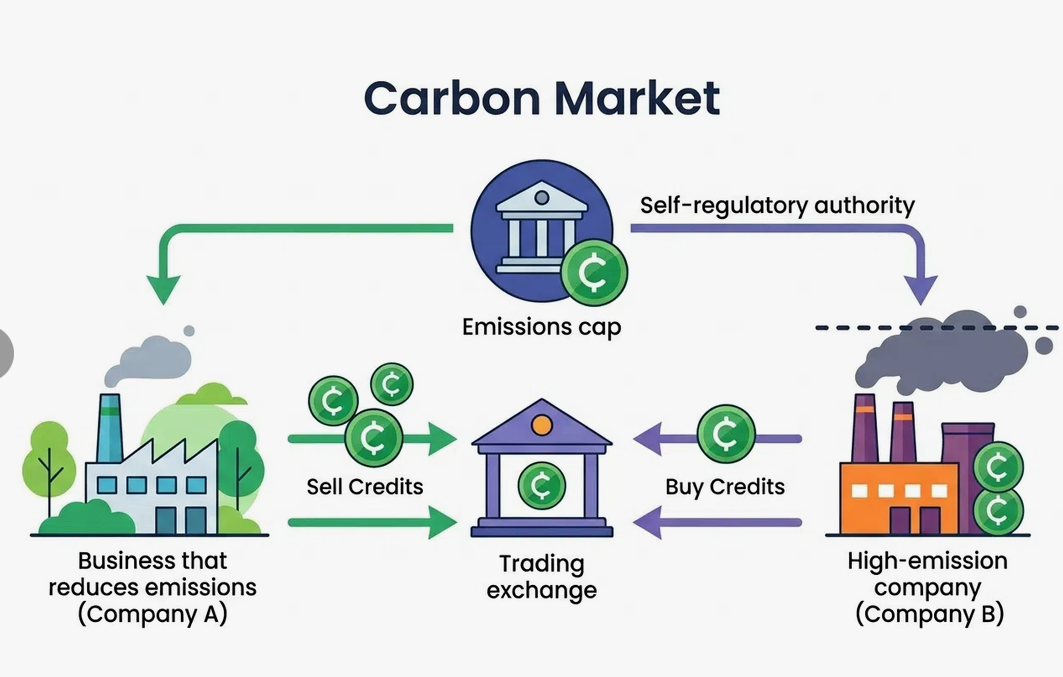
Introduction
Artificial intelligence (AI) is rapidly transforming industries by automating complex processes, improving decision-making, and delivering personalized user experiences. The carbon market is no exception. As carbon credit trading becomes more sophisticated and transaction volumes continue to grow, marketplace operators are increasingly adopting AI to enhance efficiency, strengthen transparency, and simplify platform management.
Modern carbon marketplaces handle vast amounts of data—from carbon credit verification and registry information to pricing trends, trading activities, and compliance requirements. Managing these processes manually can be time-consuming, error-prone, and difficult to scale. AI addresses these challenges by analyzing large datasets in real time, identifying patterns, automating repetitive tasks, and providing valuable insights that help users make informed decisions.
Beyond operational efficiency, AI also improves the overall marketplace experience. Buyers receive personalized carbon credit recommendations, administrators can detect suspicious activities before they become serious risks, and businesses gain actionable sustainability insights through intelligent analytics. As the carbon economy continues to evolve, AI is becoming a strategic advantage rather than simply an optional enhancement.
At Triple Minds, we recognize that organizations are looking beyond traditional marketplace functionality and investing in intelligent platforms capable of adapting to changing market conditions. Integrating AI into carbon marketplaces enables businesses to improve operational efficiency while delivering a more secure, transparent, and user-centric trading experience.
In this article, we’ll explore the most valuable AI features in modern carbon marketplaces, their practical benefits, implementation challenges, and how they contribute to building smarter and more scalable carbon trading ecosystems.
The Growing Role of AI in Carbon Credit Trading Platforms
The global carbon market has expanded significantly over the past decade, driven by increasing corporate sustainability commitments, government regulations, and growing awareness of climate change. As more organizations participate in carbon trading, marketplaces must process larger transaction volumes, manage extensive project data, verify credit authenticity, and ensure compliance with multiple environmental standards.
Businesses investing in carbon credit trading platform development are increasingly incorporating artificial intelligence to automate these complex operations while improving accuracy and user experience. AI helps transform traditional marketplaces into intelligent ecosystems capable of processing vast amounts of information, identifying market trends, and supporting faster decision-making.
Unlike conventional software that follows predefined rules, AI continuously learns from marketplace data. It can analyze historical trading patterns, evaluate buyer preferences, detect unusual transactions, and recommend relevant carbon credits based on multiple factors. This allows both marketplace operators and participants to make better decisions with less manual effort.
AI also helps address some of the industry’s biggest operational challenges, including:
- Managing large volumes of marketplace data
- Reducing manual verification efforts
- Detecting fraudulent transactions
- Improving carbon credit discovery
- Supporting regulatory compliance
- Optimizing trading efficiency
For buyers, AI simplifies the search for high-quality carbon credits by providing personalized recommendations and intelligent search capabilities. Sellers benefit from improved visibility, pricing insights, and faster transactions. Marketplace administrators gain access to automated monitoring tools that improve operational oversight while reducing administrative workload.
As carbon markets continue to mature, AI is becoming a key technology that enables marketplaces to scale efficiently without compromising transparency, security, or regulatory compliance.
Why AI Matters in Modern Carbon Marketplaces
Artificial intelligence is no longer viewed as a futuristic technology—it has become a practical tool for solving many of the operational challenges faced by modern carbon marketplaces. From improving marketplace efficiency to enhancing trust among participants, AI delivers measurable value across every stage of the carbon credit trading lifecycle.
One of AI’s greatest advantages is its ability to process and interpret massive datasets within seconds. Carbon marketplaces continuously generate information related to project verification, registry updates, trading activity, pricing trends, compliance requirements, and user behavior. AI transforms this information into actionable insights that support faster and more informed decision-making.
AI also improves transparency by continuously monitoring marketplace activity. Intelligent algorithms can identify unusual trading behavior, flag duplicate carbon credits, and detect potential fraud before it impacts marketplace integrity. This proactive approach strengthens trust among buyers, sellers, and regulators.
Another significant benefit is automation. Routine tasks such as document verification, transaction monitoring, customer support, and report generation can be handled more efficiently through AI-powered workflows. This reduces operational costs while allowing marketplace teams to focus on strategic growth initiatives.
Perhaps most importantly, AI enhances the overall user experience. Personalized recommendations, smart search capabilities, predictive pricing insights, and interactive dashboards help participants navigate the marketplace more efficiently and make better purchasing decisions.
As the carbon economy becomes increasingly data-driven, organizations that integrate AI into their marketplaces will be better positioned to improve operational performance, deliver exceptional user experiences, and remain competitive in a rapidly evolving sustainability landscape.
Essential AI Features in Modern Carbon Marketplaces
Artificial intelligence is redefining how carbon marketplaces operate by introducing automation, predictive insights, and intelligent decision-making into everyday operations. Rather than replacing existing marketplace functionality, AI enhances it by making platforms faster, smarter, and more efficient for buyers, sellers, and administrators alike.
The following AI features represent some of the most valuable capabilities that modern carbon marketplaces can implement.
AI-Powered Carbon Credit Recommendations
Finding the right carbon credits can be challenging, especially for organizations managing diverse sustainability goals or purchasing credits across multiple project categories. AI-powered recommendation engines simplify this process by analyzing user behavior, trading history, industry preferences, and carbon offset objectives to deliver personalized suggestions.
Instead of manually browsing hundreds of projects, buyers receive recommendations that closely align with their environmental priorities, budget, preferred certification standards, or geographic preferences. As users continue interacting with the platform, machine learning algorithms refine future recommendations, creating a more personalized experience over time.
For marketplace operators, intelligent recommendation systems increase user engagement, improve credit visibility, and encourage repeat transactions by presenting buyers with the most relevant opportunities.
Common recommendation capabilities include:
- Personalized carbon credit suggestions
- Industry-specific project recommendations
- Portfolio diversification insights
- Sustainability goal matching
- Similar project recommendations
- Behavioral learning for improved accuracy
By reducing search complexity, AI helps buyers make faster, more confident purchasing decisions while improving overall marketplace engagement.
Intelligent Search & Smart Filtering
Traditional keyword-based search often struggles to deliver precise results when marketplaces contain thousands of carbon credit listings. AI-powered search significantly improves this experience by understanding user intent rather than simply matching keywords.
Natural language processing (NLP) enables users to search using conversational phrases such as “renewable energy projects in Asia” or “high-impact forestry credits with Verra certification.” The platform interprets the intent behind the query and returns the most relevant listings instead of relying solely on exact keyword matches.
AI can also personalize search results by considering previous browsing behavior, purchase history, and user preferences. Frequently viewed project types, preferred registries, or favored geographic regions can all influence search rankings, helping users discover suitable credits more quickly.
Modern intelligent search features include:
- Natural language search
- AI-powered search ranking
- Personalized search results
- Context-aware filtering
- Smart autocomplete
- Dynamic filter suggestions
- Semantic search capabilities
An intelligent search experience reduces friction throughout the buying journey while making large carbon marketplaces easier to navigate.
AI-Based Fraud Detection
Maintaining marketplace integrity is essential for building trust among participants. As transaction volumes increase, manually monitoring every activity becomes increasingly difficult, making AI an invaluable tool for fraud detection and risk management.
Machine learning algorithms continuously analyze trading patterns, user behavior, transaction histories, and account activities to identify anomalies that may indicate fraudulent behavior. Instead of relying solely on predefined rules, AI learns from historical marketplace data and adapts to emerging fraud patterns over time.
For example, AI can detect unusual purchasing behavior, repeated transfers involving the same carbon credits, abnormal pricing activity, or attempts to manipulate trading volumes. When suspicious behavior is identified, the system can automatically generate alerts or temporarily flag transactions for administrative review.
AI-driven fraud detection capabilities include:
- Suspicious transaction monitoring
- Duplicate carbon credit detection
- Identity risk assessment
- Abnormal trading behavior analysis
- Real-time fraud alerts
- Risk scoring for marketplace participants
- Automated compliance monitoring
By identifying potential issues before they affect marketplace operations, AI strengthens transparency, reduces financial risks, and protects both buyers and sellers.
Predictive Carbon Credit Pricing
Carbon credit prices are influenced by numerous factors, including supply and demand, regulatory changes, market sentiment, project availability, and evolving sustainability commitments. Monitoring these variables manually can be extremely challenging, particularly in rapidly changing markets.
AI-powered predictive analytics helps marketplace participants better understand pricing trends by analyzing historical transaction data alongside external market indicators. Rather than relying solely on current prices, users gain insights into potential future market movements, enabling more informed buying and selling decisions.
Marketplace operators can also use predictive models to identify emerging demand patterns, forecast liquidity, and optimize marketplace performance through better inventory planning.
Predictive pricing capabilities may include:
- Historical price analysis
- Demand forecasting
- Market trend prediction
- Price volatility monitoring
- Seasonal trading insights
- Supply-demand analysis
- Investment opportunity identification
Although AI cannot predict market prices with absolute certainty, it provides valuable insights that support smarter trading decisions and more strategic carbon credit portfolio management.
Automated Carbon Credit Verification
Verifying carbon credits is one of the most important processes within a carbon marketplace. Buyers must be confident that every listed credit is authentic, properly certified, and traceable to a verified environmental project. Traditionally, this process involves reviewing extensive documentation and cross-checking information across multiple registries—a task that can be both time-consuming and resource-intensive.
AI streamlines verification by automatically analyzing project documentation, validating certification details, identifying inconsistencies, and assisting with registry reconciliation. Intelligent document processing can extract relevant information from verification reports, while machine learning models compare submitted data against trusted registry records to detect potential discrepancies.
Although human oversight remains essential for final approvals, AI significantly reduces manual workloads and accelerates the verification process without compromising accuracy.
Key AI verification capabilities include:
- Automated document analysis
- Registry data validation
- Certification consistency checks
- Duplicate project detection
- Compliance verification assistance
- Intelligent document classification
- Verification workflow automation
By combining AI with established verification processes, carbon marketplaces can improve operational efficiency while maintaining the transparency and credibility expected by buyers, regulators, and sustainability stakeholders.
AI Chatbots & Virtual Assistants
As carbon marketplaces expand, users often need immediate assistance with account setup, carbon credit purchases, verification processes, and transaction tracking. Relying solely on human support teams can lead to longer response times, especially as the number of marketplace participants grows.
AI-powered chatbots and virtual assistants provide instant, round-the-clock support by answering common questions, guiding users through marketplace workflows, and assisting with routine tasks. Powered by natural language processing (NLP), these assistants can understand user queries in conversational language, making interactions more intuitive and user-friendly.
Beyond customer support, AI assistants can also help users navigate complex processes such as selecting suitable carbon credits, understanding certification standards, checking transaction statuses, or learning about retirement procedures. For administrators, AI chatbots reduce support workloads by handling repetitive inquiries, allowing human teams to focus on more complex issues.
Common AI chatbot capabilities include:
- 24/7 customer support
- Intelligent FAQs
- Marketplace onboarding assistance
- Carbon credit purchase guidance
- Transaction status updates
- Personalized user assistance
- Multi-language conversations
- Support ticket automation
By improving response times and simplifying user interactions, AI chatbots contribute to a smoother and more engaging marketplace experience.
ESG Analytics & Sustainability Insights
Purchasing carbon credits is only one part of an organization’s sustainability journey. Businesses also need meaningful insights that demonstrate how their carbon investments contribute to environmental goals and corporate ESG initiatives.
AI-powered analytics transform raw marketplace data into actionable intelligence. By continuously analyzing purchased credits, retired credits, emissions data, and sustainability objectives, AI helps organizations understand the effectiveness of their carbon offset strategies.
Interactive dashboards can highlight trends, compare historical performance, and identify opportunities to improve carbon reduction efforts. AI may also generate recommendations based on portfolio composition, helping organizations build more balanced and impactful carbon offset programs.
Key ESG analytics features include:
- Carbon portfolio analysis
- Emissions offset tracking
- ESG performance dashboards
- Sustainability scorecards
- Carbon reduction forecasting
- Portfolio optimization recommendations
- Interactive reports and visualizations
- Executive-level sustainability insights
These analytics enable organizations to make data-driven sustainability decisions while demonstrating measurable progress to investors, customers, and regulatory bodies.
AI-Powered Risk Management
Managing risk is a critical responsibility for every carbon marketplace. Risks may arise from fraudulent transactions, low-quality carbon credits, changing regulations, or unexpected market fluctuations. AI helps marketplace operators identify and address these risks before they impact users or marketplace credibility.
Machine learning models continuously monitor marketplace activity to evaluate transaction behavior, participant credibility, and overall marketplace health. Instead of reacting after problems occur, AI proactively identifies warning signs and alerts administrators to potential issues.
Risk management systems can also monitor evolving regulatory requirements, helping organizations maintain compliance across different jurisdictions. As regulations change, AI can flag marketplace processes that require updates or additional verification.
Important AI risk management capabilities include:
- Transaction risk scoring
- Marketplace health monitoring
- Carbon credit quality assessment
- Regulatory compliance monitoring
- User credibility analysis
- Early warning notifications
- Automated anomaly detection
- Operational risk forecasting
By providing continuous oversight, AI strengthens marketplace resilience while reducing financial, operational, and regulatory risks.
Workflow Automation
Carbon marketplaces involve numerous repetitive administrative processes, from verifying user documents and reviewing project submissions to generating reports and processing notifications. Performing these tasks manually consumes valuable time and increases the likelihood of errors.
AI-driven workflow automation streamlines these operations by executing predefined actions based on specific business rules and real-time marketplace data. Automated workflows improve efficiency while ensuring greater consistency across platform operations.
For example, AI can automatically classify uploaded documents, notify administrators when additional verification is required, schedule compliance reports, trigger transaction confirmations, or initiate carbon credit retirement once predefined conditions are met.
Typical workflow automation capabilities include:
- Document processing automation
- Approval workflow management
- Compliance report generation
- Automated user notifications
- Transaction confirmation workflows
- Carbon credit retirement automation
- Scheduled marketplace reporting
- Administrative task automation
Automating routine processes reduces operational costs while allowing marketplace teams to focus on strategic initiatives and customer engagement.
Personalized User Experience
Every marketplace participant has unique objectives. Some organizations prioritize renewable energy projects, while others focus on forestry initiatives, methane capture, or community development programs. AI helps create personalized experiences that adapt to each user’s preferences and trading behavior.
By analyzing browsing history, purchasing activity, search patterns, and sustainability goals, AI customizes dashboards, recommendations, alerts, and marketplace content for individual users. Rather than presenting the same information to everyone, the platform delivers highly relevant experiences that improve usability and engagement.
AI can also personalize notifications by informing users about newly listed projects, price changes, expiring opportunities, or relevant regulatory updates based on their interests and previous activities.
Personalization features may include:
- Customized dashboards
- Personalized carbon credit recommendations
- Intelligent notification systems
- Adaptive search results
- Preferred project suggestions
- Smart watchlists
- Goal-based sustainability insights
- Individual trading summaries
A personalized marketplace experience increases user satisfaction, encourages repeat engagement, and helps participants discover carbon credits that best align with their sustainability objectives.
Challenges of Implementing AI in Carbon Marketplaces
While artificial intelligence offers significant advantages for carbon marketplaces, implementing AI successfully requires careful planning, reliable data, and a well-defined strategy. Organizations often underestimate the complexity of integrating AI into existing marketplace infrastructure, which can affect both performance and user trust if not addressed properly.
One of the biggest challenges is data quality. AI systems rely on accurate, complete, and up-to-date information to deliver reliable insights. Carbon marketplaces collect data from multiple sources, including carbon registries, project developers, verification agencies, financial systems, and user interactions. Inconsistent or outdated data can reduce the accuracy of AI recommendations, pricing models, and fraud detection systems.
Another major concern is regulatory compliance. Carbon markets operate under evolving environmental regulations and certification standards. AI systems must be designed to support compliance rather than replace it, ensuring that automated decisions remain transparent and aligned with industry requirements.
Organizations should also consider AI explainability. Users and regulators need to understand why an AI model recommended a particular carbon credit, flagged a transaction, or identified potential fraud. Transparent AI builds confidence and makes it easier to validate automated decisions.
Integration complexity is another common obstacle. Many businesses already use ERP systems, CRM platforms, ESG software, registry APIs, and payment gateways. Connecting AI capabilities with these existing systems often requires careful planning and scalable architecture.
Common implementation challenges include:
- Maintaining high-quality marketplace data
- Integrating AI with existing business systems
- Meeting regulatory and compliance requirements
- Preventing bias in AI models
- Ensuring AI decision transparency
- Protecting sensitive business and transaction data
- Managing implementation costs
- Continuously monitoring and improving AI models
Despite these challenges, organizations that approach AI strategically can achieve significant long-term benefits through improved efficiency, stronger security, and better user experiences.
Best Practices for Integrating AI into Carbon Marketplaces
Implementing AI successfully requires more than deploying machine learning models. Organizations should adopt a phased approach that aligns AI initiatives with business objectives while ensuring scalability, transparency, and compliance.
The first step is identifying high-impact use cases. Rather than applying AI across every marketplace function, businesses should begin with processes where automation and intelligent decision-making provide the greatest value, such as fraud detection, recommendations, intelligent search, or document verification.
Data preparation is equally important. AI models perform best when trained on clean, structured, and reliable datasets. Establishing strong data governance practices improves model accuracy and ensures consistent performance over time.
Organizations should also maintain human oversight for critical marketplace decisions. While AI can automate repetitive tasks and identify patterns, experienced professionals should continue reviewing high-risk transactions, compliance decisions, and complex verification processes.
Additional best practices include:
- Start with clearly defined business objectives
- Build AI capabilities incrementally
- Use reliable and well-governed datasets
- Design scalable, cloud-native architecture
- Continuously monitor AI model performance
- Maintain human oversight for critical decisions
- Prioritize cybersecurity and data privacy
- Regularly update AI models as market conditions evolve
Following these practices helps organizations maximize AI’s value while minimizing operational and regulatory risks.
The Future of AI in Carbon Credit Marketplaces
Artificial intelligence will continue to shape the next generation of carbon marketplaces by making platforms more autonomous, predictive, and data-driven. As AI technologies mature, marketplaces will move beyond simple automation toward intelligent ecosystems capable of supporting strategic sustainability decisions.
Future AI systems may provide real-time market intelligence by analyzing global carbon pricing trends, regulatory developments, weather patterns, and emissions data simultaneously. This could help businesses optimize carbon purchasing strategies while responding quickly to changing market conditions.
Generative AI is also expected to improve user interactions through intelligent reporting, automated document creation, and conversational sustainability assistants capable of explaining complex carbon market concepts in simple language.
Combined with blockchain, Internet of Things (IoT) devices, and advanced ESG analytics, AI will further improve transparency, traceability, and operational efficiency across the carbon credit lifecycle.
Emerging trends include:
- Generative AI for sustainability reporting
- AI-assisted carbon portfolio management
- Autonomous trading assistants
- Real-time market intelligence
- Predictive ESG analytics
- AI and blockchain integration
- Intelligent regulatory monitoring
- Advanced climate risk forecasting
Organizations that invest in AI today will be better positioned to adapt to future market demands while delivering smarter, more transparent, and highly efficient carbon trading experiences.
Conclusion
Artificial intelligence is transforming carbon marketplaces from traditional trading platforms into intelligent ecosystems capable of automating operations, improving decision-making, strengthening security, and delivering highly personalized user experiences. From AI-powered recommendations and predictive pricing to fraud detection and workflow automation, these capabilities enable marketplace operators to improve efficiency while creating greater value for buyers, sellers, and administrators.
As carbon markets continue to expand, AI will play an increasingly important role in helping organizations manage growing transaction volumes, navigate evolving regulations, and make more informed sustainability decisions. Businesses that adopt AI strategically can build marketplaces that are not only more efficient but also more transparent, scalable, and resilient.
For organizations planning to build the next generation of intelligent carbon marketplaces, partnering with an experienced technology provider is essential. Triple Minds helps businesses develop secure, scalable, and AI-powered carbon trading platforms that combine advanced automation with industry best practices, enabling organizations to launch future-ready marketplace solutions that support long-term sustainability and business growth.