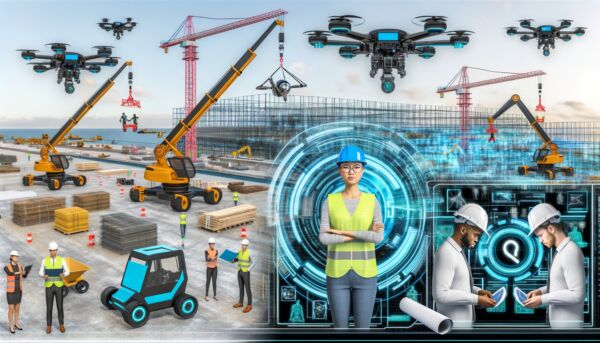
Technology is changing the way construction projects are planned, estimated, and managed. From digital blueprints and project management platforms to automated measurement tools, modern technology helps construction professionals make decisions faster and with greater accuracy. Artificial intelligence is becoming another important part of this transformation, supporting tasks that once required significant manual effort.
One practical area where digital technology can make a difference is material estimation. Mortar is essential for many masonry projects, yet determining the right quantity can involve several measurements and calculations. Combining AI-driven workflows with online estimating tools can create a smarter approach to planning mortar requirements, reducing repetitive work and helping users make better-informed purchasing decisions.
The Importance of Accurate Construction Planning
Every construction project begins with planning. Before materials arrive at a job site, contractors need to understand project dimensions, labor requirements, costs, timelines, and material quantities.
Masonry projects are no exception. Bricks, blocks, stones, cement, sand, and mortar all need to be considered before construction begins. An inaccurate material estimate can result in shortages, additional deliveries, unnecessary expenses, or wasted materials.
Accurate planning is therefore more than simply calculating numbers. It involves collecting reliable information and using it effectively. Digital tools can make this process faster while giving construction teams more opportunities to review and adjust their estimates.
How AI Is Changing Construction Estimating
Artificial intelligence can analyze large amounts of information and identify patterns that may be difficult to process manually. In construction, AI applications can support areas such as quantity takeoffs, scheduling, risk analysis, cost forecasting, and project monitoring.
For material estimating, AI can potentially work with project drawings, historical data, and other information to identify construction requirements. Instead of treating each calculation as an isolated task, AI-powered systems can help connect different parts of the planning process.
For example, information about a wall’s dimensions could eventually be combined with masonry unit specifications, material prices, waste assumptions, and project schedules to produce a more comprehensive estimate.
The goal is not necessarily to replace construction professionals. Instead, technology can reduce repetitive tasks so professionals can spend more time reviewing results and making decisions.
Where Mortar Calculators Fit In
A mortar calculator provides a simple digital starting point for estimating the amount of mortar needed for masonry work. Users typically enter information such as wall dimensions, brick or block size, and mortar joint thickness. The calculator then processes the inputs and provides an approximate material requirement.
When used alongside AI-assisted planning, this type of calculator can become part of a broader digital workflow. AI may help organize project information or identify relevant measurements, while the calculator performs the material estimation based on those inputs.
This combination can make construction planning more efficient without requiring users to manually repeat the same mathematical formulas for every section of a project.
Turning Measurements Into Useful Information
One of the biggest challenges in construction estimating is transforming raw measurements into useful purchasing information. Knowing that a wall is a certain length and height does not immediately tell a contractor how much mortar is required.
The calculation needs to account for masonry unit dimensions, joint sizes, and other variables. Digital calculators handle these mathematical steps quickly.
AI can potentially take the process further by helping organize information from multiple project sources. For instance, an intelligent construction platform could identify wall dimensions from project documentation and then pass the relevant information into an estimating workflow.
This reduces repetitive data entry and creates a more connected planning process.
Improving Efficiency on the Job Site
Construction professionals often work under tight schedules. Spending excessive time performing routine calculations can slow down other tasks.
Digital estimating tools can provide results within seconds, allowing contractors to review material requirements while planning the next stage of a project. This can be particularly useful when dimensions change during the planning process.
Instead of recalculating everything manually, users can update the relevant measurements and generate a revised estimate. AI-supported systems may also help track these changes across related project information.
The result is a more flexible planning process that can respond to changing requirements.
Supporting Better Material Purchasing
Material purchasing is closely connected to estimating. Ordering too little mortar can interrupt construction, while ordering too much may increase costs and create unnecessary waste.
A digital estimating workflow can help contractors develop a more informed purchasing plan. Once the approximate mortar volume is calculated, users can determine the appropriate quantity of premixed products or individual ingredients based on the selected mix and supplier specifications.
AI could also support purchasing decisions by combining material estimates with current project schedules, inventory information, and historical usage data. However, actual purchasing decisions should still consider product packaging, supplier recommendations, storage conditions, and expected waste.
Reducing Human Error Without Removing Human Oversight
Automation can reduce certain types of human error, particularly repetitive arithmetic mistakes and data-entry inconsistencies. However, technology is only as reliable as the information provided to it.
Incorrect wall dimensions, wrong unit sizes, or inappropriate assumptions can produce an inaccurate estimate even when the underlying calculation is performed correctly.
This is why human oversight remains essential. Construction professionals should verify measurements, review calculator assumptions, and compare digital estimates with project specifications before ordering materials.
AI should be viewed as a supporting technology rather than an automatic replacement for practical construction knowledge.
The Role of Historical Project Data
Another advantage of AI-assisted construction planning is its ability to work with historical information. Previous projects can provide useful data about material consumption, waste rates, labor requirements, and common estimating differences.
Over time, this information can help teams understand where estimates tend to differ from actual usage. That insight can improve future planning.
For example, if a contractor consistently uses slightly more mortar than initial calculations suggest because of particular masonry techniques or site conditions, historical project data may help identify that pattern. Future estimates can then be reviewed with those practical considerations in mind.
Making Construction More Sustainable
Better material estimation can also contribute to more sustainable construction practices. Over-ordering materials may lead to unused products, while inaccurate planning can result in additional transportation and waste.
More precise digital estimating can help teams purchase closer to their actual requirements. While calculators and AI cannot eliminate construction waste entirely, they can support more efficient resource planning.
This becomes increasingly important as construction companies look for ways to reduce costs while also improving material efficiency.
Looking Ahead
The future of construction planning is likely to involve greater integration between estimating tools, AI systems, project management software, digital drawings, and procurement platforms.
Instead of using separate tools for every stage, construction teams may increasingly rely on connected workflows in which project information moves from design to estimation and purchasing with less manual intervention.
For masonry projects, this could mean faster quantity calculations, easier updates, better purchasing forecasts, and more detailed project records.
Final Thoughts
AI and digital calculators are making construction planning more efficient by reducing repetitive work and helping teams process project information more effectively. For masonry projects, online mortar estimation tools provide a practical way to calculate material requirements from basic measurements.
When combined with AI-assisted workflows, these tools can support faster estimating, better purchasing decisions, reduced waste, and more organized project planning. However, technology works best when paired with accurate measurements and professional oversight.
The smarter approach to construction is not simply about replacing traditional methods. It is about combining practical experience with digital tools to make planning more accurate, efficient, and adaptable.