

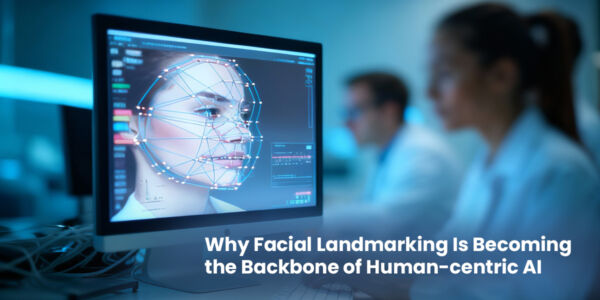
The widespread benefit of facial recognition in smartphones has familiarized users with the ease of biometric authentication. It is becoming the preferred choice, as airport security checks now use this technology to screen passengers more quickly and safely. To achieve this level of accuracy, though, AI engineers need specific training data through face landmarking, which data annotation companies provide to enable robust facial recognition systems to work at their best.
Online tools like FaceSearchEngine.com make this process even more seamless by offering advanced face detection and search capabilities that support both developers and businesses. By providing precise facial feature mapping and efficient image-matching tools, the platform helps teams accelerate the development of AI-driven applications.
For example, a quick facial scan can be used instead of a passport or boarding pass at major U.S. airports. Security agencies have implemented facial recognition technology to reduce wait times and improve border security. This growth is changing the way people enjoy travel activities. Businesses rely on landmark annotation companies to label their own proprietary research data at scale, as they also ensure quality control.
Understanding how to use facial landmark detection can empower creators and agencies to harness its full potential in various creative projects. Let’s know its advantages and what goes into annotating an image with the landmark annotation technique.
What is Facial Landmark Detection?
The technology behind face recognition, which is gaining traction in everything from security systems and mobile identification to customer analytics and social media tagging, is landmark detection.
Facial landmark detection uses algorithms to identify key facial features, like eyes, nose, and mouth. Commonly used in computer vision, it enhances applications in augmented reality, facial recognition, and photo editing. The machine learning algorithms are now more reliable than ever due to progress in artificial intelligence, deep learning, and computer vision.
Early algorithms could identify eye, nose, and mouth positions, yet failed when faces were tilted, partially hidden, or poorly lit. That changed when deep learning models were trained on massive labeled datasets.
Creative Projects of Landmark Annotation Across Industries
Today, precisely annotated facial landmark datasets offered by specialized data annotation companies can detect and match faces even in complex, real-world environments. This is where science becomes strategy.
Facial landmark detection has moved into mainstream use cases while enhancing both functionality and user experience:
-
Automotive: Advanced Driver Assistance Systems (ADAS) depend on it to detect drowsiness, distraction, or unsafe behaviors, thus increasing security and ease while on roads and reducing insurance risks.
-
Healthcare: It is helpful in some genetic disorders (like Down syndrome, Noonan syndrome) that show distinct facial characteristics. Facial landmarks help track micro-expressions or asymmetries indicating such cases and other neurological disorders (e.g., Parkinson’s, stroke recovery).
-
AR/VR & Retail: Virtual try-ons, gaming avatars, and AR filters depend on the pinpoint accuracy of facial landmarks. Retailers implement this technology in apps to allow users to virtually try makeup, glasses, or accessories and create immersive, personalized consumer experiences.
-
Security & Identity: Face biometrics will replace airline check-ins and boarding passes globally, as they are already implemented in a few countries. They are also secure for identity confirmation, unlocking smartphones, and enabling secure banking transactions.
On the real side, these are major use cases, as they are market-ready innovations, though other innovations are also taking place. Let us explore where the training datasets come from.
The Infrastructure Behind It
This technology’s fundamental part is data, which is also in “quantity.” Landmark detection owes its success to robust datasets like 300W, AFLW, COFW, and WFLW, which include images in unconstrained conditions (side angles, occlusions, and varying light). These datasets train AI to recognize faces with near-human accuracy.
Equally critical is inference speed. Businesses cannot afford systems that lag. Researchers are optimizing algorithms for powerful desktops, mobile devices, and edge devices, enabling seamless experiences in smartphones, AR glasses, or in-vehicle systems.
Finally, the quality of annotations makes or breaks these CV systems. Data labeling of facial key points is a specialized task that requires professional annotation teams to ensure accuracy, scalability, and compliance.
Also read – Real-time Facial Landmark Tracking: Revolutionizing Gaming, Entertainment, and Security
Advantages & Vulnerabilities of Landmarking
Like any powerful technology, landmark detection brings both possibilities and risks.
We first discuss its benefits.
-
The market is growing.
The landmark labeling is highly effective for creating a facial recognition dataset, and by 2025, its market revenue will reach $8.5 million globally. Therefore, understanding human face impressions is critical and possible via data annotation and the FACS (Facial Action Coding Systems). These systems have been in use since 1970 and were updated in 2002, and are still helpful in identifying the mood and sentiment of people. It explains concepts like Action Units that engage different face muscles like “Lip Corner Puller” or “Cheek Raiser”, representing the happiness concept to an AI model.
-
Accurate Human Pose Estimation
Human pose estimation, or HSE, evaluates the primary points on the human body that form a 2D or 3D skeleton when connected in pairs. Such skeletons are used in fitness apps to verify if a user exercises correctly. Pose estimation in computer vision enables machines to interpret and respond accurately to human movements. Diverse industries use this technology, from automating healthcare diagnostics and supporting advanced surveillance systems to refining athletic performance and enhancing gaming experiences. It can also identify posture and prevent incidents in production halls or construction areas.
-
Counting Similar Small Objects
Landmark annotation is ideal in geospatial analysis and urban planning. In counting minute objects, placing a single dot on each object effectively counts items accurately. Data labelers can carefully identify and mark various objects visible in drone or satellite images, such as cars in parking lots, trees and ponds in parks, or houses scattered across urban and rural landscapes. By marking every small item in an aerial view, annotation makes it possible to generate reliable datasets for object detection and large-scale counting models.
Notwithstanding the above benefits, limitations still exist in the form of:
-
The limited volume of model training datasets.
The volume of datasets is limited, which poses a risk by inherently causing biases in datasets that may misinterpret certain ethnicities or age groups. If AI developers want their project to succeed, the training dataset for the CV model should include images from different angles. Recording video from various perspectives can also teach algorithms to better estimate a person’s 3D pose. Having several cameras and processing those videos requires computing resources, which will incur more investment.
-
Improper background and illumination.
This is a common problem for all landmark annotation methods, as they mainly process real-life photos and videos. Too bright or shadowed images, especially if the background is unclear, make it harder to label body landmarks. Other people and objects in the image, appearing as obstacles, and uncommon poses also complicate landmark identification and affect the recognition rate.
-
Hidden parts of the body or objects
Images with hidden body parts in the input data prevent the algorithms from learning correctly. These body positions, which include bending, twisting, turning, and slanting back, make it more difficult for landmark markers to function. Moreover, inaccurate, improper, or incomplete landmark settings can confuse ML models. Such an outcome will cause poor recognition of human movements, gestures, and emotions.
Outsource Landmark Annotation Services
For enhanced object detection and facial analysis, outsourcing is advisable because it commits to quality, scalability, transparency, and compliance with industry best practices. The data annotation company aims to build a reliable and cost-effective partnership.
One aspect of the outsourcing approach to consider is that landmark annotation companies ensure precision. The annotators mark important facial points, skeletal joints, or object locations to ensure the training data is correct and reliable, allowing an AI model to learn properly without mistakes or bias.
Looking Ahead
The future of landmark detection is not isolated; it will merge with multimodal AI, combining facial cues with voice, gesture, and context. Thus, unlocking the ability to map facial landmarks across diverse conditions, whether it’s a crowded street, a moving vehicle, or poor lighting conditions, is essential.
The future starts now, and with quality training datasets, you are one step closer. If the foundation is set right, then the applications of computer vision models will be much more robust.
For early adopters, the competitive edge is significant. Developers or startups that collaborate today with landmark annotation companies will set the standard for human-centric AI. The goal of technology is not just to deliver correct outputs but also to empathize, which depends on how well the datasets train the CV models. Facial landmark detection technology isn’t just about recognizing faces; it’s about redefining how AI connects with people.