
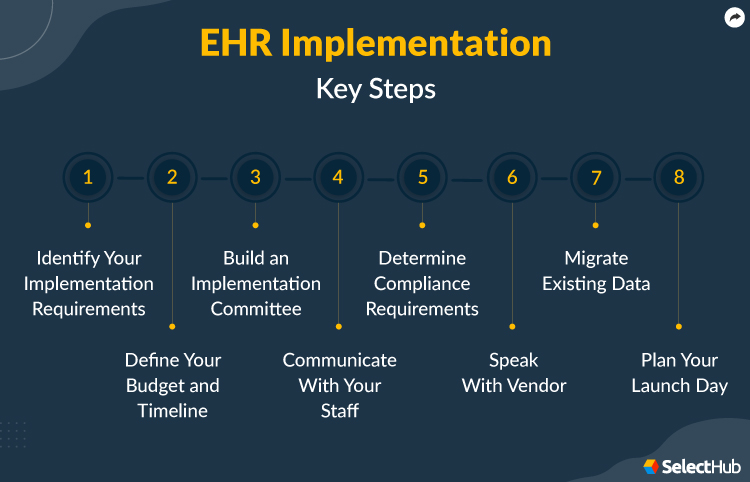
Healthcare providers are generating more data than ever—clinical records, diagnostics, treatment outcomes, billing, and patient-reported data. Yet for many organizations, that data remains siloed and underused. The reason? Poorly implemented EMR/EHR systems that aren’t built with data analytics in mind.
In today’s healthcare landscape, simply “going digital” is no longer enough. EMR/EHR systems must be designed to enable real-time, actionable insights across care delivery, operations, and population health. And that starts with how you implement them.
Where EMR/EHR Implementations Often Fall Short
Many healthcare organizations treat EMR/EHR projects as purely technical deployments—install the software, train the staff, and move on. But without a data strategy at the core, several issues can arise:
-
Inconsistent data structures that make reporting difficult
-
Lack of integration with labs, pharmacies, or third-party tools
-
Limited visibility into patient trends or organizational performance
-
Manual workarounds that reduce trust in the system
These limitations not only affect clinical efficiency—they also stifle innovation in analytics, AI adoption, and value-based care.
What a Data-First EMR/EHR Strategy Looks Like
Whether you’re planning a new implementation or optimizing an existing one, focusing on data from the beginning is essential. A data-first EMR/EHR strategy includes:
-
Structured Data Modeling: Consistent use of clinical terminologies (SNOMED, LOINC, ICD-10) to allow for accurate analytics and interoperability.
-
Interoperability Frameworks: Use of FHIR, HL7, and APIs to exchange data securely across systems.
-
Data Governance Policies: Defining roles, access, audit trails, and processes for managing data quality.
-
Real-Time Analytics Infrastructure: Integration with BI tools or data lakes for predictive insights and dashboard reporting.
-
Compliance & Privacy by Design: Ensuring HIPAA, GDPR, and local regulations are built into the system from the outset.
Why Involving Analytics Experts Early Matters
Including data analysts, informaticists, and EMR/EHR consultants in the planning phase helps ensure:
-
Better alignment between data capture and analytical needs
-
Early identification of reporting gaps and integration challenges
-
Scalability for advanced capabilities like AI diagnostics or population health modeling
-
Long-term cost savings through reduced rework and tech debt
Organizations that treat EMR/EHR as a strategic data platform—not just a digital filing cabinet—are far better positioned to compete and adapt in the rapidly evolving healthcare ecosystem.
Key Takeaway
An EMR/EHR system is only as valuable as the insights it can deliver. To unlock its full potential, implementation must be driven by data strategy—not just software installation. Whether through internal expertise or external consultation, organizations must start viewing EMR/EHR projects as foundational infrastructure for healthcare analytics.