


As digital systems expand and cyber threats grow more sophisticated, organizations are looking for experts who can secure decentralized environments. This is why blockchain cybersecurity certification has become one of the fastest-growing specialties in IT. Blockchain was once limited to cryptocurrency, but today, industries including finance, healthcare, logistics, and government rely on it for secure data storage and transactions. With this demand rising, professionals who understand both blockchain technology and cybersecurity principles are in high demand.
Certification helps build credibility and ensures that candidates understand how blockchain strengthens data security and how to protect distributed networks from emerging threats.
Understanding How Blockchain Enhances Cybersecurity
Blockchain technology is designed to create tamper-resistant systems built on decentralization, cryptography, and consensus mechanisms. Each transaction is permanently recorded, validated by multiple nodes, and secured using advanced encryption. This design makes blockchain an attractive solution for organizations looking to prevent data manipulation or unauthorized access.
A blockchain cybersecurity certification teaches professionals how these systems function, how attacks occur, and how to safeguard them using best practices and defensive strategies.
Key Concepts Covered in Blockchain Cybersecurity Certifications
Certification programs dive deep into both security and blockchain fundamentals. Candidates learn how decentralized networks function, how smart contracts execute processes, and how vulnerabilities can be exploited. These programs also explain attack techniques, such as:
-
Sybil attacks
-
Routing attacks
-
Smart contract vulnerabilities
-
Consensus manipulation
-
Wallet and key compromise
Knowledge of these concepts helps cybersecurity professionals detect threats before they escalate.
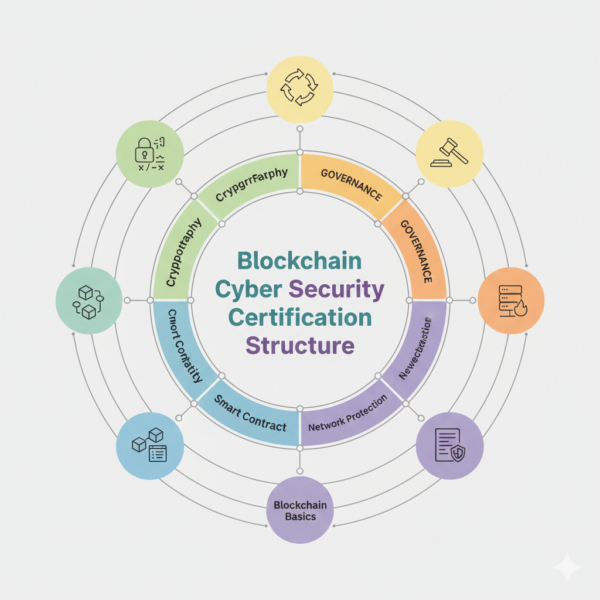
Here’s a quick overview of typical domains:
| Domain | Focus Area |
|---|---|
| Blockchain Fundamentals | Architecture, consensus, cryptography |
| Security Models | Threat analysis, risk management |
| Smart Contracts | Development and vulnerability testing |
| Network Security | Node protection and attack vectors |
| Governance | Compliance, auditing, and standards |
These domains reflect real-world requirements and prepare candidates for advanced security responsibilities.
Why Organizations Need Blockchain Security Specialists?
As more companies adopt blockchain-based applications, the demand for professionals who can secure these systems grows. From fintech and healthcare to energy and supply chain businesses, organizations rely on secure distributed ledgers to track sensitive data. Blockchain is secure by design, but it is not immune to attacks. Smart contract bugs, misconfigured nodes, poor key management, and social engineering continue to impact many platforms.
A certified blockchain security specialist understands how to analyze risks, design secure architectures, and respond to threats in decentralized environments.
How Blockchain Security Connects With Traditional Cybersecurity?
Many people assume blockchain eliminates the need for traditional security methods, but it actually expands them. Cybersecurity professionals must still apply principles such as identity management, encryption, governance, and secure coding, only adapted to decentralized frameworks.
Blockchain cybersecurity certification helps bridge this knowledge gap by showing professionals how blockchain aligns with established security frameworks and where it differs.
Smart Contract Security and Why It Matters
Smart contracts are one of the most powerful features of blockchain, but they also create significant security challenges. Because smart contracts automate financial and business logic, a single vulnerability can cause massive financial loss. Several high-profile breaches have come from poorly written contracts.
Certification programs teach candidates how to analyze, debug, and secure smart contracts using formal verification, auditing tools, and secure coding guidelines. These skills are essential for developers and security engineers working on decentralized applications.
Why Hands-On Experience Is Essential in Blockchain Security?
Blockchain cybersecurity is deeply practical. Certification programs often include hands-on labs that simulate attacks and defense strategies. Learners work on smart contract auditing, node configuration, network analysis, and vulnerability testing. This hands-on approach helps professionals develop real-world experience that employers value.
Many candidates also use preparation material from trusted platforms like Cert Empire to strengthen their understanding of scenario-based concepts and exam difficulty.
Who Should Consider Blockchain Cybersecurity Certification?
This certification is ideal for a range of professionals, including:
-
Cybersecurity analysts
-
Blockchain developers
-
Network engineers
-
IT auditors
-
Compliance officers
-
Cloud architects
Anyone interested in protecting decentralized applications or launching a career in blockchain security benefits greatly from this certification.
Why Blockchain Security Is a Future-Proof Skill?
Blockchain continues to expand into new industries. Government agencies are exploring blockchain for identity management, hospitals are adopting blockchain for patient records, and global supply chains rely on distributed ledgers for tracking shipments. As adoption grows, so does the attack surface.
Learning blockchain cybersecurity not only increases career opportunities today but also prepares professionals for emerging roles in decentralized computing, Web3 security, and digital identity.
Conclusion And Takeaways
A blockchain cybersecurity certification offers a powerful way for professionals to strengthen their expertise in one of the fastest-growing areas of technology. By understanding decentralized networks, smart contract vulnerabilities, and security frameworks, certified individuals can help organizations protect their blockchain applications from real-world threats. Combined with strong exam preparation from platforms like Cert Empire, this certification opens new opportunities for anyone building a future in advanced cybersecurity. We posted a short update on X/Twitter about this, and you can read it here.
FAQs
Q1. What is a blockchain cybersecurity certification?
It validates knowledge in securing decentralized systems, smart contracts, and distributed networks. It helps professionals build skills to protect blockchain applications.
Q2. Who should pursue this certification?
Cybersecurity analysts, developers, auditors, and engineers benefit the most. Anyone working with blockchain or Web3 applications can gain value from it.
Q3. What skills do blockchain security certifications teach?
They cover cryptography, consensus mechanisms, smart contract auditing, risk analysis, and network defense strategies.
Q4. Is blockchain cybersecurity a good career path?
Yes, it offers strong growth as industries adopt blockchain. Demand is rising for specialists who can secure decentralized environments and digital assets.