
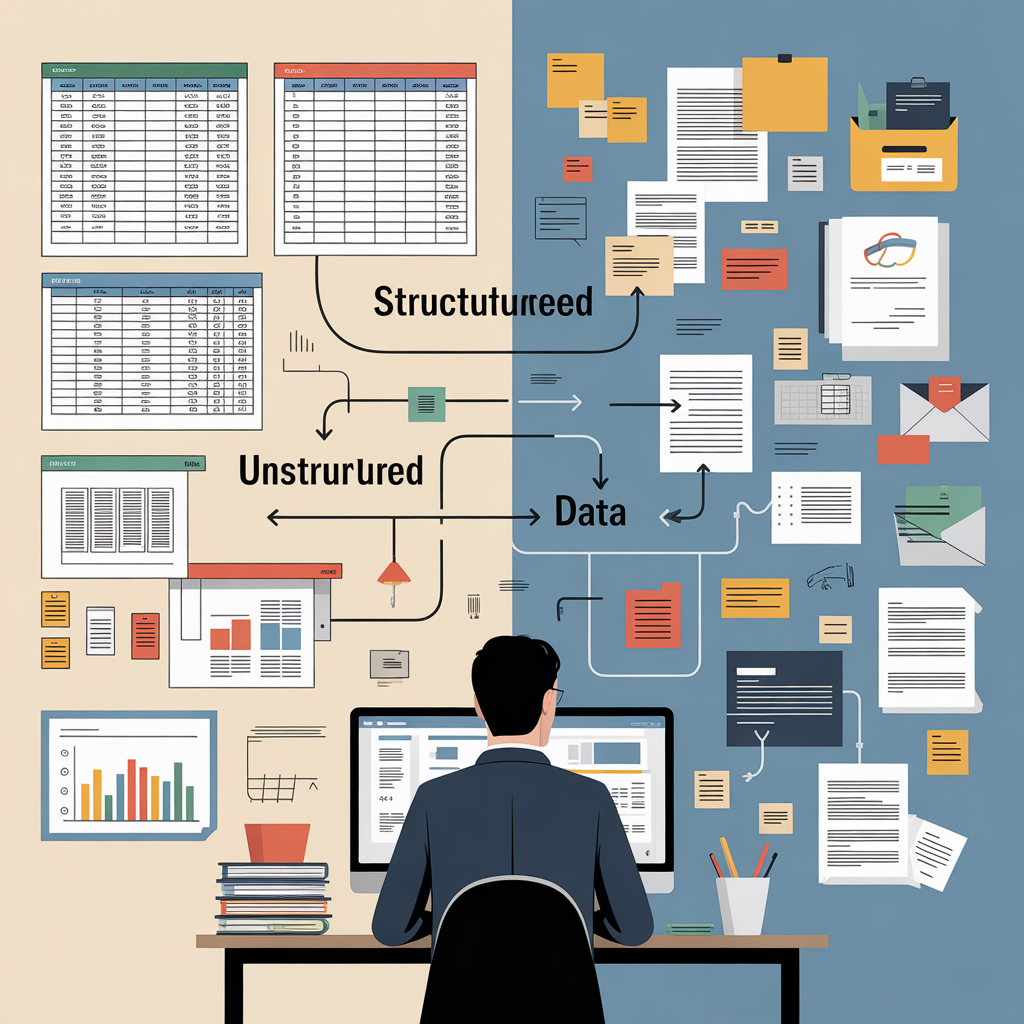
Accounting has always been about accuracy, consistency, and understanding financial patterns. Today, with so much information available, accountants deal with more than just numbers. They now handle data that comes in different forms, structured and unstructured. Structured data includes information neatly stored in spreadsheets or databases. Unstructured data, on the other hand, includes emails, receipts, or social media messages. Understanding how both types of data work together is key for modern accountants. The balance between these two data types can define how efficiently financial decisions are made and how accurately reports are generated. This article explains what structured and unstructured data mean, how they affect accounting, and how businesses can manage them better for clearer financial insights.
What Structured Data Means in Accounting
Structured data is the organized kind of data that fits into rows and columns. It’s easy to search, analyze, and store in accounting software or spreadsheets. Examples include customer invoices, payroll records, and expense categories. This type of data is the foundation of most accounting systems.
Common examples of structured data include:
-
General ledger entries
-
Bank transactions
-
Sales invoices and receipts
-
Tax records
-
Financial statements
Structured data allows accountants to pull reports quickly, compare trends, and ensure compliance with standards. Because of its uniform format, it helps reduce errors and improves audit readiness.
Key advantages of structured data:
-
Easy to store and retrieve: You can quickly find any entry using filters or queries.
-
Reliable and accurate: Since the data follows a strict format, there’s less risk of misinterpretation.
-
Ideal for automation: Accounting software uses structured data to automate tasks like reconciliations and reporting.
-
Supports compliance: Regulators prefer structured data because it can be verified easily.
-
Improves decision-making: Consistent data helps in creating accurate financial forecasts.
Structured data remains the backbone of accounting systems. However, the financial world is now moving beyond numbers in spreadsheets. That’s where unstructured data comes in.
Understanding Unstructured Data in Accounting
Unstructured data doesn’t follow a fixed format. It includes any information that can’t be neatly stored in a database column. This kind of data is growing rapidly, especially with the use of digital communication tools.
Examples of unstructured data in accounting:
-
Emails discussing budget changes
-
PDF receipts and invoices
-
Handwritten notes or scanned statements
-
Social media feedback on company performance
-
Audio recordings from client meetings
While this data seems messy, it can hold valuable insights. For example, analyzing email discussions can reveal how financial decisions are made. Scanned invoices can provide spending patterns not visible in structured databases.
Main challenges with unstructured data:
-
Hard to search and categorize: It doesn’t fit neatly into accounting systems.
-
Time-consuming to process: Extracting useful details requires advanced tools.
-
Risk of inconsistency: Manual handling may lead to errors.
-
Lack of standardization: Different formats make data integration difficult.
-
Storage concerns: Files like PDFs and videos take up more space than databases.
Despite these issues, ignoring unstructured data means missing out on important context. The accounting field is learning to manage both structured and unstructured data to get a fuller picture of financial health.
How Structured and Unstructured Data Work Together
Both types of data serve different purposes but complement each other. Structured data gives accountants the numbers, while unstructured data adds the story behind them. When combined, they create a more complete understanding of a company’s finances.
For example:
-
Structured data might show a drop in sales.
-
Unstructured data like customer emails might explain that a product had quality issues.
Ways they work together:
-
Data validation: Structured records can be cross-checked with unstructured files for accuracy.
-
Contextual insights: Notes or communications help explain numbers in reports.
-
Audit support: Having both data types makes audit trails stronger.
-
Better forecasting: Non-financial data like customer feedback can predict sales changes.
-
Enhanced decision-making: Managers see not just what happened but why.
When both data forms are properly managed, accounting becomes less about recordkeeping and more about understanding trends, behaviors, and future risks.
Tools That Help Manage Structured and Unstructured Data
Modern accounting systems are adapting to handle mixed data environments. These tools make it easier to extract insights from both structured and unstructured sources.
Popular tools and techniques include:
-
Optical Character Recognition (OCR): Converts scanned receipts and invoices into searchable text.
-
Data integration platforms: Combine inputs from spreadsheets, emails, and cloud storage.
-
Machine learning models: Help detect spending patterns in unstructured data.
-
AI-based analytics: Find relationships between structured financial data and external factors.
-
Cloud accounting platforms: Allow easy access to both structured and unstructured information in one place.
With these tools, accountants can automate repetitive tasks, reduce errors, and focus on analysis instead of data entry.
Benefits of Integrating Structured and Unstructured Data
Bringing both data types together offers many benefits to businesses and accountants alike. It bridges the gap between numerical accuracy and qualitative insight.
Top benefits include:
-
Improved accuracy: Cross-referencing structured numbers with unstructured documents catches more errors.
-
Faster reporting: Automation tools reduce time spent on manual checks.
-
Deeper understanding: Managers can connect financial data with market feedback.
-
Better compliance: Keeping records of both types supports transparency.
-
Stronger internal controls: Mixed data helps identify fraud and irregularities early.
Integrating these datasets creates a unified financial view that’s not only data-rich but contextually aware.
The Impact of Unstructured Data on Decision-Making
Accounting decisions used to rely mostly on structured data like ledgers and financial statements. Today, unstructured data gives decision-makers a clearer view of what influences those numbers.
Examples of decision areas affected by unstructured data:
-
Budget planning: Emails and reports reveal spending justifications.
-
Risk management: News articles and social media show public perception of investments.
-
Client relations: Feedback and complaints highlight areas that need financial attention.
-
Audit tracking: Scanned correspondence can verify compliance history.
-
Cash flow analysis: Transaction notes and receipts help refine forecasts.
Decision-making becomes more informed when accountants include both data types in their analysis. It helps companies anticipate challenges instead of reacting to them.
Managing Data Quality Across Both Types
Good data quality is essential for accurate accounting. Whether structured or unstructured, data must be clean, complete, and consistent. Poor data can lead to wrong conclusions and financial losses.
Best practices for maintaining data quality:
-
Standardize inputs: Use templates and uniform data formats.
-
Automate data capture: Reduce manual entry wherever possible.
-
Regularly clean datasets: Remove duplicates and outdated information.
-
Verify unstructured data sources: Check authenticity of files and communications.
-
Use data governance policies: Ensure compliance with privacy and security standards.
Accountants who focus on data quality ensure reliable reporting, easier audits, and better financial control.
Security Concerns Around Structured and Unstructured Data
Data security is a growing concern in accounting. Structured data stored in databases is usually well protected with encryption and access controls. But unstructured data is often overlooked, making it more vulnerable.
Security challenges with unstructured data:
-
It’s spread across emails, documents, and chat messages.
-
Access permissions are harder to track.
-
Files may be stored on personal devices or unsecured networks.
Ways to improve security:
-
Encrypt files before sharing.
-
Limit access based on roles.
-
Use secure cloud services for data storage.
-
Implement regular audits of data usage.
-
Train employees on data privacy rules.
Protecting both types of data ensures not just compliance but also trust between clients and accounting professionals.
Structured vs. Unstructured Data: Which Matters More?
The short answer is both. Structured data remains essential for accounting accuracy, while unstructured data adds valuable context. Businesses that rely only on structured data might miss out on the full story.
Key differences:
| Feature | Structured Data | Unstructured Data |
|---|---|---|
| Format | Organized | Unorganized |
| Storage | Databases | Files, emails, documents |
| Ease of analysis | Easy | Complex |
| Accuracy | High | Variable |
| Insight depth | Limited | Broad |
Structured data gives precision. Unstructured data gives perspective. Together, they help accountants make better judgments about performance and planning.
Real-World Uses of Mixed Data in Accounting
Many accounting firms now use both structured and unstructured data to improve client service. For instance, combining transaction records with client communications can reveal spending behavior.
Examples include:
-
Using OCR to convert paper invoices into digital data.
-
Analyzing emails to identify recurring client issues.
-
Extracting key data from PDFs for faster audits.
-
Tracking customer sentiment for revenue predictions.
-
Linking unstructured comments with structured expense reports for insight.
Firms offering bookkeeping services Miami are already adopting these practices to make reporting faster and more accurate. Integrating both data types helps them provide deeper insights to clients and maintain a competitive edge.
The Future of Data Use in Accounting
The future of accounting lies in blending structured precision with unstructured flexibility. As artificial intelligence and automation improve, unstructured data will become easier to analyze. Accountants will spend less time collecting information and more time interpreting it.
Future trends include:
-
AI-assisted data classification: Automatically organizing unstructured data.
-
Voice-to-text financial records: Capturing meeting notes directly into accounting systems.
-
Predictive analytics: Using data patterns to forecast market changes.
-
Real-time dashboards: Displaying insights from both data types at once.
-
Integrated cloud storage: Centralizing structured and unstructured records securely.
These innovations will make accounting more strategic. Accountants will shift from number management to information management, creating real value for businesses.
Final Thoughts
Structured and unstructured data each play vital roles in accounting. Structured data gives clarity and order, while unstructured data offers depth and context. When accountants use both together, they gain a complete financial picture, one that numbers alone can’t provide. Managing both properly leads to better reporting, compliance, and decision-making. The modern accountant’s job isn’t just to track numbers anymore; it’s to understand information in every form it takes.
Greenlight Financial has been an established accounting firm in Miami with over 20 years in business and the highest knowledge in business accounting.