
In the fast-growing world of artificial intelligence, terms like chatbots and AI agents are often used interchangeably. Both are digital tools that interact with users, automate tasks, and enhance business processes. But while they share similarities, they are fundamentally different in scope, intelligence, and capabilities.
As organizations move deeper into digital transformation, it’s important to understand the difference between chatbot development and AI agent development, so you can choose the right solution for your business.
What is a Chatbot?
A chatbot is a software program designed to simulate human conversation. Traditionally, chatbots follow predefined rules and scripts, answering user queries in a limited way. They’re often used for customer support, FAQs, and lead generation.
For example, when you ask a banking chatbot about your account balance, it retrieves information from the database and provides a direct response. While modern chatbots have become more advanced with natural language processing (NLP), they still focus mainly on reactive interactions.
Key traits of chatbots:
-
Task-specific, with limited scope.
-
Mostly rule-based or NLP-driven.
-
Reactive: respond to questions but don’t act independently.
-
Commonly used in customer service, websites, and messaging platforms.
What is an AI Agent?
An AI agent goes far beyond simple chat functionality. It is a goal-driven, autonomous system capable of reasoning, planning, learning, and taking actions. Unlike chatbots, AI agents can perceive their environment, make decisions, and adapt over time.
For instance, an AI agent for logistics doesn’t just answer shipment queries — it can track deliveries, optimize routes, renegotiate supplier contracts, and even predict delays before they occur. In essence, AI agents behave like digital co-workers who can handle complex workflows.
Key traits of AI agents:
-
Goal-oriented and autonomous.
-
Can analyze data, make decisions, and act without constant human input.
-
Learn and improve with experience.
-
Used in industries like healthcare, finance, real estate, logistics, and enterprise automation.
Chatbot vs. AI Agent: The Key Differences
Let’s break down the differences in a simple way:
-
Scope of Work
-
Chatbots handle narrow, predefined tasks.
-
AI agents can perform complex, multi-step workflows.
-
-
Intelligence
-
Chatbots operate on rules or limited NLP.
-
AI agents use advanced machine learning, LLMs, and reasoning abilities.
-
-
Autonomy
-
Chatbots always need user prompts to act.
-
AI agents can take independent action, set sub-goals, and work without supervision.
-
-
Adaptability
-
Chatbots don’t learn beyond what’s programmed.
-
AI agents learn, adapt, and improve performance over time.
-
-
Use Cases
-
Chatbots: FAQs, booking tickets, answering product questions.
-
AI agents: financial trading, supply chain optimization, research assistance, enterprise workflow automation.
-
Why AI Agents Are the Next Step Beyond Chatbots
While chatbots have served businesses well, the demand for autonomy, personalization, and complex decision-making is pushing enterprises toward AI agents.
For example:
-
A customer support chatbot can answer questions about a product return.
-
An AI agent, on the other hand, can initiate the return process, generate shipping labels, notify the warehouse, and update the customer — all without human intervention.
This shift from simple responses to end-to-end execution is what makes AI agents revolutionary.
Business Perspective: Which One Should You Choose?
The right choice depends on your needs:
-
If your business requires simple, repetitive tasks like answering FAQs, a chatbot is cost-effective and sufficient.
-
If you need intelligent automation, workflow management, and personalized user experiences, investing in AI agent development will deliver long-term value.
Many companies are even combining both — using chatbots for surface-level interactions and AI agents for backend execution and decision-making.
The Future: From Chatbots to Agentic AI
The rise of Agentic AI — where systems demonstrate reasoning, planning, and autonomous collaboration — is making AI agents the natural evolution of chatbots. In 2025 and beyond, businesses won’t just use chatbots for conversations; they’ll deploy AI agents as digital teammates, handling everything from customer engagement to business operations.
Conclusion
While both chatbots and AI agents fall under the AI umbrella, their capabilities, intelligence, and impact differ significantly. Chatbots are great for surface-level engagement, but AI agents represent a fundamental shift toward autonomy, adaptability, and enterprise-scale problem solving.
For businesses aiming to stay ahead in the competitive digital economy, AI agent development is the future — transforming how organizations work, communicate, and scale.
✅ SEO Keyword: AI agent development vs chatbot development
✅ Word Count: ~1300
Shall I move forward with Blog 4: “The Role of Multi-Agent Systems in Modern AI Agent Development” next?
You said:
ChatGPT said:
Perfect 👍 Let’s dive into Blog 4 of the AI Agent Development series.
The Role of Multi-Agent Systems in Modern AI Agent Development
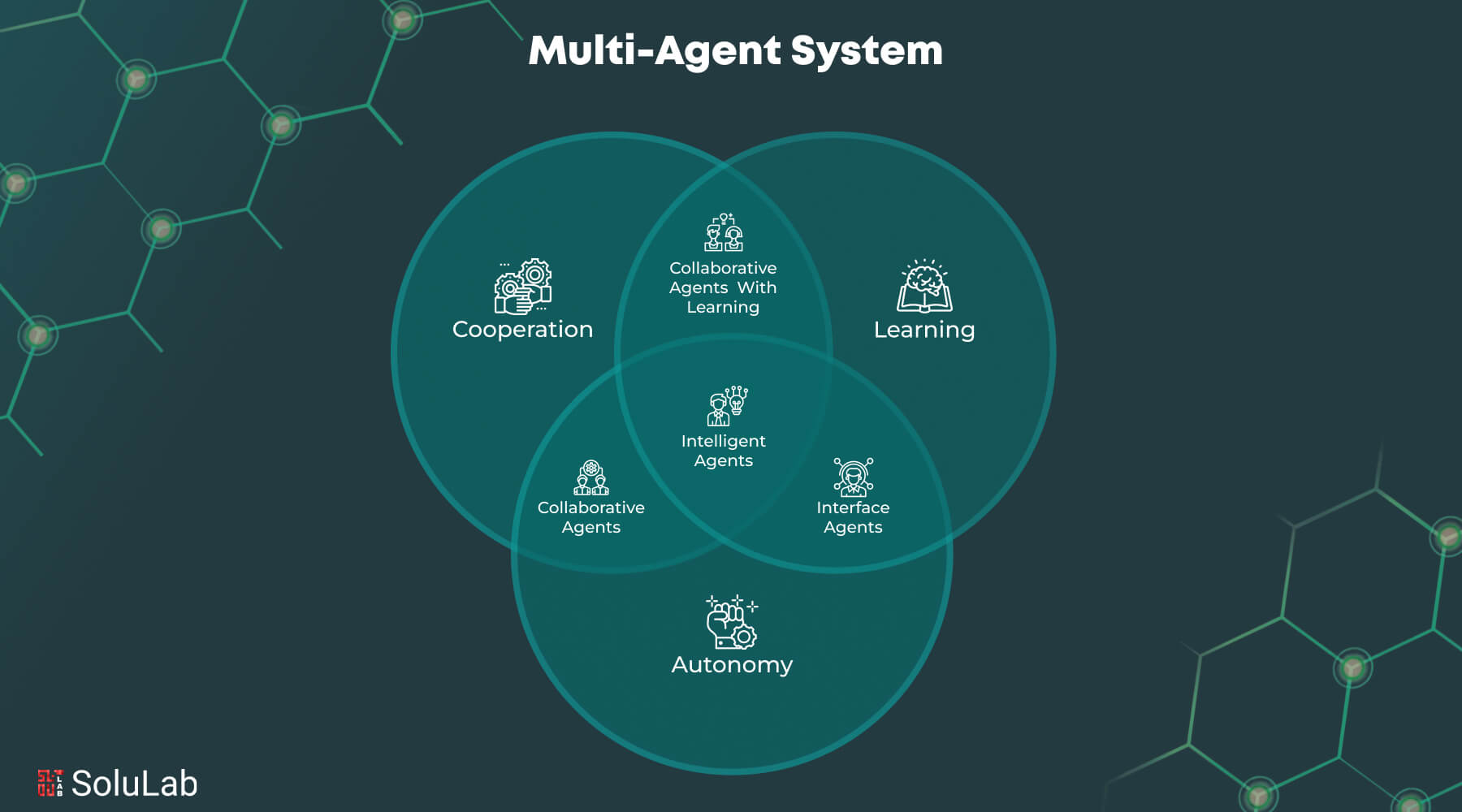
Artificial Intelligence has evolved far beyond single-task automation. Today, enterprises are adopting multi-agent systems (MAS) — frameworks where multiple AI agents interact, collaborate, and compete to achieve complex goals. Unlike traditional single-agent systems, multi-agent systems mimic real-world ecosystems by bringing together multiple specialized agents that work independently yet coordinate to solve problems.
In modern AI agent development, multi-agent systems are becoming a cornerstone of scalability, autonomy, and adaptability. From managing smart cities to powering financial trading platforms, MAS are redefining how organizations approach automation.
What is a Multi-Agent System (MAS)?
A multi-agent system is a network of autonomous AI agents that interact within a shared environment. Each agent has its own goals, knowledge, and decision-making capabilities. Together, they can collaborate, compete, or negotiate to achieve results that would be impossible for a single agent.
For example, in supply chain management:
-
One agent monitors inventory.
-
Another agent optimizes logistics routes.
-
A third agent handles supplier negotiations.
-
Together, they ensure seamless supply chain operations.
This distributed intelligence makes MAS particularly powerful in complex, dynamic environments.
Why Multi-Agent Systems Matter in 2025
With businesses moving toward autonomous enterprises, single-agent systems often hit scalability and flexibility limits. Multi-agent systems overcome these limitations by distributing intelligence across specialized agents.
Some reasons why MAS are crucial in 2025:
-
Scalability: More agents can be added as the system grows.
-
Resilience: If one agent fails, others continue functioning.
-
Flexibility: Agents can adapt to changing environments in real-time.
-
Collaboration: Agents can work together, simulating human teams.
Key Roles of Multi-Agent Systems in AI Agent Development
1. Collaboration and Coordination
In MAS, agents often share tasks and coordinate their actions. For example, in healthcare, one agent may analyze medical records while another interprets imaging scans. Together, they provide doctors with more accurate diagnoses.
2. Distributed Problem Solving
No single agent needs to handle the entire problem. Each agent contributes its own expertise, making the system more efficient. This mirrors how organizations function — different departments specialize in unique areas but work toward common goals.
3. Negotiation and Competition
Agents can be programmed to compete or negotiate. For instance, in financial markets, trading agents might compete for the best deals while negotiating optimal trades for clients. This dynamic interaction drives efficiency and innovation.
4. Learning and Adaptation
Multi-agent systems can learn from each other’s successes and failures. Through reinforcement learning, agents continuously adapt their strategies to improve performance. This leads to better long-term outcomes for enterprises.
5. Parallel Processing of Tasks
With multiple agents working at once, tasks can be processed in parallel. In logistics, while one agent tracks shipments, another simultaneously updates customs compliance, reducing delays and costs.
Real-World Applications of Multi-Agent Systems
-
Smart Cities
MAS power traffic management, energy optimization, and public safety. Traffic agents, for example, can coordinate to reduce congestion across entire urban areas. -
Finance and Trading
Multi-agent trading platforms analyze markets, predict trends, and execute trades at lightning speed, outperforming traditional systems. -
Healthcare
MAS assist in drug discovery, patient care coordination, and hospital resource allocation by dividing tasks among specialized agents. -
E-commerce
Recommendation agents, inventory agents, and pricing agents collaborate to deliver personalized shopping experiences and efficient operations. -
Robotics and Manufacturing
Swarms of robots powered by MAS can work together in factories, warehouses, and even in agriculture to maximize productivity.
Benefits of Using Multi-Agent Systems
-
Efficiency: Tasks are distributed, reducing bottlenecks.
-
Scalability: Easily expanded by adding new agents.
-
Autonomy: Agents act independently while aligning with global goals.
-
Resilience: Failure of one agent does not collapse the system.
-
Innovation: Encourages dynamic problem-solving and adaptability.
Challenges in Multi-Agent Development
While powerful, MAS also come with challenges:
-
Coordination Complexity: Ensuring smooth interaction among agents.
-
Conflict Resolution: Handling competition when agents pursue conflicting goals.
-
Security Risks: Protecting systems from malicious agents or data leaks.
-
Performance Monitoring: Tracking how individual agents impact system-wide outcomes.
Overcoming these requires careful system design, robust communication protocols, and ethical frameworks for AI agent behavior.
The Future of Multi-Agent Systems in AI Development
With advances in large language models (LLMs), LangChain, and reinforcement learning, MAS are entering a new era. Future AI systems will resemble digital ecosystems, where agents collaborate across enterprises, industries, and even nations.
Imagine a global real estate MAS:
-
Buyer agents search for properties.
-
Seller agents negotiate prices.
-
Legal agents draft contracts.
-
Financial agents secure mortgages.
All happening autonomously, with minimal human input. This is the vision of the Agentic AI era.
Conclusion
Multi-agent systems are not just a trend; they are the  . By combining distributed intelligence, collaboration, and autonomy, MAS allow businesses to solve complex problems at scale. From healthcare to finance, logistics to real estate, MAS are shaping the next generation of digital transformation.
As enterprises continue to push for autonomous, resilient, and intelligent workflows, multi-agent systems will stand at the center of innovation — redefining what AI can achieve in 2025 and beyond.