
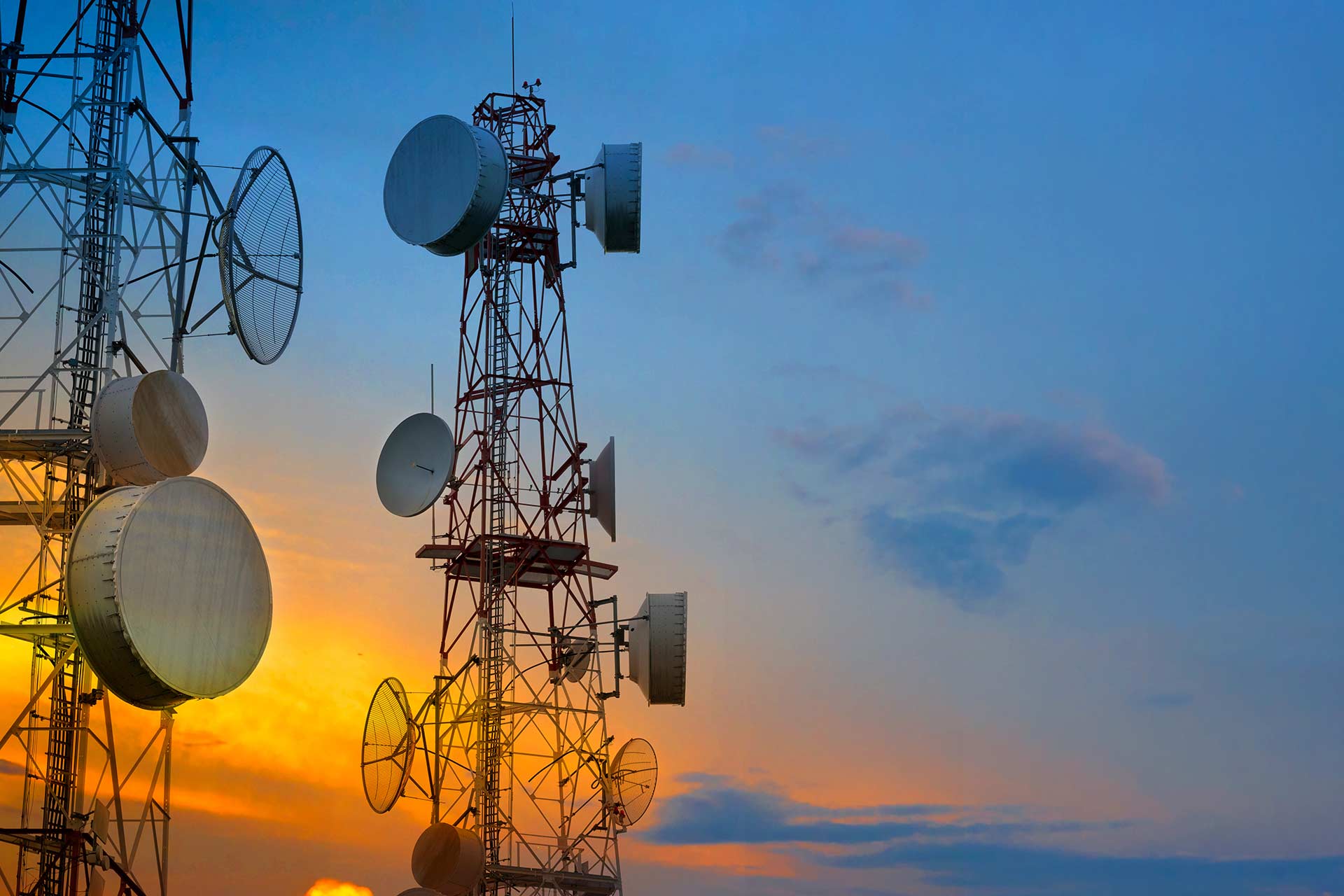
Telecommunications is at the crossroads of three key elements – connectivity, data, and digital transformation. The increase in the number of smartphones, OTT platforms, 5G networks and IoT devices have resulted in telecommunications service providers managing and capturing much more data than ever before. On average, there’s an estimated billions of call detail records created daily at just one telecommunications service provider, along with their respective networks, customer profiles, billing records, and application usage.
Data analytics in telecommunications enable telecommunications providers to leverage telecommunications big data for economic benefits through analytics platforms. Industry research indicates that the volume of data generated by telecommunications providers is projected to increase by an estimated 30-40% annually, significantly outpacing the capabilities of traditional data technology infrastructures. To meet this growing demand for telecommunications big data analytics solutions, telecommunications providers are working with specialized telecommunications software developers to create telecommunications analytics solutions that are capable of real-time processing, predictive intelligence, and automating decision-making processes.
Types of Telecommunications Data and the Value of Telecommunications Data Analysis
Telecommunications analytics is unique because of the number of different types of data and how quickly they can be generated. Examples of the different types of telecommunications data include:
-
Data from telecommunications networks (traffic volumes, latencies, dropped calls and signal strengths)
-
Data collected from subscribers (usage patterns, location, device information)
-
Billing and charging data (billing transactions, payment history, tariff plan usage)
-
Data collected through customer interactions (call centre logs, chatbot conversations, complaint records)
-
IoT and Machine Generated Data (Sensors, Smart Devices, Connected Cars)
Research suggests that over 80% of the data collected by telecommunications companies is either semi or completely unstructured, highlighting the need for telecommunications big data analytic solutions. Data sets can be processed through advanced analytical tools in milliseconds and have the ability to provide insight into what was once unattainable with traditional systems.
AI-Driven Network Optimization and Automation
Telecom companies are beginning to see a significant impact due to the use of Telcom Big Data Analytics Services, as these tools will allow for Self-Optimizing Networks (SON). AI-assisted network analytics will continue to automate the monitoring and analysis, while making automatic adjustments to optimize performance.
A few statistics related to these trends include:
-
AI-Based Optimized Network Performance reduces congestion-related complaints by users by an estimated 35%.
-
Automated Fault Detection reduces the Mean Time to Repair (MTTR) by 30%–45%.
-
Telecom Industry Energy Analytics reduce energy consumption by 15%–20%, therefore providing significant savings for telecom companies.
A telecom software development company generally provides network management systems with real time decision making capabilities, through the integration of the analytics tool.
Predictive Analytics for Capacity Planning and Demand Forecasting
As the telecom industry is subject to extreme fluctuations in traffic due to events, seasonal utilization, and/or service launches, the use of Big Data Analytics for Predictive Capacity Planning is an invaluable tool to predict and balance infrastructure costs.
-
Predictive Traffic Forecasting Models created using predictive analytics have achieved greater than 90% accuracy in traffic forecasting.
-
Proactive Capacity Planning reduces infrastructure over investment by approximately 20%–25%.
-
Companies using predictive analytics to plan capacity report 30% fewer service outages.
These capabilities allow telecom companies to balance their service performance with infrastructure costs, particularly in high-density markets.
Big Data Analytics and Telecom Customer Lifetime Value
The analytic capability of the telecom industry is no longer limited to churn prediction, but rather the advanced usage of Big Data Analytics to holistically optimize customer lifetime value (CLV) for the telecom industry.
-
Using personalized offers increases customer engagement by 25–40%.
-
Using AI powered recommendation systems for data plan upgrades increases upgrades by 15–20%.
-
Analytic insights focused on customer lifetime value improve long-term customer retention rates by 10–18%.
A telecom software developer designs a customer analytics platform to centralize CRM, billing and behavioral data to create engagement between service providers and customers at the optimal times and with the best price.
Real-Time Analytics for Digital and OTT Services
Telecom operators use real-time analytic capabilities for digital and OTT services such as video streaming, cloud call centers and Internet of Things.
-
Latency sensitive applications must provide analytics in less than 100 milliseconds.
-
Real-time service monitoring reduces customer complaints by 28%.
-
Analytics-derived quality of experience models improve data streaming performance scores by up to 20%.
Telecom analytics solutions allow telecom operators to compete with digital native companies and provide a high degree of quality service.
Data Monetization, Security, and Compliance
Telecom operators have the ability to monetize their data using analytic capabilities.
-
Data monetization adds 5–10% additional revenue to existing revenue streams.
-
Location intelligence supports advertising, retail placement, and smart city initiatives.
-
Data aggregation and anonymization products deliver double-digit year-over-year growth.
All customers utilizing telecom operator data must develop data monetization strategies built with secure data governance and privacy controls. Telecom operator data are sensitive in nature and subject to many regulations.
-
Security analytics using AI detect anomalies in less than half the time of manual solutions.
-
Automated compliance reporting saves 60–70% of audit preparation time.
-
Analytics-driven identity and access monitoring reduces security breach risks by 35%.
When designing systems that must be compliant, it is important to embed compliance into the analytics platform.
Analytics Infrastructure: Cloud, Edge, and Hybrid
New telecom analytics infrastructures are trending toward hybrid and cloud-native architectures.
-
More than 70% use cloud-based telecom analytics platforms.
-
Edge analytics reduce backhaul costs by 20–30%.
-
Hybrid architecture increases scalability and satisfies data residency requirements.
Telecom software development companies play a major role in designing analytics platforms that deliver resiliency, scalability, and very low latency.
Key Challenges in Telecom Big Data Analytics
-
Managing petabyte-scale data growth
-
Processing real-time data at very low latency
-
Integrating legacy OSS/BSS systems
-
Maintaining data quality and integrity
-
Ensuring privacy and security of sensitive data
Nearly 60% of telecom operators report struggles with data silos, indicating the need for unified analytics platforms.
Future Trends in Telecom Analytics
By 2030:
-
90% of network operations will have AI assistance
-
Autonomous networks will require 70% or less workforce involvement
-
The real-time analytics market will grow at over 20% CAGR
-
Analytics-driven decision engines will process billions of events per second
A telecom company’s early investment in advanced analytics provides a clear competitive advantage.
Final Thoughts
Telecom big data analytics is no longer about providing analytics tools; it is now a strategic enabler of transformation. Supported by compelling statistics, these services help telecom operators improve networks, enhance customer experience, secure revenue, and innovate faster. By partnering with a seasoned telecom software development company, analytics solutions become scalable, compliant, and future-proof for the rapidly evolving data-driven telecom ecosystem.