
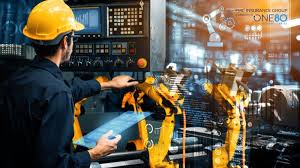
High risk manufacturing environments are built on precision. Everything from machine calibration to employee movement affects safety, productivity and regulatory integrity. Yet even the most advanced factories still rely heavily on human judgment and isolated monitoring tools that cannot keep up with the speed and complexity of modern operations. As production lines become more automated and regulations grow stricter, the margin for error becomes razor thin. Many leaders are now exploring how AI agents in manufacturing can close these gaps with real time intelligence.
This is why manufacturers worldwide are turning to AI agents that monitor, analyze and act in real time. These agents do not replace safety protocols. They strengthen them. They do not replace human decision makers. They support them with continuous intelligence and proactive intervention. The shift from reactive systems to predictive autonomous systems is redefining what it means to operate a high risk plant.
This article explores how AI agents bring unprecedented clarity and control to safety and compliance, why traditional systems fall short and how leaders can deploy these agents quickly to make a measurable impact.
The Hidden Weakness Inside Traditional Safety Programs
Factories in energy, chemicals, automotive, aerospace, heavy engineering and materials processing typically invest millions in safety frameworks. They monitor noise, temperature, chemical leakage, vibration and worker compliance. They enforce checklists, certifications and maintenance routines. Supervisors conduct daily audits. Employees undergo extensive training.
Despite all of this, incident rates remain higher than expected. The problem is not lack of effort. It is the limitation of human capacity and manual tools.
Human operators cannot process constant micro signals
Machines do not fail suddenly. They fail gradually. They produce abnormal vibration patterns. They leak microscale amounts of heat. They make subtle noise changes. Humans working long shifts cannot consistently detect these micro signals.
Compliance gaps often arise from fatigue or time pressure
Operators hurry through checklists during peak production. A missed inspection or skipped safety step becomes a risk multiplier. Supervisors cannot monitor everyone simultaneously.
Most monitoring systems only trigger alerts, not actions
Legacy systems might notify a supervisor when temperature crosses a threshold. But what if the issue demands an immediate slowdown, shutdown or evacuation? The time taken for humans to verify signals can be too long.
Regulatory documentation drains productivity
Audits require detailed logs that operators often record manually. Errors or missed data entries turn into compliance risks. Even digital logs take time to maintain.
These gaps are not due to lack of discipline. They are structural limitations the industry has lived with for decades. AI agents exist precisely to close these gaps.
What Makes Safety and Compliance AI Agents Different
AI agents operate like hyper vigilant digital teammates. They continuously scan thousands of signals, correlate them with historical patterns and make rapid decisions that keep the environment safe.
Here is what sets them apart.
1. They detect anomalies before they become hazards
AI agents learn the normal behavior of every machine. If a motor normally vibrates at 3.2 millimeters per second and suddenly shifts to 3.9, the agent knows something is off even if the reading is still below the defined threshold. Humans would miss this early warning.
2. They act instantly, not slowly
When an abnormal state emerges, the agent does not simply send a notification. It can slow down equipment, lock a control panel, trigger a micro shutdown or redirect workflow depending on severity.
3. They interpret context, which traditional systems cannot do
If the temperature is rising and the operator is wearing incorrect protective equipment, this combination becomes a dual risk. A traditional sensor treats these as separate events. An AI agent understands their relationship.
4. They maintain complete audit trails automatically
Every action and detection is recorded. This reduces compliance workload, eliminates manual paperwork and ensures transparency during audits.
5. They support workers instead of policing them
Agents can offer corrective guidance such as prompting an operator to wear gloves or secure a latch. The goal is assistance, not punishment.
6. They integrate with existing systems
Whether your facility uses SCADA, MES, EHS platforms or custom hardware, agents act as an intelligence layer on top. No need for full infrastructure replacement.
Real Examples of AI Agents in Action
The real power of safety AI agents becomes obvious when examining how they perform in actual high risk environments.
Predicting mechanical failures
A heavy equipment plant attached sensors to monitor vibration and temperature of critical rotating shafts. The AI agent learned baseline signatures for each machine and detected a small but unusual change that humans ignored for years. Based on this detection, the agent scheduled maintenance and prevented a breakdown that would have cost more than two hundred thousand dollars in downtime and repairs.
Enhancing personal safety
In a chemical processing facility, workers move through high toxicity zones. The compliance agent monitors camera feeds and checks whether operators wear masks and gloves correctly. If protective equipment is missing, the agent alerts the supervisor and the worker immediately. Within three months, personal safety violations dropped by more than sixty percent.
Strengthening emergency response
One factory experienced frequent micro leaks of hazardous gas. Before AI deployment, workers noticed leaks only after the smell appeared or after a periodic manual check. The AI agent analyzed gas sensor patterns, volume changes and air flow and flagged unusual readings early. In one case, it initiated a partial evacuation and shut down the affected valve before gas concentration reached dangerous levels.
Automating documentation
A compliance agent automatically captured data for audit reports, which previously took safety teams more than forty hours each month. The time savings allowed them to focus on real improvements rather than paperwork.
Across industries, these AI systems prevent accidents, save costs, reduce downtime and build a culture of safe excellence.
How AI Agents Improve Workforce Morale and Trust
Many leaders worry that workers may resist AI monitoring. The opposite usually happens. When employees see that agents are designed to protect, not penalize, trust grows quickly.
Workers receive fewer surprises because hazards are detected early. Supervisors become more effective because they receive clear prioritized insights instead of random alerts. Safety teams spend more time improving systems and less time collecting data.
Employees feel supported. Leaders feel more confident. Regulators feel assured. Customers feel safer knowing your processes exceed safety standards. Many of these organizations partner with an AI agent development company to scale responsibly and ensure adoption across teams.
This cultural change is one of the most underappreciated benefits of AI driven safety.
Where to Start: A Simple Roadmap for Leaders
If you manage a high risk manufacturing environment, the best way to begin with AI agents is through targeted pilots rather than full enterprise rollout.
Step 1: Identify one high risk zone
Choose an area with frequent incidents or near misses. Examples include:
• high temperature zones
• heavy machinery zones
• chemical storage rooms
• welding or forging stations
• areas with complex material flow
Step 2: Map key risks and sensors
List the critical signals such as vibration, temperature, movement, chemical concentration, equipment state and worker presence. Add video feeds if available.
Step 3: Deploy a safety agent with a clear scope
Start with a limited goal like:
• predicting equipment failure
• monitoring worker compliance
• detecting abnormal conditions
• flagging hazardous events
• automating audit logs
Step 4: Run the pilot for four to six weeks
Track results like:
• number of anomalies detected
• near misses prevented
• compliance improvement
• downtime reduction
• time saved on audits
Step 5: Expand to adjacent zones
Once stakeholders see the value, scaling becomes frictionless.
The most successful manufacturers treat AI agents as long term partners that evolve with the factory.
Conclusion
High risk manufacturing cannot rely on outdated safety models. The cost of inaction is real and measurable. Every year factories lose millions due to accidents, equipment failures, regulatory issues and slow response times. AI agents tackle these problems at the source by adding intelligence, speed and precision to the environment.
If you want to accelerate your safety transformation, begin with a focused deployment. A small pilot can reveal insights that transform your entire safety culture.
Organizations that act now will set the benchmark for operational excellence. Those that wait will struggle to compete in a world where autonomous safety and compliance become industry norms.