
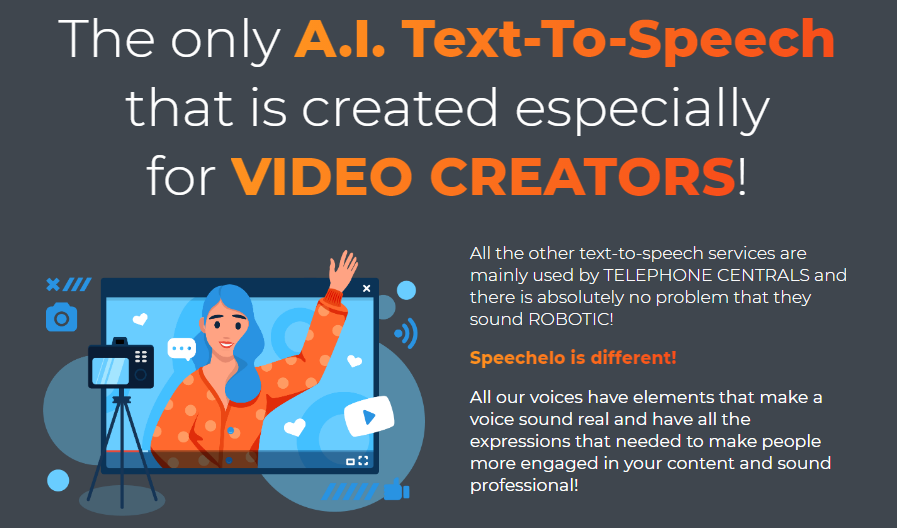
In the digital age, tremendous strides have been witnessed in the manner in which content is both produced and consumed. Of the most recent innovations has been the utilization of artificial intelligence in transforming text into engaging videos. This process has not only been making content more dynamic but has also enabled businesses and creators to reach audiences in new ways altogether. In this article, we are going to explore how AI is revolutionizing content creation by turning text into video, its benefits, and its future potential.
The Rise of AI in Content Creation
Artificial intelligence nowadays is integrated with the generation of content in all industries. Be it a chatbot or a recommendation of content, AI is helping businesses to streamline processes better and engage audiences more effectively. It has also brought text-to-video, the last application, whereby the growing preference among users for video content can be tapped into.
With the current advancement of AI technology, small businesses and individual creators alike can tap into its prowess. User-friendly tools that use AI are designed to get the highest quality video content from creators who lack technical know-how. The democratization of these AI tools has revolutionized the way businesses think about video productions, allowing them to get creative and push the limits on new innovations without the traditional restrictions of cost and resource input.
“Video content drives 80% more engagement than static text posts. This statistic alone explains why brands are focusing on video formats.”
How AI Converts Text to Video
The process of converting text into video is driven by advanced AI tools and algorithms. These advanced AI video generator tools analyze the input text, extract key information, and use pre-built templates, animations, and voiceovers to create a cohesive video. Some advanced AI platforms even incorporate natural language processing (NLP) to understand the context better and ensure the visuals align with the narrative.
Some of the key steps involved include:
- Text analysis and summarization.
- Selection of the right visuals and animations.
- Use of voiceover or subtitles to ensure accessibility
- Options for tailoring according to brand requirements
AI tools are also getting highly creative. Several platforms have automated transitions, dynamic effects, and even emotional tone adjustment features, making videos much more impactful. By analyzing the preferences of audiences and engagement data, AI can fine-tune video content to resonate more with target demographics.
Tip: If you are interested in exploring various text-to-video technologies and experiencing their capabilities firsthand, you might find Pollo AI helpful since it aggregates some of the best-known AI video models, among them Luma AI, Pika AI, and many more.
Benefits of AI-Generated Videos
- Cost-Effective Production: Traditional video production is very time-consuming and expensive. AI tools, on the other hand, are budget-friendly and allow creators to produce high-quality videos at a fraction of the cost.
- Scalability: AI allows businesses to create multiple videos in a short time, catering to diverse audiences and platforms.
- Enhanced Engagement: Videos are more engaging than text, helping brands convey complex information in an easy-to-understand format.
- Consistency: With AI tools, businesses can ensure consistent branding and messaging across all their video content, fostering a stronger connection with their audience.
“AI-driven video tools democratize content creation, making professional-grade videos accessible to startups and small businesses alike.”
Use Cases Across Industries
Education: Take study materials and convert them into explainer videos that make difficult topics easy for students to understand. For instance, a textbook chapter can be converted into a short animated video, making learning more interactive and fun.
- E-commerce: Converting text descriptions of products into demo videos. Showing how a product works or what are its main features can build customer confidence and drive sales.
- Marketing: Creating ad campaigns and social media content fast. With AI, marketers can test multiple versions of videos and pick the most effective ones.
- News & Media: Converting news articles into viral news videos. This not only makes it easier to access but also caters to the preference of those who would rather consume information visually.
- Healthcare: AI can help translate medical content into educational videos to educate patients on health conditions or treatment options in an easy-to-understand manner.
Challenges in AI Video Creation
While AI-driven video creation offers numerous advantages, it is not without its challenges. Issues like limited creativity, dependency on pre-built templates, and occasional inaccuracies in context understanding can pose hurdles. For instance, an AI tool might struggle to interpret nuanced or ambiguous text, leading to mismatched visuals or messaging.
Another challenge is the “human touch” aspect, where although AI can excel at efficiency and scalability, it often lacks that emotional depth and creativity that a human creator would bring in to content. To get over this limitation, the balance between automation and personalization must be struck, which is where an AI video production company that pairs the tools with human creative direction can help.
However, with the advancement of AI, these challenges are going to fade away. Emerging technologies are already tackling these issues by including more complex contextual understanding and creative capabilities into their algorithms.
The Future of AI in Text-to-Video Transformation
The future of AI in content creation looks promising. Paving the way for more intuitive and creative tools, advancements in machine learning, NLP, and deep learning open up more possibilities. Personalized videos, real-time video generation, and immersion through formats like AR and VR are just a few of them.
Imagine an AI that can generate videos that change in real-time based on the viewer’s reactions. For example, an educational video could adjust its pace or content depending on whether the viewer appears engaged or confused. Such innovations would not only change the way content is created but also the way audiences engage with media.
As AI becomes more integrated into content workflows, collaboration between humans and machines will become the norm. Creators will rely on AI to handle repetitive tasks, allowing them to focus on storytelling and strategic decisions.
“AI won’t replace human creativity but will enhance it, providing tools to amplify ideas and expand possibilities.”
Conclusion
AI is revolutionizing content creation by transforming static text into dynamic video. This shift not only meets the growing demand for video content but also opens new doors for creators and businesses. Combining efficiency, scalability, and creativity, AI-generated videos have the potential to redefine how we communicate and share information.
Because technology continues to advance, AI-generated video content possibilities are wide open. From personalized storytelling to real-time adaptation, an excellent future, it is seen, from this innovative sector. The businesses and creators embracing these tools now will position themselves ahead of the rest in this evolving landscape of digital experiences and provide their audiences with the most engaging and impactful content of their lives.