

The moment web forms or landing pages capture user information, businesses have a lead. Whether that lead becomes a prospective customer and how quickly they do – largely depends on the quality of the lead management process. Typically, sales and revenue teams use Salesforce for the lead management process. This CRM enables easy tracking of leads when connected with forms and landing pages. By creating lead profile pages in Salesforce, sales professionals can save user information and follow up for further process.
However, organizing lead pages using Salesforce alone doesn’t help sales teams to close deals. It’s because the native Salesforce lead page template lacks automation functionalities and makes lead lifecycle management tedious. That’s why integrating Salesforce with a robust CRM tool like monday.com is essential. This integration helps teams engage with leads effectively, personalize outreach activities, and reduce repetitive tasks.
monday.com Salesforce Integration – Automating Lead Management Cycle
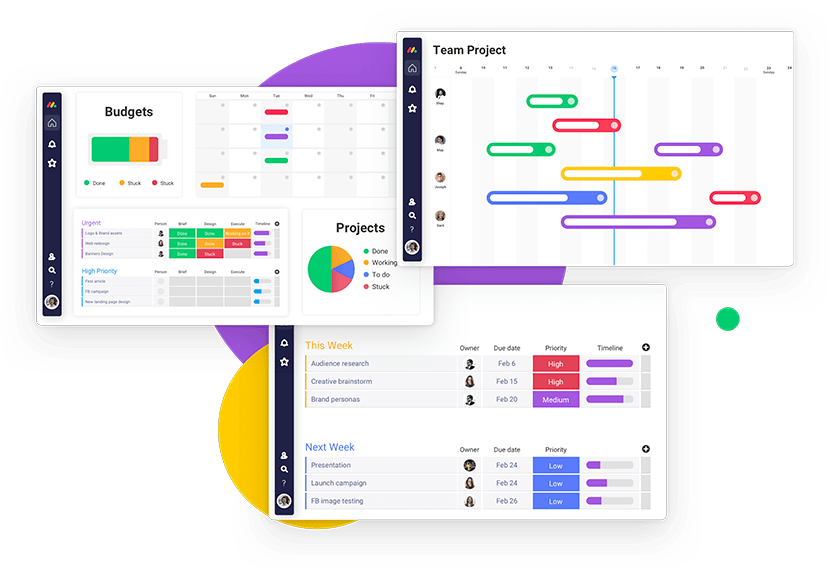
monday sales CRM is a cloud-powered platform that businesses can use for managing their sales and marketing events. monday CRM offers intuitive integration support for Salesforce, which is highly beneficial for sales teams. Up on monday.com Salesforce integration, teams can easily export their Salesforce’s web-to-lead forms in monday.com, thereby storing all lead information in a cloud repository. In addition, monday CRM integration enables sales professionals to use automated flows for managing key aspects of lead management processes like:
Lead Qualification Flow– This automated flow helps in evaluating the authenticity of information provided by users on Salesforce web-to-lead forms. The authenticity is evaluated based on the pre-defined conditions. When a user’s information in the form meets the defined conditions, it gets automatically updated as ‘sales ready’ in both the Salesforce form and monday CRM. The main objective of using this flow is to prioritize leads based on their authenticity.
Lead Distribution Flow– Once leads are evaluated, directing them to the right salespeople quickly is essential. This helps in improving the engagement and conversion rate. The lead distribution flow helps in automatically assigning potential leads to the sales agents right after the qualification process.
Lead Reporting Flow– monday.com CRM meticulously monitors and documents interactions between potential leads and sales agents. Based on the interactions, lead reporting flow can generate automated reports comprising key metrics like response rate, engagement levels, and conversion rate. With this report, sales professionals can understand the preferences of their leads and personalize interactions accordingly to fulfill their needs and priorities.
Benefits of monday.com and Salesforce Integration for Sales Teams
1. Centralize Lead Data
The integration enables sales teams to export all lead-related forms and pages in Salesforce to monday CRM’s centralized cloud repository. By storing all the records in the repository, sales team members can quickly access and analyze lead data. Beyond just bidding strategies for better segmentation, surveys can offer a powerful alternative—and SurveyVista can help you gather valuable insights through this approach.
monday.com CRM’s built-in duplicate management module helps in eliminating replicas/redundancies in scattered Salesforce lead data sources. With centralized and high-quality lead data, sales teams can make strategic decisions, target the appropriate prospects, and personalize the way they nurture leads.
2. Align Sales and Marketing Workflow
By implementing monday.com integration with Salesforce, both sales and marketing teams can have a unified platform for lead management. This integration supports bi-directional data synchronization. With greater synchronization of lead data, sales and marketing professionals can have access to the most up-to-date information on their prospective customers.
Moreover, integration offers a collaborative environment, enabling both teams to manage leads sequentially. For example, lead data captured through email marketing campaigns in Salesforce will be automatically updated in monday CRM. Consequently, sales teams can use that information for tracking and follow-up activities. This coordinated approach enables both sales and marketing departments to tailor their campaign strategies and drive business growth.
3. Automate Repetitive Processes
Integrating Salesforce and monday CRM helps in automating lead data entry, appointment scheduling, and lead routing. When integrated, the lead information captured by the Salesforce’s web-to-lead forms gets automatically synchronized in the monday CRM. This eliminates the need for sales professionals to manually extract or enter lead data within the monday CRM. Also, automated data entry reduces human errors and data discrepancies.
Similarly, when a lead attains the ‘sales ready’ phase in Salesforce, automated workflows in monday CRM can trigger the formation of an appointment schedule. Automated triggers and reminders ensure that no high-quality leads are overlooked or disregarded by sales professionals. This helps in increasing the effectiveness of lead engagement and improving customer experience.
4. Build Dashboards to Track Lead Engagement
When Salesforce is integrated with monday.com, sales teams can build lead engagement dashboards and monitor key metrics. Here are some key engagement metrics that can be tracked via dashboards:
Lead-to-Opportunity Transition Rate– The percentage of leads that effectively convert into valid opportunities
Source Performance– This metric enables sales teams to identify which Salesforce marketing campaign led to the most conversions
Sales Cycle Period– The average time it takes for a lead to cross through the lead management and sales cycle
By observing these metrics, sales admins can obtain insights, understand areas for improvement, and augment the lead management process with ease. Besides, designing and deploying no-code dashboards in monday CRM enables every member of sales and marketing teams to work towards the same objectives.
5. AI Copilot for Advanced Recommendations
Salesforce integration with monday.com CRM enables sales teams to make use of the monday platform’s AI Copilot app and further modernize lead management. This app can process Salesforce web-to-lead forms and predict lead behavior efficiently. The app’s intuitive AI and ML models help in determining lead behavior after assessing lead interactions, previous purchase history, and demographic data. This way, sales teams can target leads with the highest conversion potential and anticipate the outcomes effectively.
Based on the behavior and preferences of leads, sales teams can send smart product/service recommendations to leads. This helps in improving lead engagement and fulfillment since they receive recommendations that precisely meet their needs. Overall, AI Copilot simplifies targeted lead management easier for sales teams.
Hiring Dedicated Consultants for monday.com Salesforce Integration
When sales teams use monday.com CRM and Salesforce separately for lead management, they might end up with data silos. That’s why integrating both these tools is an effective way for sales teams to manage leads and opportunities. However, ensuring security and integrity during integration is essential. Besides, mapping the Salesforce functionalities in monday CRM requires in-depth knowledge of both platforms.
In such situations, organizations can hire dedicated monday.com integration experts from a recognized consulting firm. Dedicated monday.com professionals can customize the intuitive Salesforce API in monday CRM and implement the integration based on business needs. This approach ensures that the sales teams can get the most out of both platforms.
Summing Up
The way sales teams organize leads and opportunities influences the revenue they bring in. monday.com CRM integration with Salesforce has the power to modernize the lead management cycle. This integration enables sales professionals to improve lead engagement, increase conversions, and drive productivity.