
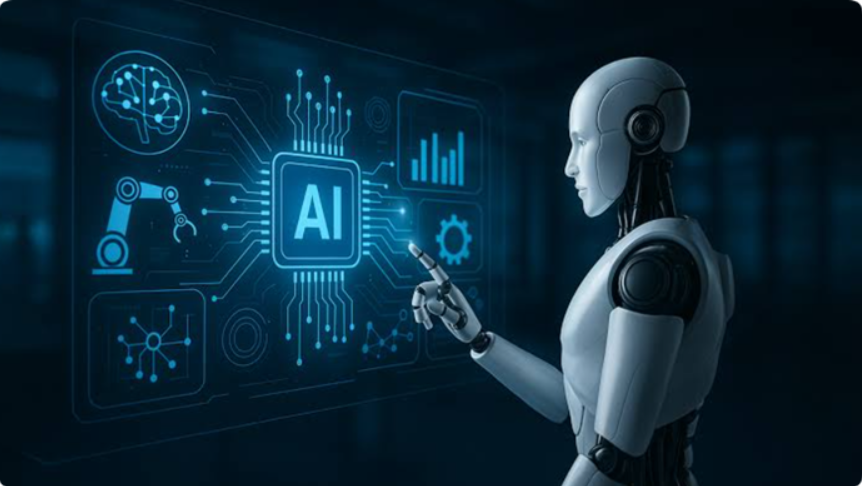
Artificial intelligence is no longer limited to software applications and digital platforms. Today, researchers and businesses are exploring how AI can interact with the physical world through machines, robots, and intelligent devices. This development is creating new opportunities for smarter systems that can understand, adapt, and respond to real-world environments.

The Shift From Traditional AI to Physical AI
Traditional artificial intelligence has mainly focused on processing digital information. Search engines, recommendation systems, and language models are examples of AI applications that work primarily with online data.
However, many real-world tasks require more than digital intelligence. A robot working in a warehouse, for example, must recognize objects, understand space, avoid obstacles, and respond to unexpected changes.
This is where physical AI becomes increasingly important. Physical AI combines machine learning capabilities with real-world data, allowing machines to perceive their surroundings and make decisions based on physical interactions.
Unlike traditional automated systems that follow fixed instructions, smart machines powered by physical AI can adapt to changing environments.
Why Physical AI Is Important for Smart Machines
The development of smart machines depends on the connection between artificial intelligence models and accurate physical data.
A machine cannot effectively operate in the real world by relying only on theoretical knowledge. It needs practical information about movement, objects, environments, and human interaction.
Key data sources for physical AI systems include:
- Sensor data collected from real environments
- Visual and spatial information
- Robotics movement records
- Simulation and testing data
- Human-machine interaction patterns
This combination allows AI systems to improve their understanding of physical situations and perform more complex tasks.
How Physical AI Is Transforming Different Industries
The influence of physical AI can already be seen across multiple industries.
Robotics and Manufacturing
Manufacturing is one of the areas where smart machines are developing rapidly. Modern factories increasingly use AI-powered robots that can perform tasks requiring flexibility and decision-making.
For example, intelligent robots can identify different objects, adjust their movements, and work alongside human employees. This creates a more adaptive approach to automation compared with traditional industrial machines.
Autonomous Systems
Autonomous vehicles and robotic systems rely heavily on physical AI capabilities. These machines must analyze their surroundings continuously and make decisions within seconds.
Accurate physical data helps autonomous systems recognize road conditions, detect obstacles, and improve operational safety.
Healthcare and Service Applications
Physical AI is also creating possibilities in healthcare and service industries. Intelligent devices can assist professionals by monitoring environments, supporting daily operations, and improving efficiency.
As AI technology becomes more integrated with physical devices, these applications are expected to expand further.
The Role of Data in Building Advanced AI Systems
Behind every successful AI application is a strong data foundation. The performance of smart machines depends not only on algorithms but also on the quality and diversity of training data.
Physical environments create additional challenges because conditions are constantly changing. Data collected from one scenario may not always represent another situation.
Therefore, organizations need reliable data solutions that support AI development across different environments.
Platforms such as EGXO Data provide resources focused on physical AI and artificial intelligence applications, helping developers and organizations access structured data needed for advanced AI research and deployment.
Better data availability allows AI systems to become more accurate, adaptable, and practical in real-world applications.
Challenges Facing the Development of Smart Machines
Although physical AI has significant potential, several challenges still need to be addressed.
One challenge is collecting diverse and high-quality physical data. Unlike digital datasets, real-world data collection often requires specialized equipment, testing environments, and careful validation.
Another challenge is ensuring that smart machines operate safely and responsibly. Developers need to consider issues such as privacy, security, and ethical use when deploying AI-powered systems.
Research organizations and technology communities continue to develop standards and best practices to support responsible artificial intelligence development.
The Future Connection Between AI and the Physical World
The future of smart machines will depend on how effectively artificial intelligence can understand and interact with physical environments.
As robotics, automation, and intelligent devices continue to evolve, physical AI will become an important part of AI development. Companies building future solutions will need to focus on both advanced algorithms and dependable data resources.
The combination of intelligent models and real-world information will help create machines that are more capable, flexible, and useful.
Conclusion
Physical AI represents a major step forward in the development of smart machines. By connecting artificial intelligence with real-world data, it allows machines to better understand their surroundings and perform more complex tasks.
As industries continue adopting intelligent technologies, high-quality physical data and responsible AI development will become increasingly important. The future of AI will not only depend on smarter algorithms but also on how well machines can interact with the world around them.