
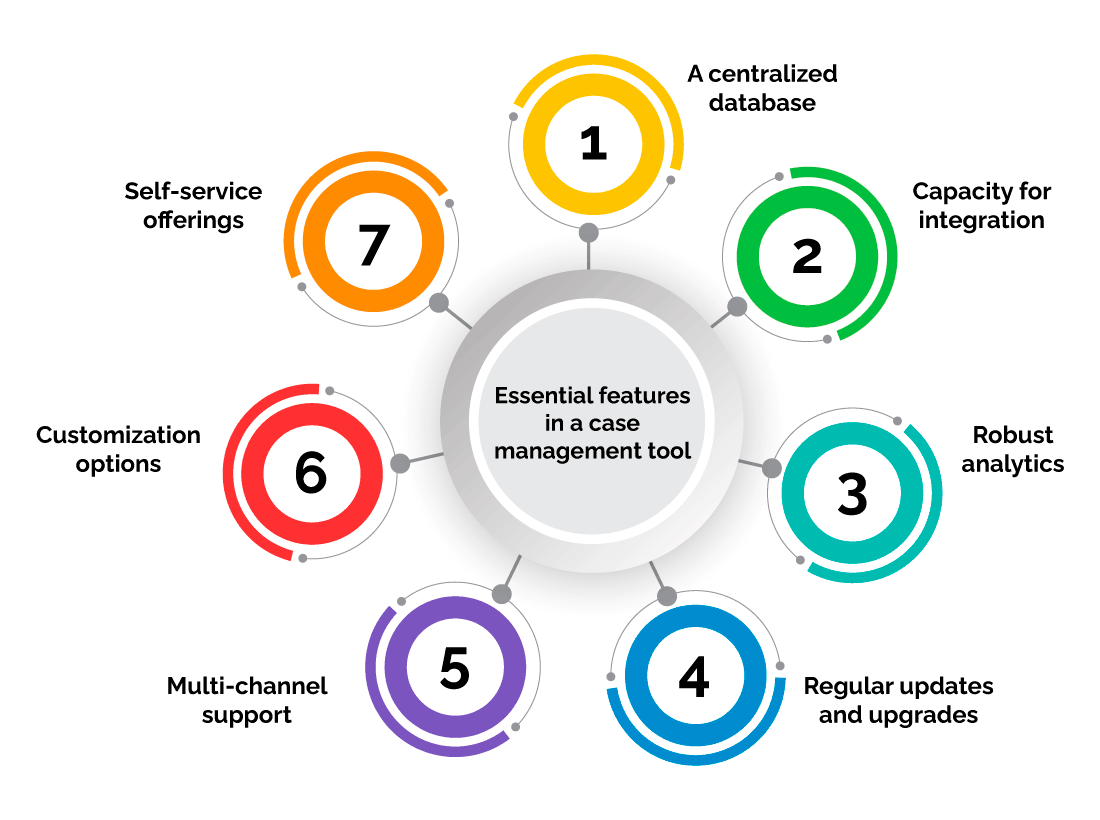
The daily reality for many prosecutor offices is a battle against administrative friction. Managing complex criminal cases often involves navigating a maze of spreadsheets, shared documents, and email chains. This manual approach creates version control nightmares, information silos, and a constant risk of human error, pulling skilled attorneys away from critical legal work and into tedious data entry.
The good news is that technology has provided a direct and powerful counterpoint to these challenges. Modernizing isn’t a fringe concept; it’s the established standard. According to data from the Association of Prosecuting Attorneys, 81% of prosecutor offices now use a case management system (CMS). For offices evaluating their options, understanding the capabilities of a criminal case management software platform provides a clear benchmark for what is possible.
This article explores the five most significant ways a purpose-built CMS enhances efficiency, secures critical data, and transforms prosecutorial workflows for the better.
Key Takeaways
-
Automated Workflows: Modern CMS dramatically cuts administrative time by automating tasks like document generation and scheduling, freeing prosecutors for critical legal work.
-
Enhanced Collaboration: Centralized platforms break down information silos, enabling real-time team communication and secure external agency cooperation.
-
Robust Security & Evidence Management: Dedicated systems ensure CJIS-compliant data handling and maintain an impeccable chain-of-custody for all physical and digital evidence.
-
Streamlined Intake: Interoperable CMS solutions automate the influx of case data from law enforcement and courts, eliminating manual re-entry and reducing errors.
-
Actionable Analytics: Advanced reporting capabilities provide supervisors with real-time insights into caseloads, performance, and trends, enabling data-driven decision-making.
The Core Conflict: Why Spreadsheets Undermine Prosecutor Performance
Before diving into the solution, it’s crucial to acknowledge the root of the problem. While familiar, spreadsheets and generic office software were never designed for the unique demands of a prosecutor’s office. They create significant, often hidden, operational drags that undermine performance.
-
Information Silos & Version Control: When case data is scattered across multiple spreadsheet files—CaseList_FINAL.xlsx, CaseList_FINAL_v2_JohnsEdits.xlsx—there is no single source of truth. Tracking changes becomes nearly impossible, and team members often work from outdated information, leading to confusion and mistakes.
-
Security & Compliance Nightmares: Spreadsheets are inherently insecure. They lack the granular access controls, detailed audit trails, and encryption standards required to protect sensitive Personally Identifiable Information (PII) and case details. This makes them a major liability for meeting Criminal Justice Information Services (CJIS) compliance.
-
Manual Overload & Error Risk: Every piece of data entered into a spreadsheet is a manual action. This repetitive work consumes countless hours that could be spent on case strategy. It also introduces a high risk of typos and data entry errors that can have serious consequences for a case.
-
Collaboration Barriers: Trying to collaborate on a case using a spreadsheet is clunky and inefficient. There’s no effective way to manage tasks, leave real-time notes, or ensure everyone has the latest updates without a constant stream of emails and follow-up calls.
-
Lack of Insight: You can’t manage what you can’t measure. Extracting meaningful, aggregated data from unstructured spreadsheets is a manual, time-consuming process. This makes it incredibly difficult for supervisors to monitor caseloads, identify bottlenecks, or make strategic, data-informed decisions.
The 5 Ways Modern CMS Transforms Prosecutorial Workflows
A modern Case Management System is more than just a digital filing cabinet. It’s an intelligent, integrated platform that fundamentally changes how work gets done. Here are the five key transformations your office can expect.
1. Workflow Automation and Reduction of Administrative Overhead
A prosecutor’s most valuable asset is their time and legal expertise. A modern CMS protects that asset by automating the routine, administrative tasks that bog down daily operations. This shifts your team from being reactive to administrative demands to being proactive in their legal strategy.
Imagine generating a batch of subpoenas, plea agreements, or sentencing judgments—all populated with the correct case information—with just a few clicks. A powerful CMS achieves this through customizable document templates. It can also sync with court calendars to automatically schedule events and send deadline reminders, preventing crucial dates from being missed. As noted by industry experts, effective workflow automation in case management software reduces administrative overhead, allowing prosecutors to focus on what truly matters: building strong cases.
Leading systems like PROSECUTOR by Karpel take this even further, capable of generating hundreds of complex legal documents from pre-set templates. This simple function alone can save hundreds of hours per year, drastically cutting down on manual data entry and proofreading.
2. Improved Collaboration and Centralized Communication
Effective prosecution is a team sport. A CMS acts as the central hub for that team, creating a single, unified digital case file accessible to every authorized user. This immediately breaks down the information silos that plague spreadsheet-based workflows, ensuring everyone is working from the most current and accurate information.
Features like real-time case notes, integrated internal messaging, and clear task assignment tools streamline communication and accountability. There’s no more digging through email threads to find a key piece of information or wondering about the status of a task. Everything related to the case—documents, evidence logs, communication history, and upcoming deadlines—lives in one organized place.
This centralized access also empowers leadership. As a study from the Urban Institute points out, this means “‘Supervisors can log into any case from their desk and see what’s going on,’ allowing them to identify staff who may need guidance and ensure consistency.” Furthermore, top-tier platforms extend this collaboration securely to outside partners. Features like an External Agency Portal allow law enforcement or other justice partners to submit materials electronically or view case statuses with read-only access, improving efficiency across the entire justice ecosystem.
3. Enhanced Data Security and Evidence Management
In the justice system, data security isn’t just an IT concern—it’s a foundational requirement. A dedicated CMS provides the robust, multi-layered security that spreadsheets simply cannot offer. These systems are built with features like granular, user-based permissions that control who can view, edit, or delete information.
Every action taken within the system is logged in a detailed, unalterable audit trail, providing a complete history of the case file. Hosting in a secure, CJIS-compliant environment, such as the Microsoft Azure Government Cloud, ensures that sensitive data is protected by world-class physical and digital security protocols.
This security extends to one of the most critical aspects of any case: evidence. A CMS offers a dedicated evidence tracking module to manage both physical and digital evidence, maintaining a clear and unbroken chain of custody from intake to disposition. Top-tier systems are fully integrated with platforms like Evidence.com, allowing for the seamless linking of digital evidence like body-cam footage without insecure local downloads, thereby maintaining the integrity and security of the primary evidence.
4. Streamlined Case Intake and Document Management
The efficiency of a case’s entire lifecycle often depends on how it begins. Manual case intake—re-keying data from police reports, scanning documents, and creating folders—is slow and prone to error. A modern CMS with strong interoperability automates this entire process.
By integrating directly with law enforcement Records Management Systems (RMS) and court systems, a CMS can automatically import initial case data, defendant information, and charging documents. This is often accomplished using NIEM-conforming web services, a national standard for secure and reliable data exchange between justice agencies.
The result is a complete, accurate digital case file created in a fraction of the time, with no redundant data entry. Your team can begin working on the substantive aspects of the case almost immediately, rather than getting bogged down in administrative setup.
5. Advanced Reporting, Analytics, and Data-Driven Decision-Making
Prosecutor offices are increasingly expected to operate with transparency and make data-informed strategic decisions. This is nearly impossible when your data is locked away in disparate spreadsheets. However, a report from Fair and Just Prosecution highlights a critical data gap, noting that “only two in five prosecutor offices collect all seven foundational measures of case flow.”
A modern CMS closes this gap by transforming raw case data into actionable intelligence. With robust, built-in reporting capabilities, supervisors and District Attorneys can access real-time dashboards and generate custom reports on key performance indicators (KPIs) like:
-
Caseload volumes and distribution
-
Case aging and potential bottlenecks
-
Disposition rates and conviction trends
-
Sentencing outcomes
-
Individual and team performance metrics
This data empowers leaders to optimize resource allocation, identify training needs, set meaningful strategic priorities, and justify budget requests with concrete evidence. It moves decision-making from being based on gut feelings to being backed by hard numbers.
Making the Switch: Best Practices for Choosing and Implementing a CMS
Moving to a new system is a significant decision. To ensure a successful transition, it’s vital to choose a partner and a platform that are built for your specific needs.
-
Specialization Matters: Choose a system designed specifically for prosecutors. Generic legal software often lacks the nuanced workflows, terminology, and integrations required for criminal prosecution.
-
Prioritize Interoperability: A system that can’t talk to your justice partners—police, courts, jails—will only create new data silos. Ensure any potential CMS has a proven track record of successful integration.
-
Evaluate Training & Support: The best software is only effective if your team knows how to use it. Look for a provider that offers comprehensive, hands-on training and responsive, 24/7 technical support. A strong support partner is critical for long-term success.
-
Consider Cloud Hosting: Modern cloud-based solutions offer significant advantages, including high uptime, built-in disaster recovery, secure remote access for your team, and a reduced burden on your local IT infrastructure.
The Verdict: A New Standard for Justice and Efficiency
Moving beyond spreadsheets is no longer just a technological upgrade; it is a strategic imperative for any modern prosecutor’s office. By automating workflows, centralizing communication, securing data, streamlining intake, and enabling data-driven insights, a modern CMS addresses the core operational challenges that limit efficiency and increase risk.
The ultimate impact goes far beyond saving time. It leads to improved accuracy in case filings, better-prepared attorneys, enhanced services for victims, and a more effective and transparent administration of justice for the entire community.
As caseloads grow and public expectations for efficiency and accountability increase, now is the time for every prosecutor’s office to evaluate its tools and ask: Is our technology a bottleneck or a catalyst for justice?