
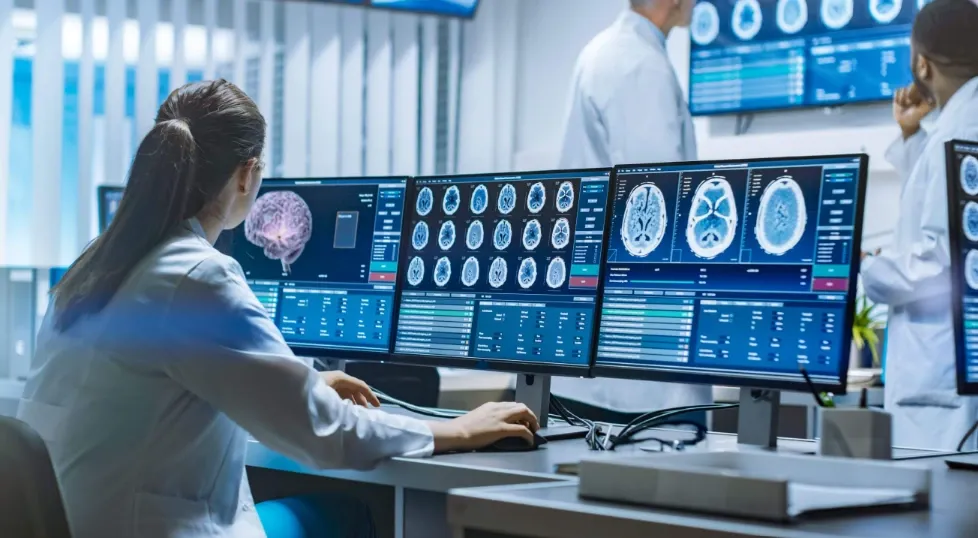
In healthcare, medical image annotation is a powerful yet often unseen hero that brings precision and insight to AI-powered diagnostics and treatment. By labeling images like X-rays, MRIs, and CT scans, this process allows AI models to detect, classify, and even predict health conditions. For healthcare professionals and patients alike, this means more accurate diagnoses, faster treatment plans, and better outcomes.

What Is Medical Image Annotation?
At its core, medical image annotation is about taking raw medical images and marking specific regions of interest—think of it as turning an image into a map for AI to understand. Trained annotators work with specialized tools such as V7 Labs, Encord or 3D Slider to outline organs, tumors, fractures, or any other medically significant features. These annotated images then become training data, teaching AI systems to recognize these patterns in real-world scenarios.
Why Is It So Important?
AI models that rely on well-annotated images can speed up diagnostics, help catch diseases early, and support healthcare professionals with data-backed insights. Take, for example, cancer detection: AI trained on annotated images can identify minute details that might escape even a trained eye, potentially improving patient outcomes and lowering healthcare costs.
Some of the biggest benefits include:
- Sharper Diagnoses: Annotated images serve as a guide for AI to locate conditions with precision, boosting diagnostic accuracy.
- Quicker Decisions: By taking on some routine diagnostics, AI enables healthcare teams to make faster calls on treatment.
- Trusted Support: AI-driven insights offer clinicians a (much required) extra layer of assurance, especially in complex cases.
How Medical Image Annotation Powers Different Fields in Medicine
Medical image annotation has a wide range of applications in healthcare:
- Radiology: AI models trained on annotated radiology images, like X-rays and MRIs, can detect fractures, tumors, and other abnormalities.
- Pathology: Annotated pathology slides enable AI systems to spot disease-related changes at the cellular level, especially for conditions like cancer.
- Ophthalmology: AI trained on annotated eye images can catch early signs of diseases like diabetic retinopathy or glaucoma, allowing for early intervention.
- Dentistry: Annotated dental images, including X-rays and 3D scans, help AI detect cavities, assess gum health, and identify structural abnormalities, supporting more precise diagnoses and personalized treatment planning.
Tools and Techniques in Medical Image Annotation
Various tools make this process easier, including advanced platforms that Data Labeling Service Providers such as Innovatiana leverages to ensure precision and scalability. Tools like Label Studio allow experts to create and refine detailed annotations, guiding AI to learn and predict with accuracy.
Some of the most used techniques include:
- Segmentation: Tracing around organs or abnormalities to isolate them for the AI. This must be as precise as possible to train the model accurately.
- Landmark Annotation: Marking key points on anatomical structures for tracking changes or measurements.
- 3D Annotation: Creating 3D views of structures, especially useful for surgeries and intricate medical procedures.
Innovatiana’s Role in Medical Image Annotation
Innovatiana is dedicated to making healthcare AI smarter with high-quality annotated data. By providing expert annotation services, Innovatiana supports healthcare and tech companies, creating datasets that are the backbone of advanced medical AI. Learn more about Innovatiana’s medical image annotation services, and see how they bring precision and insight to every annotation project.
Challenges in Medical Image Annotation
Working with medical images requires both technical know-how and healthcare insight. Some challenges include:
- Complexity: Medical images can be highly detailed, making accurate annotation a meticulous process.
- Privacy Regulations: Handling patient data means meeting standards like HIPAA in the U.S. and GDPR in the EU or other local regulations such as HDS in France (“Hébergement des données de santé”).
- Need for Expertise: Interpreting medical images often requires specialized knowledge, ensuring that annotations align with clinical standards.
For more in-depth information on medical imaging, Radiopaedia offers a valuable resource for professionals in the field.
Final Thoughts
Medical image annotation is shaping the future of healthcare, making AI a more effective tool for diagnosis and treatment. By structuring raw data into insights, this technology offers faster, more accurate diagnostics and supports clinicians in making informed decisions. Innovatiana is proud to be part of this revolution, bringing quality and consistency to medical data annotation.