
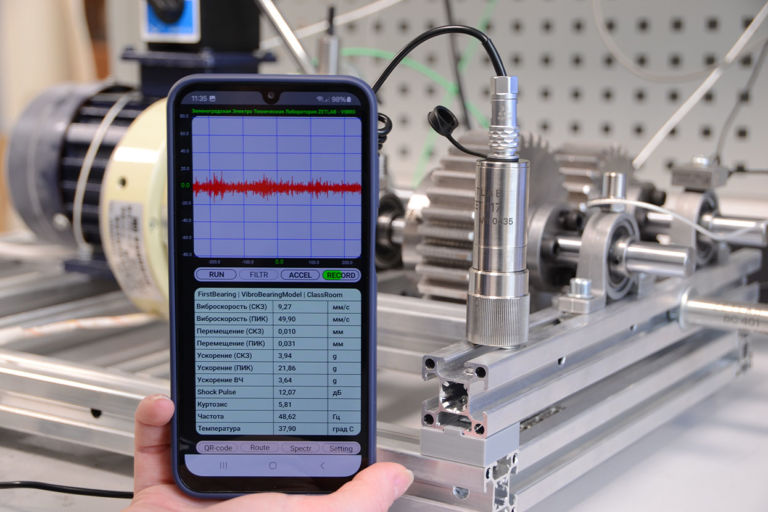
Industrial equipment generates an impressive amount of data every day. Sensors can capture changes in vibration, temperature, pressure, speed, and other operating conditions, creating a detailed picture of how machinery behaves over time. The challenge is that raw data does not automatically make a business smarter. Someone has to interpret it, identify meaningful changes, and connect those findings to practical decisions. This is where condition monitoring and data analysis become especially valuable. When equipment data is collected consistently and examined in context, it can help maintenance teams understand developing problems before they become expensive disruptions.
1. Turning Machine Behavior Into Measurable Data
Mechanical issues can develop gradually, and changes in equipment behavior may appear in measured data before a visible failure occurs. Vibration is particularly useful because rotating equipment naturally produces vibration while operating. Motors, pumps, fans, compressors, gearboxes, turbines, and other machines each produce measurable vibration patterns. Analysts can track values such as amplitude, acceleration, velocity, frequency, and phase to understand whether equipment is behaving as expected. Over time, this creates a historical record rather than a collection of isolated measurements. That history matters because a single reading provides limited context, while a trend can show whether a condition is stable, improving, or getting progressively worse.
2. Why Vibration Monitoring Is Valuable for Data-Driven Maintenance
Vibration monitoring involves measuring and analyzing vibration produced by industrial equipment to identify changes in mechanical condition. Instead of relying entirely on scheduled inspections or waiting for a machine to show obvious symptoms, maintenance teams can use vibration data as an additional source of information when assessing asset health. Changes in vibration patterns can be associated with issues such as imbalance, misalignment, looseness, bearing problems, gear faults, or resonance. The real value comes from connecting these measurements with time and operating context. When data is collected repeatedly, teams can establish a baseline for normal behavior and then investigate meaningful deviations from it.
3. From Raw Measurements to Useful Patterns
Raw sensor readings can be difficult to interpret without the right analytical approach. This is where techniques such as time-domain and frequency-domain analysis become useful. Time-domain data can help reveal impacts, transient events, and changes in the way a machine is behaving at a particular moment. Frequency-domain analysis, including Fast Fourier Transform (FFT), helps break vibration signals into their frequency components, making certain mechanical patterns easier to identify. The goal is not to collect the biggest possible pile of data. It is to find the information that answers a useful question: What changed? When did it change? How significant is the change? And does it point toward a condition that requires investigation?
4. Trends Can Tell a Bigger Story Than a Single Reading
One measurement can be interesting. A reliable trend is much more informative. Tracking vibration data over weeks, months, or longer periods allows maintenance teams to compare current conditions with historical performance. A gradual increase in vibration may deserve investigation even when an individual measurement does not appear dramatic. Trend information can also help teams evaluate whether maintenance work had the intended effect. If vibration levels decrease after an alignment or bearing replacement, that change provides useful evidence about the result of the intervention. This turns condition monitoring into an ongoing feedback loop. Data is collected, analyzed, acted on, and then measured again. The process helps maintenance decisions become more evidence-based instead of relying primarily on assumptions or fixed schedules.
5. Real-Time Alerts Make Data More Practical
Data becomes much more useful when it can reach the right people at the right time. Modern monitoring systems can continuously collect measurements and use predefined alarm levels to flag events that require attention. For ground vibration applications, for example, IVC Technologies uses tri-axial seismic sensors for continuous monitoring, with configurable alarm levels and immediate text or email notifications. Triggered reports can include information such as vibration amplitude and Peak Particle Velocity (PPV), while longer projects can use periodic summary reports to identify broader trends. Similar principles apply to industrial equipment: an alert can prompt a closer inspection before a developing condition turns into an unexpected shutdown. The key is making sure alerts lead to a defined response rather than becoming another stream of notifications that nobody has time to review.
6. Better Data Supports Better Maintenance Decisions
The final step is turning analysis into action. A dashboard full of charts does not improve reliability by itself. Maintenance teams need information that helps answer practical questions, such as whether equipment needs closer inspection, whether maintenance should be scheduled, or whether a change in operating conditions needs further investigation. Remote monitoring can support this process by giving teams visibility into equipment condition without requiring constant physical access, particularly for distributed or hard-to-reach assets. Data can also become more useful when it is connected with maintenance records, operating conditions, equipment history, and other relevant information. This creates a clearer picture of why a change happened and what should happen next. In that sense, good industrial analytics is less about having more data and more about making the existing data easier to understand and use.
Industrial data has real value when it helps people make better decisions. Vibration measurements can provide detailed information about machinery and structural environments, while ongoing analysis can reveal changes that may be difficult to spot through routine observation alone. Trend analysis, frequency analysis, automated alerts, and historical records can turn technical measurements into practical information for maintenance and risk management. The most effective approach treats monitoring as an ongoing process rather than a one-off data collection exercise. When the right measurements are collected, interpreted in context, and connected to clear actions, industrial data can move from being another digital resource to becoming a useful part of everyday engineering and maintenance decisions.