
Solving geometry problems becomes much easier when you know which formulas to use and how to apply them correctly. Right triangles are among the most common shapes in mathematics, appearing in geometry, trigonometry, physics, engineering, and everyday measurements. However, calculating missing sides, angles, or areas manually can take time, especially when a problem involves several steps.
A right triangle calculator offers a simple way to solve these problems quickly and accurately. By entering the known measurements, students and professionals can calculate missing values without working through every equation by hand. Understanding how these calculators work can also help you strengthen your mathematical skills and avoid common calculation errors.
What Is a Right Triangle Calculator?
A right triangle calculator is an online mathematical tool designed to solve problems involving triangles with one 90-degree angle. It uses established geometric and trigonometric formulas to determine unknown side lengths, angles, and other measurements.
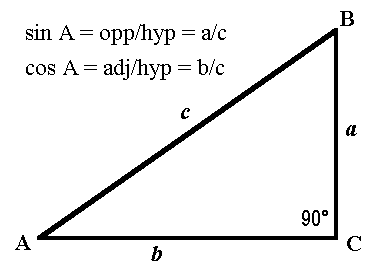
A right triangle has three sides: two legs that form the right angle and a hypotenuse, which is the longest side opposite that angle. If you know two appropriate measurements, you can usually calculate the remaining values.
For example, if the two legs measure 3 units and 4 units, the calculator can determine that the hypotenuse measures 5 units. It can also calculate the triangle’s acute angles and area.
These tools are useful for students completing homework, teachers preparing examples, construction professionals checking measurements, and anyone who needs quick mathematical results.
1. Enter the Known Measurements
The first step is identifying the information provided in your problem. Depending on the calculator, you may be able to enter two side lengths, one side and an acute angle, or another supported combination of measurements.
For instance, imagine a right triangle with a base of 6 inches and a height of 8 inches. Entering these two values allows the calculator to determine the hypotenuse.
Before submitting your measurements, check that you have selected the correct fields and used consistent units. Mixing inches with centimeters or feet with meters can produce misleading results if the calculator does not automatically convert them.
Accurate input is essential because even a sophisticated calculator cannot correct an incorrect measurement entered by the user.
2. Calculate Missing Side Lengths Using the Pythagorean Theorem
One of the most important formulas for right triangles is the Pythagorean theorem. It establishes the relationship between the two legs and the hypotenuse.
<LearningViz type_id=”PYTHAGOREAN_THEOREM” initial_values={{“a”:6,”b”:8}}/>
The formula is:
[
a^2+b^2=c^2
]
Here, (a) and (b) represent the legs, while (c) represents the hypotenuse.
Suppose a triangle has legs measuring 6 units and 8 units. To find the hypotenuse, square both legs, add the results, and take the square root:
[
c=\sqrt{6^2+8^2}
]
[
c=\sqrt{36+64}=\sqrt{100}=10
]
The hypotenuse is 10 units long.
A calculator performs these operations automatically, making it especially useful when measurements involve decimals or larger numbers. You can also rearrange the formula to find a missing leg when the hypotenuse and the other leg are known.
3. Find Missing Angles With Trigonometry
Sometimes, a geometry problem provides side lengths or one acute angle and asks you to determine another angle. In these situations, trigonometric functions are useful.
The three basic trigonometric ratios are:
- Sine: opposite side divided by hypotenuse.
- Cosine: adjacent side divided by hypotenuse.
- Tangent: opposite side divided by adjacent side.
For example, if the opposite side measures 5 units and the adjacent side measures 12 units, the angle can be calculated using inverse tangent:
[
\theta=\tan^{-1}\left(\frac{5}{12}\right)
]
The resulting angle is approximately 22.62 degrees.
A right triangle calculator can determine this value instantly, provided the correct sides are entered and the angle settings are appropriate.
Remember that the two acute angles of a right triangle always add up to 90 degrees. This relationship provides a useful way to check your results.
4. Calculate the Area of a Right Triangle
Finding the area is another common task that a right triangle calculator can simplify. Because the two legs meet at a right angle, they can serve as the base and height.
The area formula is:
[
A=\frac{1}{2}bh
]
In this equation, (b) represents the base and (h) represents the perpendicular height.
Consider a triangle with a base of 10 feet and a height of 6 feet:
[
A=\frac{1}{2}\times10\times6=30
]
The triangle’s area is 30 square feet.
This calculation is useful in school assignments, land measurement, construction planning, and estimating the area of triangular surfaces. A calculator can reduce repetitive work and help you obtain results quickly.
5. Save Time on Homework and Everyday Problems
One of the main advantages of using an online calculator is efficiency. Instead of repeatedly rearranging formulas and checking arithmetic, you can enter known values and receive results within seconds.
Students can use these tools to verify homework answers and identify mistakes in their calculations. Teachers can use them to demonstrate mathematical relationships, while professionals may find them helpful for preliminary measurements and estimates.
For example, if you are calculating the height of a triangular support or checking the diagonal distance across a rectangular surface, right triangle formulas can help establish the necessary measurements.
However, relying exclusively on the final answer may limit learning. For educational purposes, try solving the problem manually first and then use the calculator to verify your work.
6. Avoid Common Calculation Mistakes
Although online calculators simplify mathematics, users should still understand how to enter information correctly.
One common mistake is confusing the hypotenuse with one of the legs. The hypotenuse is always opposite the 90-degree angle and must be the longest side.
Another mistake involves using the wrong trigonometric ratio. Before choosing sine, cosine, or tangent, identify which sides are opposite and adjacent to the angle being measured.
You should also check whether the calculator uses degrees or radians. An incorrect angle setting can cause unexpected results.
Finally, pay attention to rounding. If a result contains several decimal places, keep sufficient precision during intermediate calculations and round only the final answer when appropriate.
These simple checks help you use digital tools more confidently and accurately.
7. Choose a Calculator That Fits Your Needs
Not every right triangle calculator offers the same features. Some provide only missing side lengths, while others calculate angles, area, perimeter, and trigonometric ratios.
If you are a student, look for a tool that displays formulas or explains each calculation. Seeing the mathematical steps can improve your understanding of geometry and make it easier to solve similar problems independently.
For practical measurement tasks, choose a calculator that supports decimal inputs, multiple measurement units, and sufficient precision.
It is also helpful to understand the assumptions behind the tool. A right triangle calculator is intended for triangles containing a 90-degree angle, so it may not be suitable for solving every type of triangle problem.
Conclusion
A right triangle calculator is a practical tool for solving geometry and trigonometry problems faster. It can help you determine missing side lengths, calculate angles, find areas, and verify answers using established mathematical formulas.
By learning how to enter measurements correctly, apply the Pythagorean theorem, and use basic trigonometric ratios, you can get more value from these tools while strengthening your understanding of mathematics.
Whether you are completing homework, preparing for an exam, or working with everyday measurements, combining manual problem-solving skills with a reliable calculator can make mathematical tasks simpler, faster, and more manageable.