
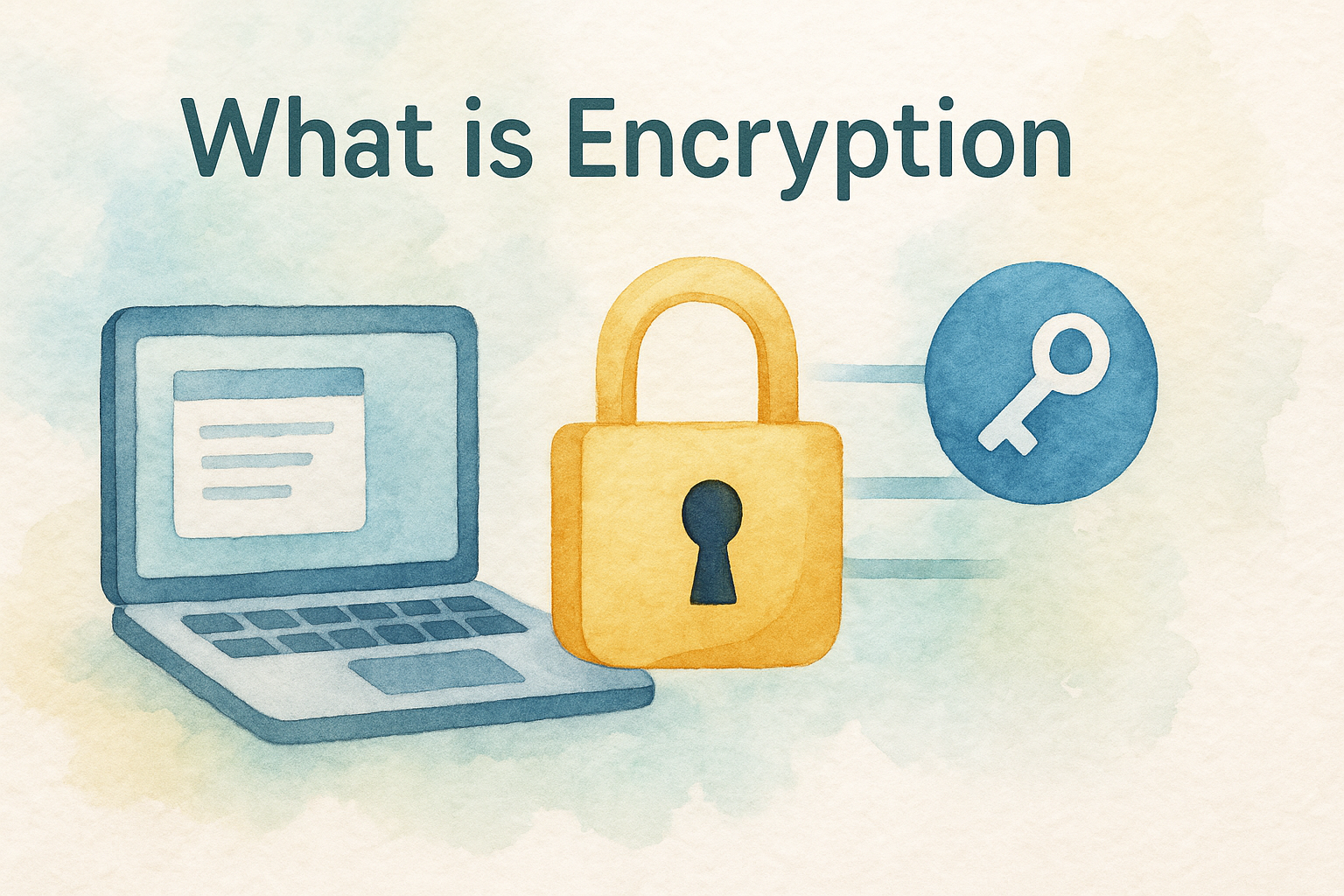
Most people think digital security is a complex mystery, but it actually relies on the logic of prime numbers. You might assume your files are safe because you have a strong password, but the real work happens after you hit save.
Mathematical functions work behind the scenes to scramble your data so that only you can read it. Keep on reading to see how these equations turn your documents into unreadable strings of characters.
How Public and Private Keys Secure Data
Asymmetric cryptography is the foundation of modern privacy. It uses a pair of keys that are mathematically linked but not identical. One is your public key, which anyone can use to encrypt a file for you. The other is your private key, which you keep secret and use to decrypt those files. This system relies on trapdoor functions. It’s easy to calculate the sum in one direction, but nearly impossible for a computer to reverse the process without the correct key.
The maths involves multiplying two incredibly large prime numbers to create a public key. While multiplying them is quick, finding the original factors of that massive number takes an impractical amount of computing power. This means that even if someone intercepts your data, they can’t unlock it because they don’t have the private factor. It’s worth pointing out that this ensures your data stays safe even when it moves across public networks.
Security Differences in Modern Cloud Storage
There’s a significant difference between how different providers handle your data. Many mainstream services use encryption in transit, which means your files are protected while they move from your laptop to their servers. However, the provider often keeps the decryption keys on their end. Because of this, the company or a rogue employee could technically access your files if they wanted to.
When you use a cloud storage service that uses client-side encryption, the whole process of communication and file sharing between client and server is much safer. The encryption happens on your device before the data ever leaves. This ensures the provider never sees your actual key or the contents of your files. This creates a zero-knowledge environment where only the owner of the account holds the power to view the data.
Why Local Encryption Is Safer
Local or client-side encryption removes the element of trust from the equation. You don’t have to hope the company has good internal security protocols because the data they store is already scrambled. If a hacker manages to break into the server farm, they will only find encrypted blocks of data that look like digital noise.
There are three main components that work together to keep your data private:
- Asymmetric encryption for securely sharing files with others.
- Symmetric encryption for locking your own files quickly and efficiently.
- Cryptographic hashing to ensure that nobody has tampered with the file since you saved it.
How Your Password Becomes a Key
You don’t actually use your password to encrypt a file directly. Instead, the system uses something called a key derivation function. When you type your password, the software runs it through an algorithm like Argon2. This process adds random data, known as salt, and performs thousands of calculations to turn your simple password into a long, complex cryptographic key.
This step is vital because it protects against brute-force attacks. Even if a hacker uses a supercomputer to guess millions of passwords a second, the key derivation process slows them down. It makes the cost of the attack too high to be worth the effort. By the time they could guess the right combination, the information would likely be useless.
Concluding Notes
The maths behind encryption is the only thing standing between your private documents and the rest of the web. By moving the encryption process to your own device, you take control of your digital footprint.
It’s a simple change in how data is handled, but it makes a massive difference to your overall security. Relying on proven mathematical principles is always better than relying on the promises of a service provider.