
Image Credit: Unsplash
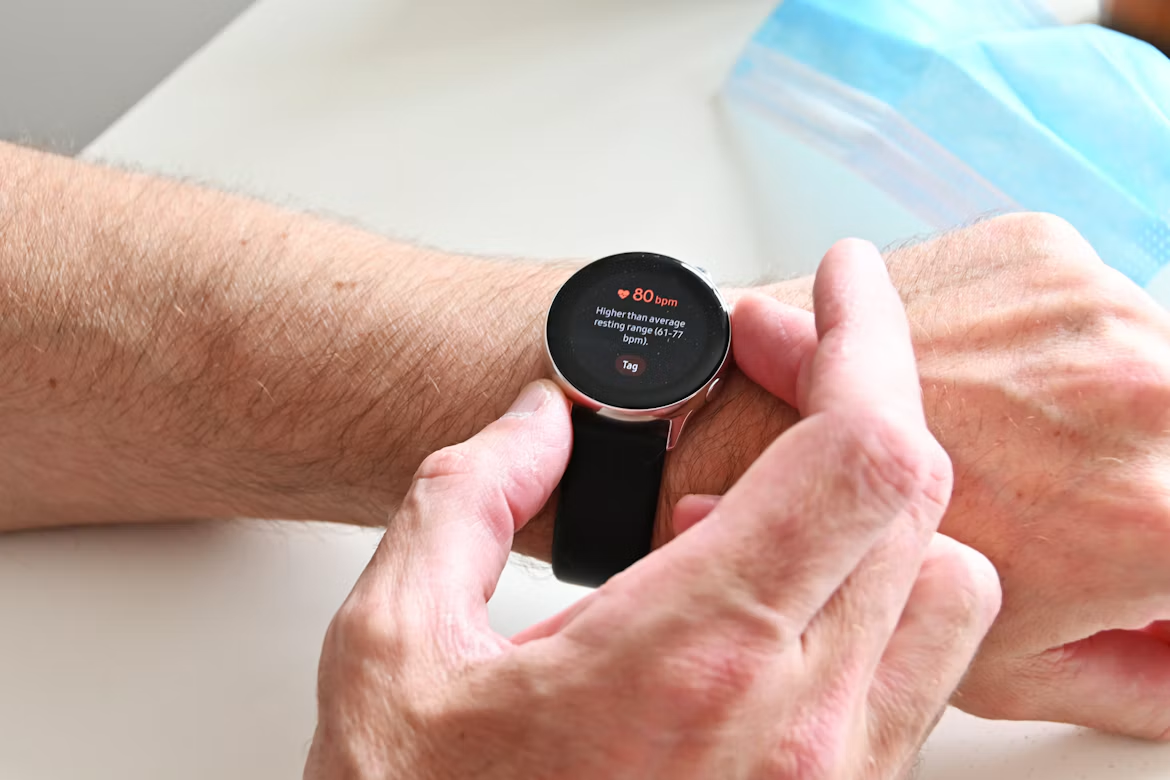
Wearable safety devices need to recognize a possible emergency and trigger the right response within seconds. Edge computing supports that goal by analyzing sensor data close to where it is produced, often on the wearable itself or a nearby hub. This design reduces dependence on a continuous cloud connection and limits the amount of personal data transmitted over a network. For fall detection and related safety functions, local processing can turn raw movement measurements into a useful alert while keeping response times predictable.
Latency Bottlenecks in Cloud-Based Alerts
A cloud-only system must transmit sensor readings, wait for remote analysis, and receive an instruction before it can act. Weak cellular coverage, congested networks or a temporary internet outage can add delays at the moment an alert matters most. Research into on-device edge processing shows why local decisions can improve response times in safety applications.
When comparing wearable options, look for automatic detection, manual help buttons and backup communication paths. A Life Assure personal medical alert system is one example Canadian seniors and families can consider when evaluating monitored home or mobile safety support. Ask the provider what happens when connectivity drops and which functions remain available.
Processing Kinetic Signals on Device
Wearables usually measure motion through accelerometers and gyroscopes. An accelerometer tracks changes in movement and orientation, while a gyroscope measures rotation. Local software can examine these kinetic signals for a sequence such as rapid downward motion, impact, and an unusual period of stillness.
Threshold rules offer a simple starting point, but they can confuse sitting quickly with falling. A compact machine learning model can evaluate signal patterns across short time windows and assign a confidence score. If confidence is high, the device may start an alert workflow. If it is uncertain, it can ask the wearer to confirm their status. This layered process reduces unnecessary alerts without waiting for continuous cloud analysis.
Real-World Deployments in Senior Care
In senior care, edge-enabled wearables can support people who live independently, residents in assisted living settings and caregivers monitoring mobility risks. Consider a person who falls in a hallway outside Wi-Fi range. A wearable can classify the movement locally, vibrate or sound a prompt and start its communication process once it identifies a likely emergency.
Deployment teams should test devices during ordinary activities, including getting out of bed, climbing stairs and sitting down quickly. They should also confirm where cellular or local hub coverage weakens. Broader edge computing guidance recommends matching data processing locations to response needs and network conditions. These checks help teams tune detection settings to real routines instead of controlled demonstrations.
Overcoming Battery and Memory Limits
Continuous sensor analysis can drain a small wearable battery, while complex models may exceed available memory. Developers address both constraints through low-power sampling, event-based activation and model compression. For example, a device might collect basic accelerometer data at a modest rate, then activate higher-frequency analysis only after detecting sudden motion.
Care teams and buyers should check expected battery life under normal use, charging time and low-battery warnings. Software updates also need careful management because a larger model may improve classification while increasing power demand. The principles behind real-time anomaly detection can help technical teams identify unusual movement patterns without processing every signal at maximum intensity. Regular field testing should measure battery performance and alert accuracy together.
Edge computing works best when local detection, reliable communication and human response form one coordinated process. A wearable that recognizes a likely fall in seconds still needs clear prompts, dependable monitoring and a charging routine the wearer can follow. Testing that full chain in the places where the device will be used reveals gaps that specification sheets often miss.