
Behavioral health involves personal and complex issues about mental health and human behavior. The question remains for practitioners: how best can we use the power of data science to understand patients’ needs better, anticipate risks, and proactively offer them personalized care?
Data science has transformed how practitioners diagnose, monitor, and treat individuals. It has transformed the behavioral health professional into one who can offer timely support that truly answers a patient at the point where they are potentially revolutionizing the landscape of behavioral health.
Identifying and Predicting Mental Health Risks
Predictive analytics through data science is a game-changing approach that allows finding out the risk of mental health disorders before they grab an alarming proportion in society. Patterns analyzed from big data, such as medical records, social factors, and even biological markers of physical health, are used by behavioral health professionals to determine risk factors associated with mental health disorders.
For instance, machine learning algorithms that deploy a combination of genetic, demographic, and environmental data are being used to predict the risk of depression or anxiety and several other conditions. Early risk identification is crucially important in populations with limited access to mental health services and lays a platform for preventive care.
Personalizing Treatment Plans

One of the most significant ways in which data science is shaping behavioral health is by enabling highly personalized treatment. Traditionally, treatment approaches are not universally applicable. Data analytics, including the analysis of Codes for ADHD in ICD-10, allows clinicians to identify patterns across large datasets, helping determine the most effective treatments for specific patient groups based on their unique characteristics.
Often, data-driven personalization in behavioral health is offered by tools, including natural language processing and sentiment analysis, which score a patient’s responses, emotions, and cognitive state from one time point to another.
Improving Patient Monitoring and Progress Tracking
As behavioral health conditions may be very dynamic or changing within the patient, constant monitoring is necessary for proper care. Data science has brought forth various tools to enhance the precision, efficiency, and accessibility of patient monitoring.
Wearable devices, applications on smartphones, and even the analysis of social media enable continuous data collection related to a patient’s mood, activity levels, sleep patterns, and so on. These data points have clearer, more real-time pictures that a behavioral health professional might see in a patient’s track and future problems.
For example, mood throughout the day can be tracked with an application that alerts clinicians to signs of deterioration or improvement. Such tools enable the quicker readjustment of treatment plans to keep care responsive to the needs of patients at the moment.
Enhancing Early Detection Through Natural Language Processing
Natural language processing (NLP) is one of the most powerful tools in data science, allowing computers to work with human language instead of resisting it. In the realm of behavioral health, NLP transforms the way early signs of mental health issues are identified. Through speech or written text patterns social media postings or electronic health records will identify an uncharacteristic language of depression, anxiety, and suicidal ideation.
For instance, an NLP model can detect emotional changes or linguistic styles that might suggest depressive episodes. Such information can enable clinicians to act early before crises occur. NLP-based applications are also increasingly being combined with digital platforms for mental health care, allowing mass screening and triaging without overburdening the time and competencies of clinicians.
Enhancing the Quality of Behavioral Health Data Through Collaboration
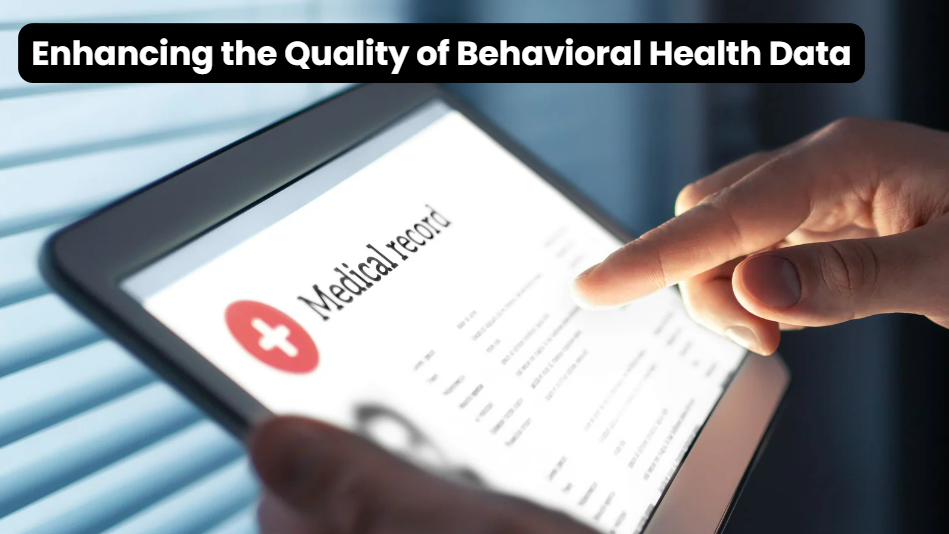
Data science is also allowing mental health professionals, researchers, and healthcare organizations to better collaborate and improve quality through the understanding of behavioral health data. With shared databases and standardized metrics, researchers and clinicians get large diverse datasets for furthering knowledge about their mental health trends and the effectiveness of treatment.
This collaborative approach will therefore improve the accuracy of mental health diagnoses because larger datasets mitigate the risk of biases that might be inherent in the smaller sample. For example, a clinic specializing in PTSD could send anonymous data to researchers for purposes of refining diagnostic criteria or developing more effective therapeutic approaches.
Empowering Patients Through Self-Management Tools
Data science has completely changed the way clinicians work and even the way patients manage their behavioral health. Using self-management applications and digital tools partially powered by data analytics, patients are now allowed to gain insight into patterns and triggers related to their mental health.
For example, the CBT applications use data-based algorithms when providing what they claim are individualized exercises or practices tailored to the mood of the user and foster a means of patient-led engagement and thus enhance adherence in therapy.
Addressing Data Privacy and Ethical Concerns
Data in behavioral health is on the rise, and with it, concerns about data privacy and ethics. Behavioral health data is often sensitive, and the risks of misuse or breaches are significantly high. Data science in behavioral health requires strict observance of privacy standards in protecting patients’ confidential information.
There are such simple steps as secure data storage methods, data anonymization, and compliance with requirements of healthcare privacy regulations. Transparency in the usage of data and protection measures from patients is also essential because it leads to trust and a feeling of respect for the individual’s privacy in the face of further technological developments in behavioral health.
Challenges and Future Directions
| Aspect | Description |
| Challenges of Data Science in Behavioral Health | Despite its benefits, data science integration in behavioral health faces challenges such as limited resources, lack of technological infrastructure, and low data literacy in many organizations. |
| Biases in Datasets | Some datasets may contain biases, leading to inaccurate predictions or discrimination if not carefully managed. |
| Promise of Data Science in Behavioral Health | Data science holds significant promise, with ongoing advancements in artificial intelligence, machine learning, and big data analytics supporting predictive and personalized care. |
| Future of Mental Health Models | Data science will enable the development of new mental health models and intervention methods tailored to specific cultures, socioeconomic backgrounds, and demographics. |
Conclusion
Data science is slowly becoming a cornerstone of the modern behavioral healthcare profession as it increasingly changes the way mental health professionals diagnose, treat, and engage patients. Data science has proven to be capable of early detection, personalized treatment, and improved patient monitoring.
It helps make health care more accessible and effective for patients. However, the field needs to balance innovation with ethical responsibility as it continues to progress. Data science does have the potential to make behavioral health care more empathetic, inclusive, and effective by empowering both providers and patients toward a future of better mental well-being.
FAQs
- How does data science help in predicting mental health risks?
Data science uses patterns in large datasets to identify risk factors for mental health issues, allowing providers to intervene early and prevent crises.
- Can data science personalize treatment for behavioral health patients?
Yes, data analytics helps tailor treatment plans based on individual needs, improving patient outcomes and engagement.
- What role do wearable devices play in patient monitoring?
Wearables track real-time data like mood, sleep, and activity, giving providers insight into patients’ daily mental health fluctuations.