
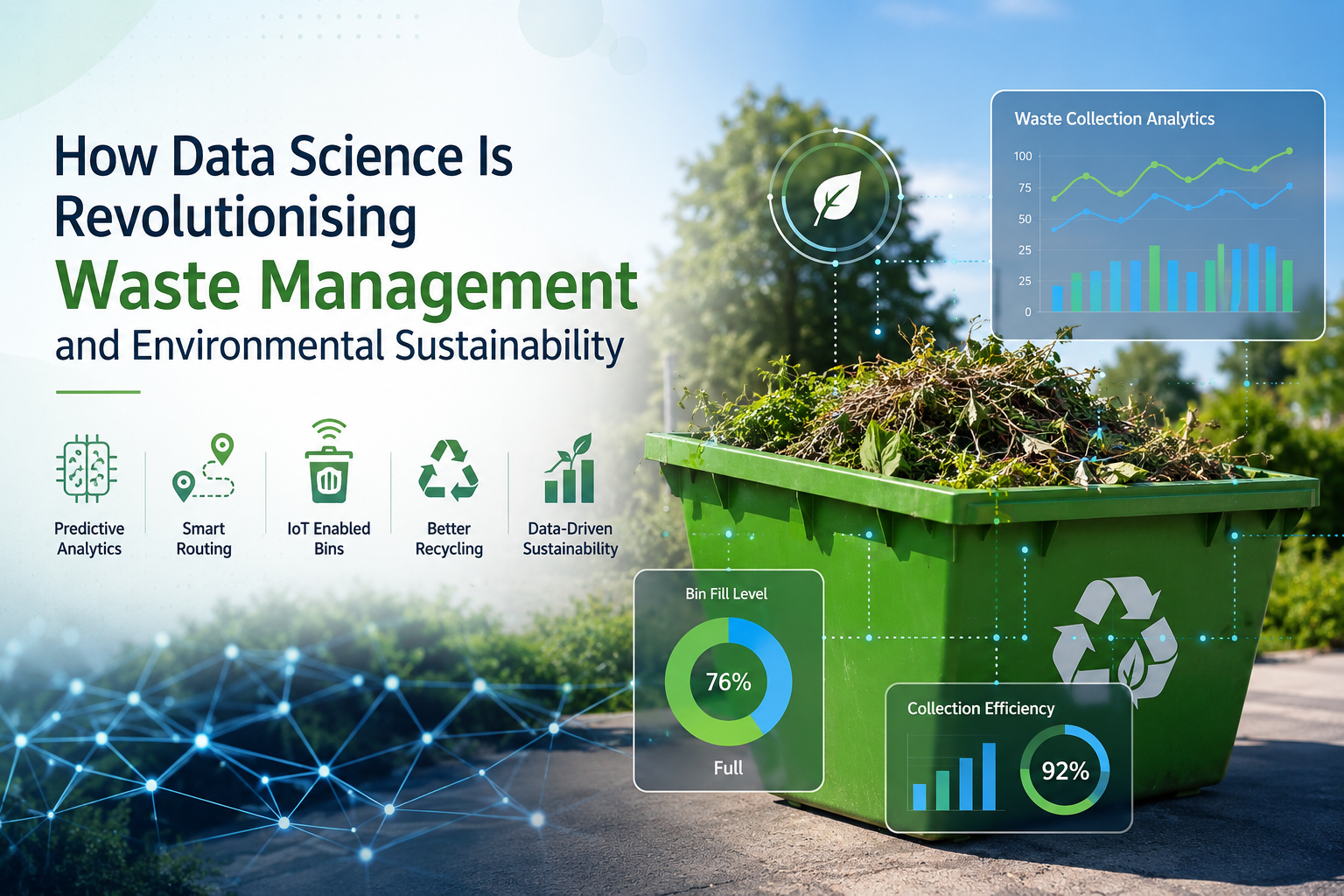
As cities continue to grow and environmental concerns become more pressing, waste management has evolved from a simple collection service into a technology-driven industry. Data science is playing a crucial role in this transformation by helping governments, businesses, and waste management providers make smarter decisions based on real-time information and predictive analytics.
From optimising collection routes to improving recycling rates, data-driven solutions are creating cleaner, more sustainable communities while reducing operational costs. This shift demonstrates how artificial intelligence, machine learning, and big data can solve practical environmental challenges that affect millions of people every day.
The Growing Challenge of Waste Management
Urban populations generate enormous volumes of waste daily. Managing household rubbish, construction debris, recyclable materials, and organic waste requires careful planning and efficient resource allocation.
Traditional waste management systems often rely on fixed collection schedules and manual planning. While these methods have served communities for decades, they frequently lead to:
- Inefficient collection routes
- Overflowing bins
- Increased fuel consumption
- Higher operational expenses
- Missed recycling opportunities
Data science offers an opportunity to replace these reactive systems with intelligent, predictive models.
Predictive Analytics for Smarter Waste Collection
Predictive analytics enables waste management companies to forecast waste generation based on historical trends, weather conditions, seasonal events, and population growth.
Machine learning algorithms can analyse thousands of data points to determine:
- Which neighbourhoods generate the most waste
- Peak collection periods
- Seasonal variations
- Expected recycling volumes
- Vehicle utilisation requirements
This information allows organisations to allocate resources more efficiently while reducing unnecessary trips.
Route Optimisation Through Artificial Intelligence
One of the most successful applications of data science is route optimisation.
GPS data, traffic information, fuel consumption records, and historical collection times are analysed to create the most efficient collection schedules.
Benefits include:
- Reduced fuel usage
- Lower carbon emissions
- Faster collection times
- Reduced vehicle maintenance
- Improved customer satisfaction
AI-powered routing systems continuously adjust schedules based on traffic congestion, road closures, and real-time bin capacity.
Smart Bins and Internet of Things (IoT)
Modern waste management increasingly relies on Internet of Things (IoT) technology.
Smart sensors installed inside waste bins can monitor:
- Fill levels
- Temperature
- Weight
- Moisture
- Collection frequency
These sensors transmit live data to central management platforms, allowing operators to dispatch vehicles only when necessary instead of following rigid schedules.
This significantly reduces operational costs while preventing overflowing bins.
Improving Recycling with Data
Recycling programmes often struggle because recyclable materials become contaminated by incorrect disposal.
Computer vision and machine learning can improve sorting accuracy by identifying different materials on automated processing lines.
These systems can distinguish between:
- Plastic types
- Glass
- Paper
- Cardboard
- Metals
- Organic waste
Higher sorting accuracy improves recycling efficiency while reducing landfill waste.
Environmental Monitoring Through Big Data
Data science also supports broader environmental monitoring.
Satellite imagery, sensor networks, and environmental databases help authorities track:
- Illegal dumping
- Landfill capacity
- Air quality
- Water contamination
- Greenhouse gas emissions
Combining these datasets provides policymakers with valuable insights for long-term environmental planning.
Forecasting Future Waste Trends
Population growth, economic development, tourism, and consumer behaviour all influence waste production.
Predictive models allow governments to estimate future waste volumes years in advance.
These forecasts support:
- Infrastructure planning
- Budget allocation
- Recycling facility expansion
- Landfill management
- Sustainability initiatives
Rather than reacting to increasing waste volumes, organisations can proactively prepare for future demand.
Data Science in Organic Waste Management
Organic waste represents a significant portion of household rubbish.
By analysing collection patterns and seasonal vegetation cycles, waste providers can better manage composting and green waste processing facilities.
For example, many Australian service providers offering green waste skip bins darwin use demand forecasting to anticipate higher garden waste volumes during landscaping projects, storm clean-ups, and seasonal maintenance. Better forecasting improves fleet scheduling and reduces unnecessary transport, making organic waste recycling more efficient.
Challenges in Data-Driven Waste Management
Although the benefits are substantial, implementing data-driven waste systems presents several challenges:
- Data quality and consistency
- High implementation costs
- Integration with existing infrastructure
- Cybersecurity concerns
- Workforce training requirements
Successful digital transformation requires both technological investment and organisational commitment.
The Future of Intelligent Waste Management
Emerging technologies will continue expanding the role of data science within environmental management.
Future innovations may include:
- Autonomous waste collection vehicles
- AI-powered recycling robots
- Digital twins of city waste systems
- Real-time carbon footprint monitoring
- Advanced predictive maintenance for waste collection fleets
As machine learning models become increasingly sophisticated, waste management operations will become more efficient, environmentally friendly, and cost-effective.
Conclusion
Data science is transforming waste management from a reactive public service into an intelligent, predictive ecosystem. Through machine learning, IoT devices, predictive analytics, and computer vision, organisations can reduce operational costs, improve recycling performance, and minimise environmental impact.
As cities pursue smarter infrastructure and sustainability goals, data-driven waste management will become an essential component of urban planning. The integration of analytics and environmental services demonstrates how technology can deliver measurable benefits for businesses, governments, and communities while supporting a cleaner, more sustainable future.