
Predictive analytics has transformed how businesses anticipate market trends, customer behavior, and operational risks. With the growing availability of big data and advancements in artificial intelligence, organizations can make more informed decisions than ever before.
Data science plays a crucial role in refining these predictive models, ensuring that businesses react to trends and proactively shape their strategies. Therefore, data has become a key focus area for many companies worldwide.
According to Forbes, around 90% of companies prioritized data initiatives in 2023. It is evident, considering the benefits data offers to any business. Companies leveraging data-driven strategies achieve 23 times greater customer acquisition and seven times higher customer retention and revenue.
This article looks at how data science is reshaping predictive analytics in business strategy.
The Power of Machine Learning
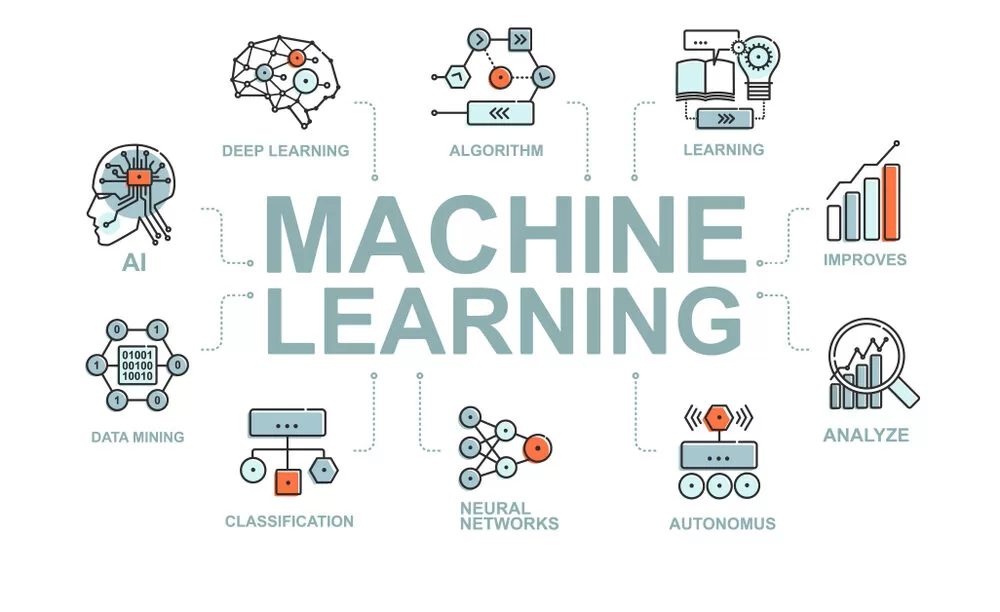
Machine learning (ML), a branch of artificial intelligence (AI), drives this change by enabling computers to learn from data and discover patterns beyond statistics.

As noted in a ScienceDirect study, statistical methods try to build a relationship between inputs and outputs based on the available data. They consider various assumptions and rules. On the other hand, ML algorithms identify patterns by linking the predictors and the predicted variable without any assumptions. This allows businesses to build highly accurate predictive models that can forecast future outcomes with unprecedented precision.
Retailers utilize machine learning to personalize customer experiences through preference prediction and product recommendations, boosting satisfaction, sales, and revenue.
Consider the example of Amazon, which has been using AI and ML for product recommendations throughout a customer’s shopping journey. Algorithms analyze customer purchase history and preferences to generate product recommendations. In fact, it is now also using generative AI to create personalized product descriptions that can attract more customers.
How does machine learning process unstructured data, such as text and images, for predictive analytics?
Machine learning tackles unstructured data through specialized techniques. Natural Language Processing (NLP) analyzes text by tokenizing sentences, while Convolutional Neural Networks (CNNs) process images. CNNs process images by identifying features like edges, shapes, and textures, gradually building a comprehensive understanding of the image content.
Data Governance and Compliance
Successful predictive analytics relies on robust data governance, ensuring data accuracy, consistency, and security through quality standards, security measures, and privacy compliance.
Ethical considerations regarding data and algorithms are crucial for maintaining public trust and mitigating biases. This becomes even more important for companies operating remotely. They should wisely choose a state to incorporate their corporate presence, someplace where they can get legal support.
Delaware is one such state with a business-friendly legal framework. It has a dedicated court, the Court of Chancery, for legal corporate disputes. With three different court locations to help with legal disputes, there’s no wonder why many enterprises want to incorporate in Delaware.
Remote companies leveraging data science for predictive analytics can get a Delaware business address to benefit from its legal framework. This practice ensures that although you operate remotely, you can seek legal assistance in Delaware in case of any data governance and compliance disputes.
You don’t need to have a physical business in Delaware to do this. The Farm Soho states that you can simply have a virtual address with mailbox services. Any documentation for legal disputes or communication from government entities will be addressed to this virtual mailbox. You can ask the service provider to scan it and share the email with you.
Real-Time Insights and Dynamic Decision-Making
Generating real-time insights is another key driver of adopting predictive analytics in business strategy. Today, businesses are able to source data from various sources, including social media, mobile devices, and the Internet of Things (IoT). Businesses now have real-time access to market trends, customer behavior, and operational performance data.
When combined with sophisticated predictive models, this real-time data enables businesses to make dynamic decisions in response to changing conditions. Logistics companies use real-time data to optimize routes, predict delays, and address supply chain issues.
This real-time data analytics has use cases across sectors. For example, manufacturers can rely on real-time data for equipment maintenance. This can help them take a proactive approach to predictive maintenance to minimize repairs and downtime. Additionally, using data science for real-time analysis can help them identify opportunities to improve production processes.
What methods ensure real-time data accuracy and reliability for predictive analytics?
Ensuring accuracy in real-time data involves implementing robust data validation processes at the source. Data cleansing, anomaly detection, and consistency checks identify and correct errors. Employing reliable data sources, such as sensor networks or trusted APIs, is crucial. Data stream processing technologies enable continuous monitoring and validation of incoming data.
Enhancing Risk Management and Fraud Detection
It is also important to use data science in predictive analytics to enhance risk management and fraud detection. Analyzing historical data for suspicious patterns enables proactive risk mitigation and financial loss prevention.
For example, consider the insurance industry. Data shows that insurance fraud costs the USA around $308.6 billion annually. Around 75% of insurance companies are confident that insurance fraud is spreading quickly.
A CNBC news article also states that criminals steal over $100 billion from Medicare and Medicaid frauds alone. However, experts believe that the actual amount of fraud can be much higher.
In the insurance industry, predictive models assess the risk of claims, detect fraudulent applications, and optimize pricing strategies. Proactive risk management reduces losses, improves efficiency, and builds customer trust.
How can predictive analytics be used to detect emerging risks beyond traditional financial risks?
By analyzing diverse data sources, predictive analytics can expand risk detection beyond financial domains. Social media monitoring can identify emerging reputational risks by analyzing sentiment and detecting negative trends. News and industry reports offer early warnings of supply chain and market changes.
As data science continues to evolve, predictive analytics capabilities will only expand. Future trends include advanced algorithms, new data sources, and broader AI-driven decision-making.
Organizations that can effectively harness the power of data science to anticipate future trends will define the future of business strategy. This requires a commitment to continuous learning, innovation, and embracing new technologies. Businesses that adapt and evolve within this data-driven environment will thrive in the future.