
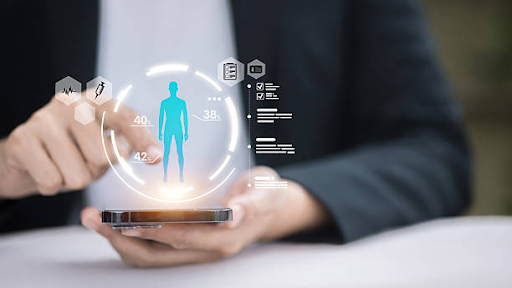
For decades, consumer health platforms operated on a fundamentally flawed assumption: that human physiology is linear, predictable, and universally standard. Most early health tracking applications relied on a single, male-centric baseline. Caloric expenditure calculations, metabolic recovery models, and sleep quality indexes were built using clinical data that consistently underrepresented women. The result was a generation of digital health tools that gave female users advice that was, at best, generalized and, at worst, entirely out of sync with their biological reality.
That gap is finally closing, and the solution isn’t just better user interface design, it is advanced data engineering. The shift toward genuine data-driven personalization in women’s health apps represents a massive leap forward in how we process complex, non-linear biological data. For data scientists, the FemTech space introduces a unique layer of architectural complexity: how to build adaptive pipelines that process messy, asynchronous, and deeply intimate user data to deliver highly precise, actionable predictions.
The Historical Baseline Problem: Overcoming Data Biases in Healthcare
To understand why generic apps fail women, we have to look at the underlying training datasets. Traditional health algorithms rely heavily on static formulas. For example, standard basal metabolic rate (BMR) formulas treat daily energy expenditure as a fixed equation based on height, weight, and age.
However, female biology operates on a continuous, multi-week cycle where hormones like estrogen and progesterone dramatically alter insulin sensitivity, metabolic rate, core body temperature, and nutrient absorption. When an application ignores these variables, its predictive accuracy plummets. A calorie deficit plan or a high-intensity training recommendation that works perfectly on Day 5 of a woman’s cycle might cause metabolic stress or severe fatigue on Day 23. To build a system that actually works, data science teams cannot treat biological fluctuations as noise or outliers. Instead, they must treat these cyclical patterns as the primary baseline. This requires moving away from static linear models and shifting toward continuous model retraining and dynamic feature weighting.
[Traditional Models] ──► Linear Assumptions ──► Static Recommendations (Often Inaccurate)
[Modern FemTech] ──► Cyclical Features ──► Dynamic Retraining ──► Adaptive Insights
Inside the Pipeline: How FemTech Personalization Actually Works
Transforming raw telemetry into hyper-personalized user guidance requires a sophisticated backend architecture. Modern FemTech apps do not just rely on a simple onboarding quiz; they build living data ecosystems that continuously update through specific infrastructural layers:
-
Multimodal Data Fusion:
The first major engineering hurdle is ingesting and syncing highly contrasting data streams. On one hand, you have continuous, high-frequency time-series data coming from wearable IoT devices (such as resting heart rate, heart rate variability, skin temperature, and sleep architecture). On the other hand, you have sparse, subjective, and categorical data manually logged by the user (such as mood scales, specific cravings, pain levels, and digestive symptoms). Data fusion layers must clean, timestamp, and align these disparate streams so models can identify correlations between objective metrics and subjective inputs.
-
Feature Engineering for Bi-Periodic Trends:
Biological tracking requires feature engineering that maps calendar dates to a fluid, moving biological timeline. Because a woman’s cycle can vary anywhere from 21 to 35 days, algorithms cannot rely on fixed 30-day loops. Data scientists use specialized time-warping algorithms and phase-mapping techniques to convert calendar days into relative positions within a biological cycle, allowing the model to accurately compare historical events across multiple months.
-
Solving the Cold Start Challenge:
Engineers solve the initial data deficit by using unsupervised clustering algorithms, such as K-Means or hierarchical clustering. Based on onboarding attributes (age, goals, historical cycle length), the system assigns the user to a specific behavioral and physiological archetype. As telemetry data accumulates, the algorithm shifts its focus away from broad cluster averages and assigns heavier weights to the individual’s unique data points.
Domain Application: Re-Engineering Nutrition, Weight and Mental Health Analytics
The true power of this data architecture is realized when it translates raw numbers into practical, everyday support. This is where data science meets real-world wellness strategies.
Adaptive Nutrition and Weight Management Models:
Instead of handing a user a rigid, unchanging macro-nutrient target, advanced recommendation engines adapt daily. If time-series data registers a sustained rise in core body temperature alongside a localized drop in heart rate variability (HRV), common indicators of the late luteal phase, the backend engine shifts its parameters. It might automatically adjust glucose management thresholds, scale down high-intensity workout suggestions, and suggest specific nutrient-dense food groups to match the body’s shifting metabolic demands.
To ensure these automated adjustments are both safe and scientifically valid, data structures must be grounded in verified clinical frameworks. For example, data scientists frequently map their automated content rules against trusted, domain-specific wellness platforms.
Platforms like healthsorbit.com, which specialize in evidence-based deep dives across Women’s Health, Nutrition, and Weight Management, provide the essential medical guardrails that keep machine learning outputs grounded. By training recommendation engines to align with these verified clinical standards, engineering teams ensure that automated, AI-driven wellness advice remains biologically safe and contextually relevant.
Behavioral Anomaly Detection in Mental Health Technology:
Mental health feature engineering has evolved far beyond simple mood tracking. Advanced platforms now utilize anomaly detection algorithms to cross-reference psychological self-reports with passive behavioral telemetry. For instance, a recurrent neural network (RNN) or a Long Short-Term Memory (LSTM) network can analyze patterns in sleep fragmentation, typing speed, social app usage, and physical activity drops. If the network identifies a pattern of compounding sleep debt paired with decreased physical movement, it can flag a high statistical probability of an impending anxiety spike or burnout period, often days before the user is consciously aware of it.
The Next Frontier: Predictive Health Analytics and Edge Privacy
We are currently transitioning from a descriptive era of data, where an app simply tells you what happened yesterday to a predictive era. The ultimate goal of FemTech data architectures is to forecast physiological states. By analyzing months of consistent biometrics, predictive models can look ahead and warn a user of an oncoming low-energy window or a metabolic shift up to 72 hours in advance. This gives women the agency to adjust their professional schedules, training intensities, and dietary habits proactively rather than reactively. For gynecology practices managing the billing side of these expanding care models, dedicated gynecology billing services like AnnexMed help ensure that new care delivery approaches are coded and reimbursed accurately.
However, scaling these predictive systems requires addressing a massive ethical bottleneck: Data Privacy. Menstrual data, mental health logs, and biometric streams are highly sensitive. To protect user anonymity while maintaining hyper-personalization, the tech industry is rapidly moving toward decentralized machine learning architectures, specifically federated learning and differential privacy. Instead of uploading raw, deeply personal user logs to a centralized cloud server, the machine learning models are trained directly on the user’s smartphone (edge computing). This ensures that the global model becomes smarter collectively without the central platform ever seeing an individual’s raw, private health data.
A Paradigm Shift in Healthcare Technology
For data scientists, software engineers, and machine learning researchers, building solutions for modern women’s health apps is one of the most rewarding challenges in consumer healthcare. It requires moving past the outdated comfort zone of clean, linear, population-wide averages and mastering the nuances of highly variable, multi-modal time-series data. By treating biological variance as a critical feature rather than a statistical error, data science is finally giving women the tools they deserve to manage their physical health and mental well-being. The future of health technology is adaptive, highly secure, and built entirely around the intricate patterns of the individual.