
Introduction
For large enterprises, Amazon Storefronts are no longer just another sales channel—they are a direct extension of brand identity, customer experience, and market expansion. With millions of sellers competing for attention, standing out requires more than simply listing products. Enterprises need sophisticated strategies that combine creativity, data, and automation.
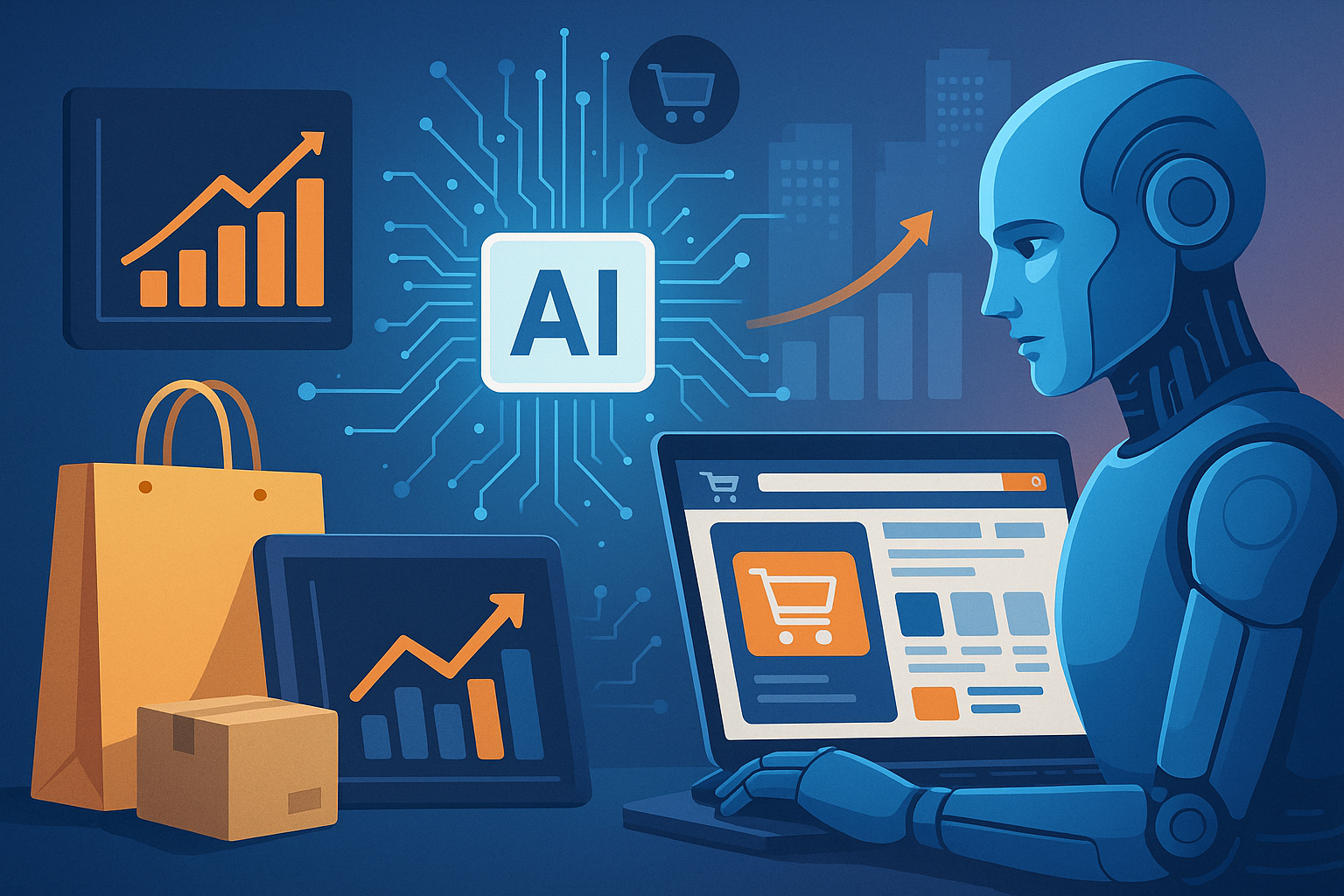
This is where Artificial Intelligence (AI) enters the picture. By integrating AI Development, eCommerce Development, enterprises can transform their Amazon Storefronts into dynamic, high-performing ecosystems. AI is not only redefining how brands approach marketing but also how they manage operations, customer engagement, and long-term growth.
The Current State of Amazon Storefront Marketing

Amazon Storefronts provide a branded experience that allows enterprises to showcase curated product collections, promotional campaigns, and multimedia assets. Yet, despite this potential, many enterprises face challenges such as:
-
Rising advertising costs due to high competition.
-
Lack of personalization, making storefronts feel generic.
-
Difficulty in analyzing and optimizing campaigns across thousands of SKUs.
-
Maintaining consistent branding across multiple global markets.
Without advanced tools, marketing services for Amazon storefronts often remain reactive—responding to trends instead of predicting them. AI changes this dynamic by introducing data-driven, proactive decision-making.
AI-Powered Personalization for Storefronts

Personalization is no longer a luxury; it is an expectation. Customers demand experiences tailored to their preferences, and AI enables enterprises to deliver exactly that.
By analyzing browsing history, purchase patterns, and demographic data, AI can dynamically adjust storefront layouts, highlight the most relevant products, and even recommend bundles. This ensures that two customers visiting the same storefront may see different product promotions—each optimized for their buying intent.
Large brands leveraging Marketing Services for Amazon Storefront powered by AI gain a competitive edge, as they can convert casual browsers into loyal customers with hyper-personalized recommendations.
Smarter Content Creation and Optimization

Content is the backbone of any successful Amazon Storefront. However, crafting engaging product titles, descriptions, and A+ content for hundreds or even thousands of products is a resource-intensive task.
AI tools can assist enterprises by:
-
Generating SEO-friendly titles and descriptions that rank higher in Amazon searches.
-
Suggesting storefront visuals, banners, and promotional creatives based on customer behavior.
-
Offering multilingual content creation for global reach.
For enterprises investing in eCommerce Development, integrating AI-driven content optimization ensures consistency, scalability, and improved discoverability.
Advanced Advertising and Campaign Management

Advertising on Amazon has become increasingly competitive. Enterprises often spend millions on PPC campaigns without fully understanding ROI. AI transforms this by providing predictive insights and real-time optimization.
AI-driven algorithms can:
-
Allocate budgets efficiently across campaigns.
-
Identify high-performing keywords.
-
Automate bid adjustments to maximize ROI.
-
Integrate Amazon DSP campaigns with external channels like Google Ads and social media.
When combined with, enterprises gain the ability to run leaner, smarter campaigns that generate better results with reduced overhead.
Enhanced Customer Insights & Predictive Analytics

AI provides enterprises with more than just real-time reporting—it offers predictive intelligence. By analyzing customer sentiment, browsing history, and purchase frequency, AI can forecast future demand and detect emerging trends.
For example:
-
Predicting a surge in seasonal products like winter gear or festival-specific items.
-
Identifying upsell opportunities (customers buying a camera may need accessories).
-
Highlighting cross-sell potential (a customer purchasing protein powder may need shaker bottles).
These insights empower brands to redesign storefront experiences and inventory strategies to align with future demand.
AI-Driven Visual Search and Voice Commerce

The way customers search for products is evolving. Amazon is at the forefront of both visual search and voice-driven shopping through Alexa. AI ensures enterprises are not left behind in this transformation.
-
Visual Search: Customers can upload images to find similar products. AI ensures storefronts are optimized to surface relevant SKUs.
-
Voice Commerce: With Alexa, customers can purchase through simple commands. Enterprises must adapt product listings, descriptions, and promotions to voice search algorithms.
For enterprises using AI Development in tandem with Amazon storefront marketing, this is an opportunity to capture early adopters of these shopping trends.
Inventory and Pricing Optimization With AI

Enterprises operating at scale often struggle with inventory management and pricing strategies. Overstocking ties up capital, while understocking leads to lost sales. AI can forecast demand more accurately, helping enterprises balance these challenges.
Additionally, AI enables dynamic pricing models that adapt to competitor pricing, demand fluctuations, and seasonal changes. When integrated with eCommerce Development, this results in better supply chain efficiency and improved margins.
Challenges & Risks in Using AI for Storefront Marketing

Despite its benefits, adopting AI in storefront marketing is not without risks:
-
Data Privacy Concerns: Enterprises must comply with global data protection regulations.
-
Over-reliance on Automation: Human creativity and brand storytelling remain irreplaceable.
-
Cost of Adoption: AI implementation requires significant investment in both technology and skilled resources.
-
Evolving Algorithms: Amazon frequently updates its systems, requiring enterprises to continuously optimize their AI models.
This is why many enterprises partner with providers offering Managed eCommerce —ensuring AI integration is seamless, compliant, and future-ready.
The Future of AI in Amazon Storefront Marketing

Looking ahead, AI is expected to take Amazon Storefronts to entirely new levels of engagement:
-
AR/VR Shopping Experiences: Customers virtually trying products before purchase.
-
Deeper AI + Amazon Ecosystem Integration: Synchronizing storefronts with Alexa, Prime, and logistics.
-
Predictive Personalization: AI-driven experiences that anticipate customer needs before they express them.
For large enterprises, adopting AI in storefront marketing is not just about keeping up—it’s about leading the next wave of eCommerce innovation.
Conclusion
AI is redefining Amazon Storefront marketing, giving large enterprises the ability to deliver personalized experiences, smarter campaigns, and optimized operations at scale. From predictive analytics to dynamic pricing, AI ensures storefronts are no longer static catalogs but living, evolving brand ecosystems. In a marketplace where customer expectations are rising and competition is relentless, AI isn’t just a technological upgrade—it’s the future of enterprise success on Amazon.