
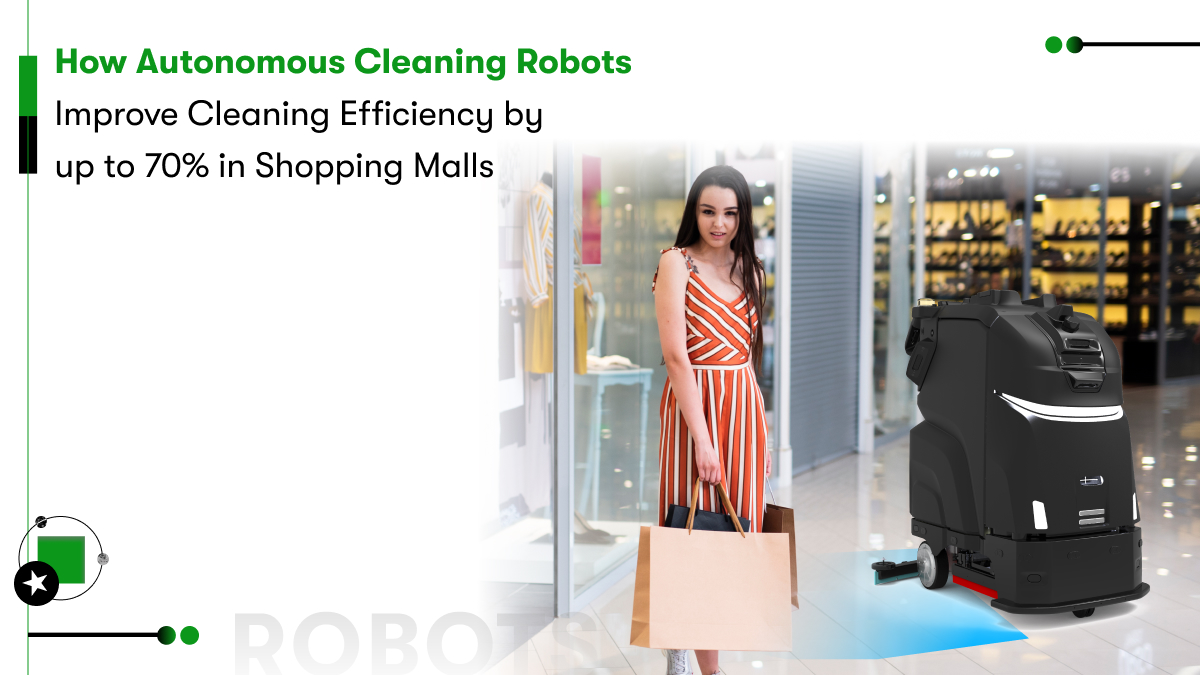
Shopping malls are high-footfall environments where cleaning never truly stops. Visitors enter from parking areas, walk through corridors, gather in atriums, use food courts, visit retail stores, attend events, and move between multiple floors throughout the day. Every hour brings dust, footprints, spills, trolley marks, food residue, and visible floor wear.
That is why Autonomous Cleaning Robots are becoming valuable for shopping malls. Manual cleaning teams remain essential, but large malls need more structured support for repeated floor care. A robot can handle routine cleaning routes while human teams focus on spills, washrooms, corners, inspections, and detailed cleaning.
The phrase “improve cleaning efficiency by up to 70 percent” should be understood responsibly. The outcome depends on mall size, cleaning frequency, floor layout, route planning, staff training, and daily usage. When deployed properly across repeated cleaning routes, a robotic cleaning model can significantly reduce manual floor-cleaning effort and improve coverage consistency.
Vulcan by Kody Robots is a robotics company in India fits this need as a mall-focused autonomous cleaning solution for high-footfall environments.
Key Takeaways
- Autonomous Cleaning Robots help malls improve floor-cleaning consistency across busy public areas.
- A Cleaning Robot for Mall operations can support corridors, atriums, food court surroundings, entrances, and long walkways.
- A Mall Cleaning Robot reduces repetitive manual floor-cleaning pressure and improves staff allocation.
- A Floor Cleaning Robot works best when routes, schedules, and staff responsibilities are planned clearly.
- A Heavy-Duty Cleaning Robot can support large shopping centers with repeated cleaning needs.
- The highest efficiency gains come from daily use across high-impact mall zones.
Why Shopping Malls Need Better Cleaning Efficiency?
A shopping mall is not a controlled office floor. Mall traffic changes constantly. Morning footfall may be low, but afternoons, weekends, holidays, and festivals can create sudden cleaning pressure. Food courts create spills and stains. Retail corridors collect dust and footprints. Entrances become messy during rain. Event zones need quick cleanup after promotions or crowd activity.
Manual teams work hard, but mall cleaning is repetitive and wide-area in nature. Large corridors, atriums, and common zones need cleaning again and again. When staff spend too much time on repeated floor routes, less time remains for urgent cleaning, washrooms, waste handling, escalator surroundings, glass, and inspection rounds.
A Cleaning Robot for Malls like Vulcan by Kody Robots can support routine floor cleaning so human teams can focus where judgment and quick response matter most.
What Autonomous Cleaning Robots Do in Shopping Malls?
Autonomous Cleaning Robots are designed to support floor-cleaning tasks with less continuous human operation. The robot can move across planned routes, clean defined areas, and support regular floor maintenance across high-footfall spaces.
In malls, a robotic cleaning system can support:
- Retail corridor cleaning
- Atrium floor care
- Food court surrounding areas
- Entry and exit zones
- Elevator lobby cleaning
- Cinema floor approach areas
- Event zone maintenance
- Long walkway cleaning
- Common-area floor support
The robot does not replace the housekeeping team. Mall cleaning still needs people for spills, corners, washrooms, waste bins, glass, detailed checks, and customer-sensitive response. The robot supports the repeated floor-cleaning layer.
How Cleaning Efficiency Can Improve by up to 70 Percent?
Cleaning efficiency improves when the robot takes over repetitive, route-based floor cleaning that would otherwise consume staff time. The “up to 70 percent” improvement should not be treated as a fixed result for every mall. It is a realistic upper-range efficiency target when the deployment is well planned and the robot is used consistently.
Efficiency gains can come from five areas.
Reduced repeated walking
Housekeeping staff spend less time walking the same floor routes with manual machines.
Better route coverage
The robot can follow planned routes, helping ensure important areas receive regular cleaning.
Better staff allocation
Staff can focus on spills, washrooms, escalators, waste, and detailed inspection instead of routine floor scrubbing only.
Better schedule discipline
Planned robotic cleaning makes cleaning cycles more predictable.
Better use during low-traffic windows
Robots can support floor care during suitable time slots when routes are clearer.
For example, a large mall may use the robot for regular corridor and atrium cleaning while staff focus on food court spills, washroom checks, and customer-facing areas. This division can improve total cleaning productivity.
Why Manual Cleaning Alone Struggles in Malls?
Manual cleaning remains important, but manual-only cleaning can create operational gaps.
Large floors require many hours
Malls often include long walkways, multiple floors, open atriums, and wide common areas. Repeated manual cleaning can consume a large number of staff hours.
Cleaning quality can vary
Different staff members may clean differently. Fatigue, shift changes, crowding, and supervision gaps can affect consistency.
Peak footfall interrupts cleaning
Cleaning teams may struggle to use manual equipment when corridors are crowded.
Staff handle many other tasks
Housekeeping teams are responsible for more than floor care. They also manage spills, washrooms, waste bins, glass, seating areas, and food court cleaning.
Mall image depends on visible cleanliness
Visitors judge malls quickly. Dirty floors can make even a premium mall feel poorly managed.
A Mall Cleaning Robot helps reduce dependence on manual route repetition and strengthens routine floor care.
Where Shopping Mall Cleaning Robots Create the Most Value?
A Shopping Mall Cleaning Robot should be used where floor cleaning demand is high and repeated.
Main entrances
Entrances receive dust, rainwater, footprints, and outdoor residue. Clean entrances create a stronger first impression.
Atriums
Atriums are highly visible and often used for events, displays, and brand activations. Clean atrium floors support mall presentation.
Retail corridors
Retail corridors receive constant shopper movement. Robot-supported cleaning helps maintain a cleaner walking experience.
Food court surroundings
Food courts create frequent floor pressure from spills, food particles, packaging, and heavy crowd movement.
Elevator and escalator zones
These areas receive repeated traffic throughout the day. Routine cleaning helps maintain a better appearance.
Cinema and entertainment zones
Cinema areas experience crowd movement during showtimes. Cleaning robots can support common walkway maintenance around those zones.
Event areas
Promotions, exhibitions, and weekend events can leave floors messy. A robot can support floor recovery after event activity.
Heavy-Duty Cleaning Robot for Large Shopping Centers
Large malls need stronger cleaning systems than small commercial spaces. A Heavy-Duty Cleaning Robot like Vulcan by Kody Robots can support big floor areas where cleaning demand is frequent, visible, and repetitive.
A heavy-duty approach is useful when a mall has:
- Multiple floors
- Large atriums
- Long corridors
- High weekend footfall
- Food courts
- Event zones
- Cinema areas
- Frequent retail promotions
- High visitor expectations
- Large housekeeping teams
The robot becomes most valuable when the mall uses it every day across defined routes. Daily routine use creates stronger operational impact than occasional demonstration use.
How Vulcan Supports Mall Cleaning Operations?
Vulcan by Kody Robots can support shopping mall facility teams that want cleaner common areas and better cleaning productivity. The robot can be positioned for routine floor maintenance across high-footfall mall spaces.
Vulcan can support:
- Planned floor-cleaning routes
- Corridor cleaning
- Atrium maintenance
- Common-area floor care
- Food court surrounding areas
- Entry-zone floor support
- Event-zone cleanup support
- Large indoor surface maintenance
The strongest results come when Vulcan is integrated into a proper facility workflow. Mall teams should define routes, cleaning schedules, supervision rules, and staff responsibilities before deployment.
Benefits of Autonomous Cleaning Robots for Mall Owners
Higher cleaning productivity
Robots can support repeated floor-cleaning routes and reduce manual route pressure.
Better staff utilization
Housekeeping teams can focus on urgent and detail-heavy cleaning tasks.
Better floor consistency
Planned routes help maintain common floors more regularly.
Better visitor experience
Clean floors make malls feel more premium, organized, and comfortable.
Better operational discipline
Robotic cleaning encourages facility teams to plan routes, time slots, and cleaning priorities more clearly.
Better support during events
Mall events create short-term cleaning pressure. Robots can support floor recovery before and after activities.
Better long-term scalability
As the mall grows or footfall increases, robotic support can help manage additional cleaning demand.
Benefits for Housekeeping Teams
A cleaning robot should support staff, not replace the importance of people. Housekeeping teams still handle the most sensitive and detailed cleaning work.
Staff benefit through:
- Less repetitive floor-machine operation
- Reduced long-route walking
- More time for inspections
- Faster response to spills
- Better focus on washrooms and food court needs
- More manageable workload during peak periods
- Better task clarity
A robot gives housekeeping teams an additional tool to manage large spaces more effectively.
Benefits for Shoppers and Retailers
Visitors may not think about cleaning operations, but shoppers immediately notice clean or dirty floors. Clean floors improve comfort and trust.
Shoppers benefit through:
- Cleaner walkways
- Better food court surroundings
- More comfortable common areas
- Better first impression
- Safer-looking movement zones
- More premium mall experience
Retailers also benefit because cleaner common areas help support store footfall and mall reputation. A poorly maintained common area can affect the perception of nearby stores.
How to Deploy a Floor Cleaning Robot in a Mall
A Floor Cleaning Robot should be deployed with a clear plan.
Step 1 Identify high-impact zones
Start with corridors, atriums, entrances, and food court surroundings.
Step 2 Map cleaning routes
Routes should be wide, safe, and connected to real footfall patterns.
Step 3 Choose operating windows
Run the robot during suitable time slots such as early morning, low-traffic windows, or planned maintenance periods.
Step 4 Train housekeeping staff
Staff should know how to supervise the robot and manage daily workflow.
Step 5 Review performance
Facility teams should review coverage, route effectiveness, and staff feedback regularly.
Step 6 Expand gradually
After successful initial routes, the mall can expand robotic cleaning to more areas.
Buy or Lease Autonomous Cleaning Robot
Mall owners may not all need the same adoption model. Some shopping centers may want long-term deployment. Others may want to test robotic cleaning before investing fully.
Buy or Lease Autonomous Cleaning Robot gives malls flexibility based on budget, footfall, and cleaning demand.
Buying may suit:
- Large malls with daily cleaning pressure
- Premium retail destinations
- Multi-floor shopping centers
- High-footfall food court areas
- Facilities with long-term automation plans
- Malls with frequent events and promotions
Leasing may suit:
- Pilot projects
- Seasonal footfall increases
- Event-based cleaning support
- Trial deployments
- Budget-flexible planning
- Short-term facility upgrades
The right model depends on mall size, cleaning frequency, housekeeping workload, and long-term facility strategy.
What Mall Owners Should Evaluate Before Adoption?
Floor size
Larger areas usually create stronger value from autonomous cleaning.
Footfall pattern
Cleaning schedules should match weekdays, weekends, festival traffic, events, and food court rush periods.
Route clarity
Wide and open routes improve robot deployment.
Surface type
Facility teams should check floor material, surface condition, slopes, and obstacles.
Staff readiness
Housekeeping teams should understand the robot workflow.
Maintenance support
Training, service, spare support, and daily care affect long-term performance.
ROI expectation
Malls should measure value through productivity, consistency, visitor experience, staff allocation, and cleaning coverage.
Why Kody Robots Fits Mall Cleaning Automation?
Kody Robots is a robotics manufacturing company fits mall cleaning automation through Vulcan, a robotic cleaning solution for large, busy, and high-footfall environments. Malls need practical automation that improves cleaning efficiency, not technology that only attracts attention for a short time.
Vulcan can help mall owners improve cleaning consistency, support housekeeping teams, and maintain better common-area presentation. The value grows when the robot becomes part of the daily facility workflow.
Future of Autonomous Cleaning Robots in Shopping Malls
The future of mall facility management will become more automated, measurable, and workflow-driven. Cleaning robots will be part of this shift because floor care is one of the most repeated tasks in any shopping center.
Future-ready malls may combine:
- Autonomous cleaning robots
- Digital facility dashboards
- Smart visitor management
- Security robots
- Advertising robots
- Food court serving robots
- Energy-efficient systems
- Predictive maintenance tools
Autonomous Cleaning Robots fit naturally into this future because they help malls manage repetitive floor care more efficiently.
Conclusion
Shopping malls need clean floors every day, across every high-footfall zone. Manual cleaning teams remain essential, but large malls need stronger support for repeated floor-cleaning routes. Autonomous Cleaning Robots can improve cleaning efficiency by reducing repetitive manual workload, improving route coverage, and helping teams focus on urgent and detailed tasks.
Vulcan by Kody Robots supports mall cleaning operations by helping facility teams maintain cleaner corridors, atriums, entrances, food court surroundings, and common areas.
For malls ready to improve cleaning productivity, support housekeeping teams, and create a better visitor experience, autonomous cleaning offers a practical path toward smarter facility management.