
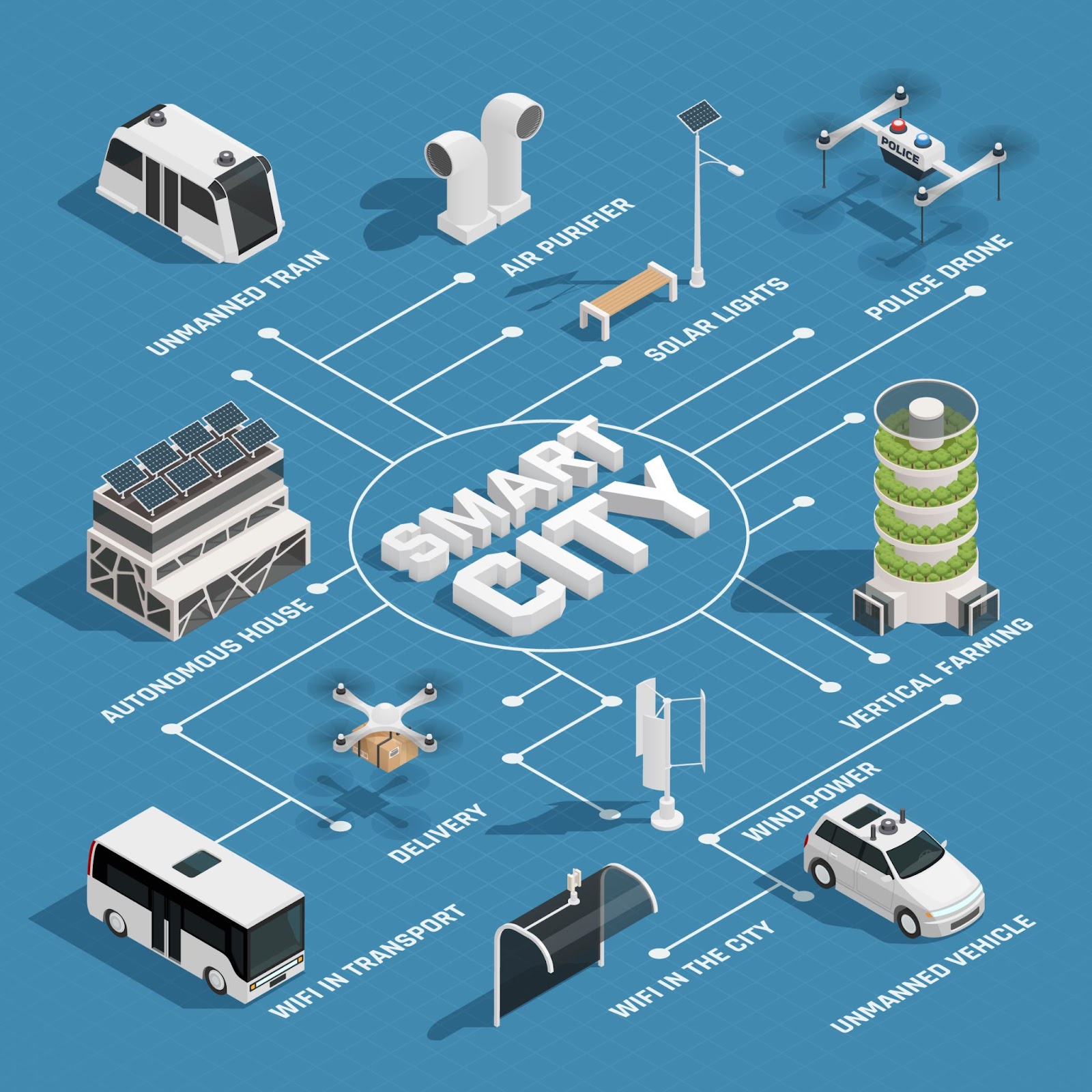
In the morning, you are stepping out of your home, and you take out your smartphone to look for the fastest route to your destination. The map shows you that and also notifies you about the most feasible options for less crowded transport. After a few minutes, the waste management system, integrated into your phone, alerts the local sanitation teams that the waste bin at your home is just 1-day away from overflowing. They quickly turn up at your place and collect the waste from home. If you think this is a scene from the future, you are wrong – it’s taking place now, and mobile apps function at the very core of it.
Mobile apps: nurturing concepts of smart cities into reality
Across the United States, cities are becoming smart by seamlessly integrating advanced technologies into urban life to facilitate convenience, sustainability, and efficiency. But what is the driving force behind this evolution? The answer solely lies in the hands of enterprise app development companies and their team of talented custom app developers, who are constantly crafting intelligent solutions in the form of mobile apps that create a bridge of smart communication between the citizens and the city.
From hyper-personalized public services to AI-based traffic management, new-generation mobile apps function beyond just being another tool—they have become the backbone of today’s smart urban living.
These apps are used for everything from managing waste and energy consumption to providing real-time updates on public transportation and emergency services, demonstrating their versatility and impact on urban life.
In this write-up, explore how the cities in the US are using technology to drive innovation, enhance public safety, improve urban mobility, and create a sustainable future. Uncover how custom mobile app development solutions are shaping the era of the smart city revolution.
A digital renaissance with the rise of Smart Cities
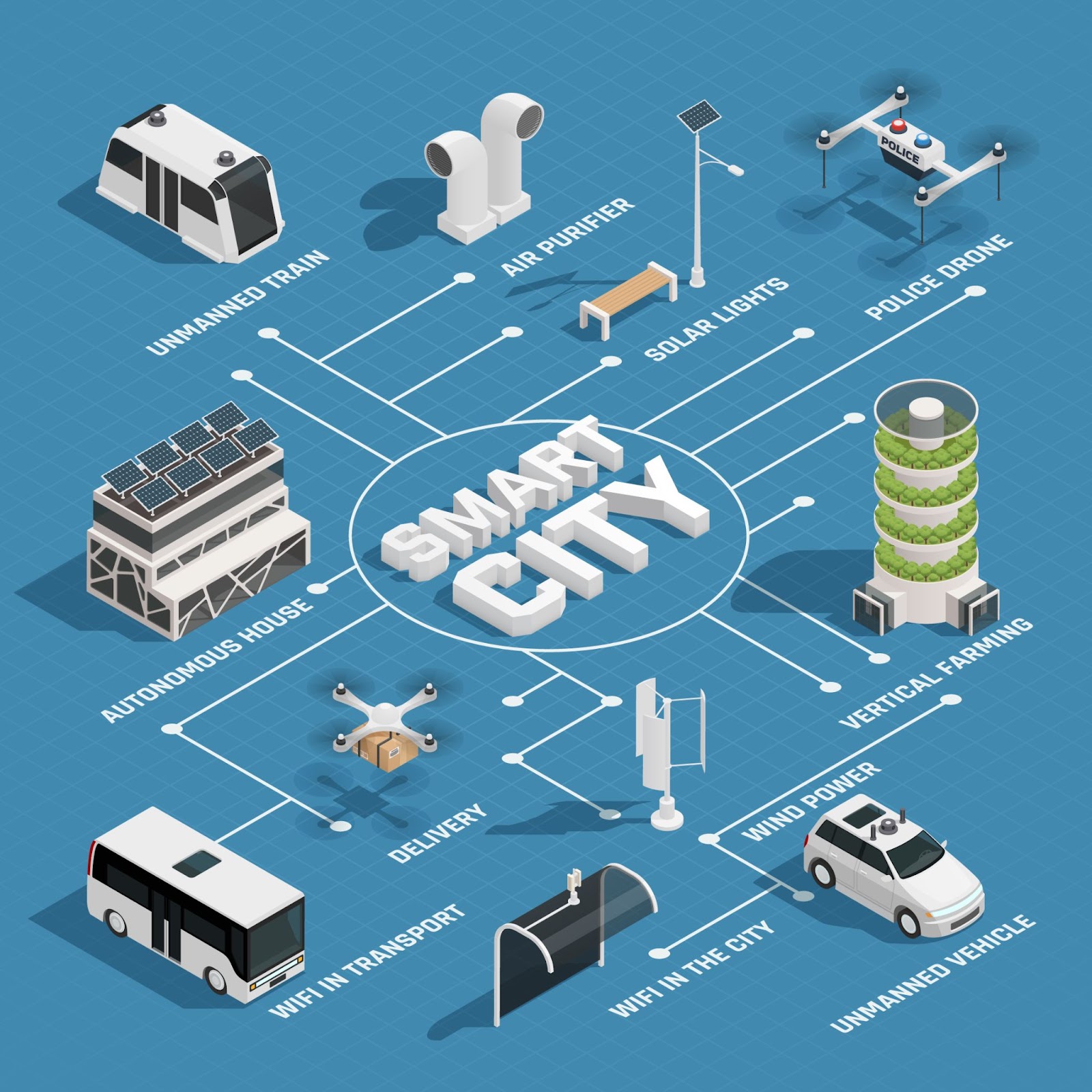
With the rising urban population, cities worldwide face common challenges like strained public services, environmental degradation, and traffic congestion. To bypass these perpetual problems that hamper planning for the future, cities are turned smarter.
Defining smart cities: Urban areas that use modern innovations to enhance the quality of living of their inhabitants.
As mentioned earlier, mobile apps play a crucial role by acting as the conduit between the digital infrastructure and citizens.
The integration of 5G, IoT, and mobile technologies reached significant levels in 2025. US cities like Nashville and Los Angeles have adopted various solutions in micro-mobility, like shared bikes, scooters, etc., that aim to improve connectivity and reduce greenhouse emissions.
Such initiatives address the problem that most car trips in the US are within three miles, and these small changes are ideal for optimally managing environmental damage. Let’s have a look at more innovations and adoptions by US smart cities.
AI-powered urban mobility management
Road traffic is still a formidable challenge in urban planning. But as US cities turn towards AI-powered analytics, they are enjoying smart traffic systems in real-time.
Los Angeles has implemented a unique traffic control system that is adaptive to real-time congestion management based on the crucial factor of live road conditions. This system helps reduce harmful emissions and also improves vehicle flow.
Boston, too, the Project Green Light, in collaboration with Google, has embraced a unique AI-based traffic control system that analyses and monitors the traffic patterns at the city intersections. This collaboration aims to improve the traffic flow and prepare the city for operational risks.
Efficient and seamless journeys
Mobile applications have transformed the functionality of public transportation by facilitating mobile ticketing, route optimization, and real-time updates. In cities like New Jersey, on-demand car ride services have significantly encouraged shared and public transport use and effectively eliminated cars from the roads.
In addition, the introduction of self-driven cabs in Austin, Texas, reflects a huge leap towards public transportation. These vehicles are hailed via Lyft or Uber, and this solution is an exemplary glimpse at the future of urban mobility.
Rapid public safety response through seamless connectivity
Improving public safety is a significant aspect of all smart city initiatives. Today’s Mobile apps are well equipped with the AI-power capabilities that facilitate rapid response to emergencies.
For instance, LYT in California’s Fremont connects with all traffic signals to request green lights for emergency vehicles, and it has successfully reduced the response time significantly. Fire trucks can now pass through the roads in just 14 minutes instead of 46.
Creating green cities with smart solutions
When it comes to smart city agendas, sustainability takes the lead. Mobile apps are powerful tools in promoting eco-friendly practices. For instance, shared mobility services like Lake Tahoe’s micro-transit system have popularized the concept of co-riding, significantly reducing carbon emissions. These initiatives, powered by mobile apps, paint a hopeful picture of a greener, more sustainable future for our cities.
Engaging and empowering residents through technology
Mobile apps bridge the gap between administrations and residents, fostering a participation culture and transparency. For instance, the 311 mobile app in New York enables citizens to receive alerts, find information, and lodge complaints by streamlining service delivery and communication.
How custom app developers are innovating for tomorrow’s cities
The backbone of smart city innovations is the expertise and skills of custom app developers. By providing custom app development services, these professionals are shaping the future of our cities. Their innovations ensure that the apps are not just functional, but also secure and scalable, aligning with the objectives of residents and urban planners. Their work is not just about creating apps, but about shaping the very fabric of our urban life.
How enterprise app development companies are also scaling innovation
Enterprise app development companies have a pivotal role to play when it comes to scaling these solutions. Using their expertise and resources, they shape pilot projects for city-wide implementations. It is their involvement that assures people that innovations are maintainable, sustainable, and capable of adapting to technological advancements.
Considerations and challenges in navigating the digital frontier
Integrating mobile apps into smart city initiatives have a lot of benefits, but there are some minor challenges as well, like:
- Cybersecurity – With boosted connectivity, the risk of cyber threats shoots up, too. It is crucial to protect the urban infrastructure from sudden attacks as a priority.
- Data privacy—As cities collect a large amount of data, it becomes crucial to implement robust measures to safeguard the privacy of citizens’ information.
- Digital divide – It is crucial to ensure that all residents, regardless of their socio-economic status or technological literacy, can access these innovative mobile apps. This means not only providing the necessary infrastructure and resources but also conducting awareness campaigns and training programs to bridge the digital gap and ensure that everyone can benefit from the advancements in smart city technology.
Conclusion
The blend of smart city initiatives and mobile apps is reshaping urban life across various US cities. With the united efforts of enterprise app development companies and custom app developers, the country’s cities are becoming more sustainable, efficient, and responsive. As we navigate this new digital frontier, embracing these innovations will be the cornerstone of building smart cities that thrive in the 21st century.