
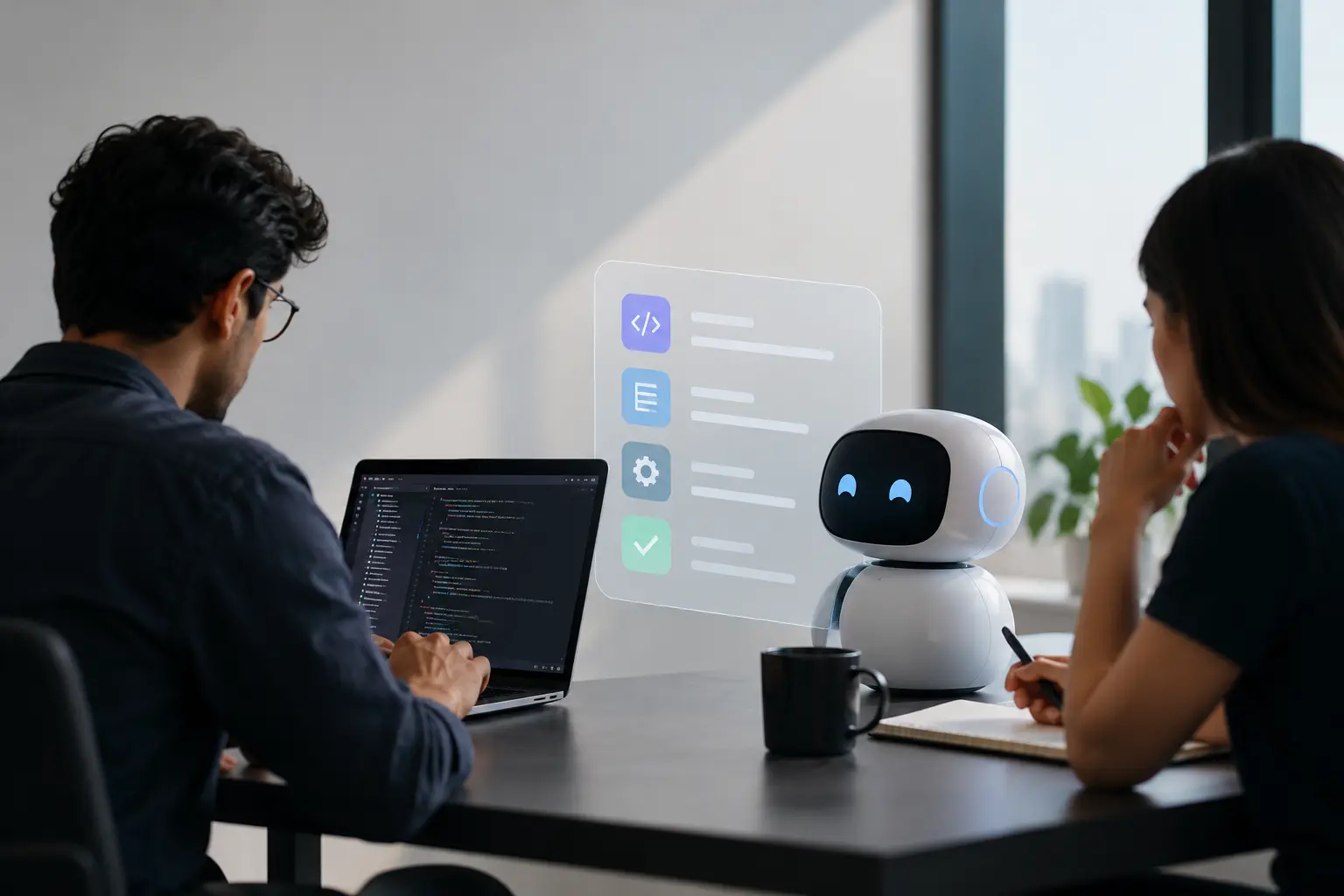
The rise of artificial intelligence has changed how technology teams work. Analysis, interpretation, and decision-making have become faster. Now, tech teams can create need-based solutions more precisely and deliver the envisioned output on time. But the efficiency of the tech solution depends on how much hands-on experience the team has.
Every AI-focused project requires specific intelligence-powered skills. For instance, smart camera software development requires computer vision, NLP, and ML expertise. It is difficult sometimes to have such a power-packed in-house team. To sustain the momentum, many businesses turn to AI staff augmentation to instantly boost team capacity with the right skill set.
This eliminates bottlenecks and executes ambitious technical roadmaps without friction. In this article, we will explore the role AI tools play in technology teams’ work.
Where AI is Already Changing Day-to-Day Work?
AI has been a great leveller for technology teams. This technology is making its way into different parts of technology delivery. But if we compare how tech teams used to work traditionally vs. how AI has changed it, the difference is significant.
| Technology Teams | Traditional Workflow | With AI assistance |
| Development | Everything manual, from coding to debugging | AI-assisted coding and documentation |
| QA | Manual creation and maintenance of test cases | AI-powered test creation |
| IT Operations | Troubleshooting to log analysis, everything was manual | Faster investigation and issue resolution with AI |
| Cybersecurity | Reviewing a large volume of alerts | AI helps in analysis and prioritization |
| Project Delivery | Manual reporting and task tracking | AI-supported planning and reporting |
With AI’s assistance, technology teams have been building top-level solutions.
What Changes for Developers, IT, and Security Teams
Technology has levelled up with each passing year. AI has a different impact on different teams. It becomes easier to understand the impact when we look at individual roles.
Less time on repetitive work
Earlier, developers had to write everything from scratch, whether a basic functionality or a complex feature. Everything takes a lot of time. Plus, debugging is more comprehensive and time-consuming.
AI’s introduction has significantly helped developers with refactoring, debugging, and documentation. This frees up time for architecture, system design, performance, and problem-solving. Now, the dev team can invest more time in brainstorming and improving output.
Speed Up Troubleshooting
IT teams have to deal with logs, tickets, monitoring data, and incidents every day. Improving one thing used to take a lot of time.
Today, AI’s leverage has helped IT teams speed up the slow cycle of operations. This smart tech helps them summarize information, identify patterns early, suggest possible causes, and reduce the amount of manual investigation involved.
Data Surge for Security Teams
Cybersecurity teams already have a lot to manage in their day-to-day operations. It includes alerts, triggers, and signal handling, which sometimes become difficult to manage.
Well, AI can help correlate information, identify patterns, build sturdy guardrails, and summarize incidents more promptly and quickly. But this is also where human oversight matters. AI can predict; humans can respond appropriately.
How is AI Changing the Technology Teams’ Work
The conversation is not entirely focused on how much a team can automate, but major aspects focus on how much work they are ready to take on.
Imagine a development team that previously used to spend a significant portion of its time writing the same repetitive code, creating documentation, and investigating bugs.
If AI reduces the time on those activities, the same team can redirect their capacity towards modernization, architecture improvement, or reducing technical debt. That changes what leaders expect from the same team.
Technology professionals increasingly need to know how to:
- Work efficiently with AI-powered development tools
- Validate the output of AI
- Identify inaccuracies in AI-first information
- Provide better instructions
- Make decisions that AI can not make
Simply put, AI literacy is quietly becoming the most important part of the tech team’s workflow.
Increased Importance of Human Oversight
No matter how smart AI can become. The tech still needs someone behind it. Though AI is very good at understanding written outputs and the core behind it, AI can not automatically understand why X company built a particular legacy system, what the idea was, or the intent.
Also, it can guide you through the choices of the right integration tools but can not help you pick the business-critical one. This is where professional experience remains critical.
Skilled individuals play a quintessential role in increasing the efficiency of an organization. They provide:
- An understanding of business context and what a particular technology has to do
- Experience in choosing solutions that work across the wider tech stack
- Validate recommendations against organizational risks
- Owning the outcome when a technical decision affects the business
Total reliance on AI is equivalent to throwing yourself in the trench. That’s why it is important to have someone in the backend who can understand, evaluate, and make appropriate decisions in this AI-driven era.
Conclusion
Artificial Intelligence is changing what technology teams can accomplish, how quickly they can work, and which skills matter the most. Professionals who use AI to build top-tier web and app solutions are excelling in the market. The technology is helping teams move faster and more efficiently.
However, the point is to have a fair and strict human layer before the output goes live. They must understand the context, requirements, and how well they align their expertise to deliver the envisioned result. Thus, AI understanding is gradually becoming more important because every role in technology demands different skill sets to complete their work.