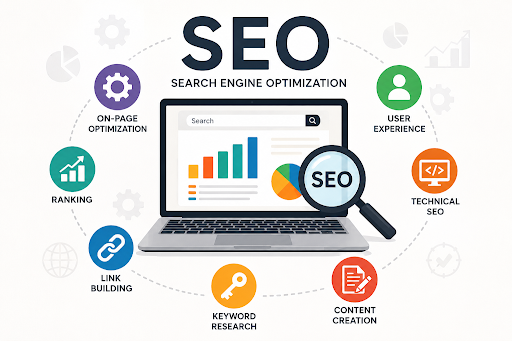
Search engine optimization (SEO) has always evolved alongside advancements in technology, but the rise of artificial intelligence (AI) is driving one of the most significant transformations the industry has ever seen. Traditional SEO practices focused heavily on keywords, backlinks, and technical website optimization. While these elements remain important, AI is changing how search engines understand content, interpret user intent, and deliver search results.
As AI-powered search experiences become more common, businesses and marketers must adapt their strategies to remain visible online. AI search optimization is emerging as a critical component of modern digital marketing, helping brands align their content with the future of search.
In this article, we’ll explore how AI search optimization is changing the future of SEO and what businesses can do to stay ahead of the curve.
What Is AI Search Optimization?
AI search optimization tools refers to the process of creating and optimizing content for search engines and AI-powered search systems that use machine learning, natural language processing, and advanced algorithms to understand user queries.
Unlike traditional SEO, which often focused on matching keywords, AI search optimization prioritizes:
- Search intent
- Contextual relevance
- Content quality
- User experience
- Topic authority
- Semantic relationships
The goal is to help search engines and AI systems understand the true meaning behind content and provide users with the most relevant answers.
The Evolution of Search Engines
Search engines have become increasingly sophisticated over the years.
Early search algorithms primarily relied on keyword matching. Websites that included exact keywords frequently were often rewarded with higher rankings.
Today, AI technologies allow search engines to understand:
- User behavior
- Context
- Intent
- Relationships between topics
- Content quality signals
This shift means that SEO is no longer about simply optimizing for keywords. Instead, it focuses on creating valuable content that genuinely helps users solve problems and find information.
Search Intent Is More Important Than Ever
One of the biggest changes driven by AI is the emphasis on search intent.
Modern search systems analyze why users are searching rather than just what they are searching for.
For example, someone searching for “best project management software” may be looking to:
- Compare solutions
- Read reviews
- Make a purchase decision
- Learn about available options
AI-powered search engines can identify these intentions and prioritize content that best satisfies user needs.
As a result, successful SEO strategies must focus on delivering content that aligns with specific search intent categories rather than targeting keywords alone.
AI Improves Content Understanding
Artificial intelligence enables search engines to interpret language much more effectively than in the past.
Through natural language processing (NLP), AI can understand:
- Synonyms
- Related concepts
- Contextual meaning
- User questions
- Conversational language
This allows search engines to evaluate content based on overall topic relevance rather than exact keyword usage.
For content creators, this means writing naturally and comprehensively is often more effective than repeatedly inserting target keywords.
High-quality content that addresses a topic thoroughly is more likely to perform well in AI-driven search environments.
Topic Authority Is Replacing Keyword Obsession
AI search optimization encourages businesses to build authority around entire topics instead of focusing on individual keywords.
Search engines increasingly reward websites that demonstrate expertise across related subject areas.
For example, a website covering SEO may create content about:
- Technical SEO
- Content marketing
- Link building
- Local SEO
- AI search optimization
- Search analytics
By covering a topic comprehensively, websites establish topical authority and improve their chances of ranking for a wide range of related searches.
This approach aligns closely with modern SEO best practices and Google’s emphasis on expertise and trustworthiness.
User Experience Plays a Bigger Role
AI-powered search systems evaluate how users interact with websites after clicking on search results.
Important user experience factors include:
- Page speed
- Mobile responsiveness
- Navigation
- Readability
- Content structure
- Engagement metrics
If users quickly leave a page because it fails to meet their expectations, search engines may interpret this as a signal that the content is not sufficiently valuable.
As AI continues to improve, user satisfaction will become an even stronger ranking factor.
The Rise of AI-Generated Search Results
One of the most notable developments in recent years is the growth of AI-generated search experiences.
Instead of simply displaying a list of links, AI-powered systems can generate direct answers by analyzing information from multiple sources.
This change impacts how users discover content and interact with search engines.
To remain visible, content creators should focus on:
- Answering questions clearly
- Providing factual information
- Using structured headings
- Demonstrating expertise
- Creating comprehensive resources
Content that delivers clear, trustworthy answers is more likely to be referenced by AI-powered search systems.
AI Search Optimization Supports Better Content Strategy
AI tools are helping marketers make smarter content decisions.
These tools can analyze:
- Search trends
- User behavior
- Competitor performance
- Content gaps
- Emerging topics and a chatgpt tracker can show you specifically how your content is performing inside ChatGPT responses.
With these insights, businesses can create more relevant content and identify opportunities before competitors.
AI-driven data analysis enables more efficient content planning and stronger SEO performance over time.
Best Practices for AI Search Optimization
To prepare for the future of SEO, businesses should focus on:
Create Helpful Content
Prioritize user value over keyword density.
Demonstrate Expertise
Showcase industry knowledge and practical experience.
Cover Topics Thoroughly
Develop comprehensive resources that answer related questions.
Improve User Experience
Optimize website performance and readability.
Use Structured Content
Organize information with clear headings and logical formatting.
Stay Updated
Monitor changes in search technology and AI-driven search trends.
These practices help align content with the expectations of both users and modern search systems.
Conclusion
AI search optimization is fundamentally changing the future of SEO. As search engines become more intelligent, success depends less on keyword manipulation and more on delivering valuable, authoritative, and user-focused content.
Businesses that embrace AI search optimization can improve visibility, strengthen topic authority, and adapt to the evolving search landscape. By focusing on search intent, content quality, user experience, and expertise, organizations can position themselves for long-term success in an increasingly AI-driven world.
The future of SEO belongs to those who understand not just how search engines work, but how AI helps them better understand and serve users.