
Introduction
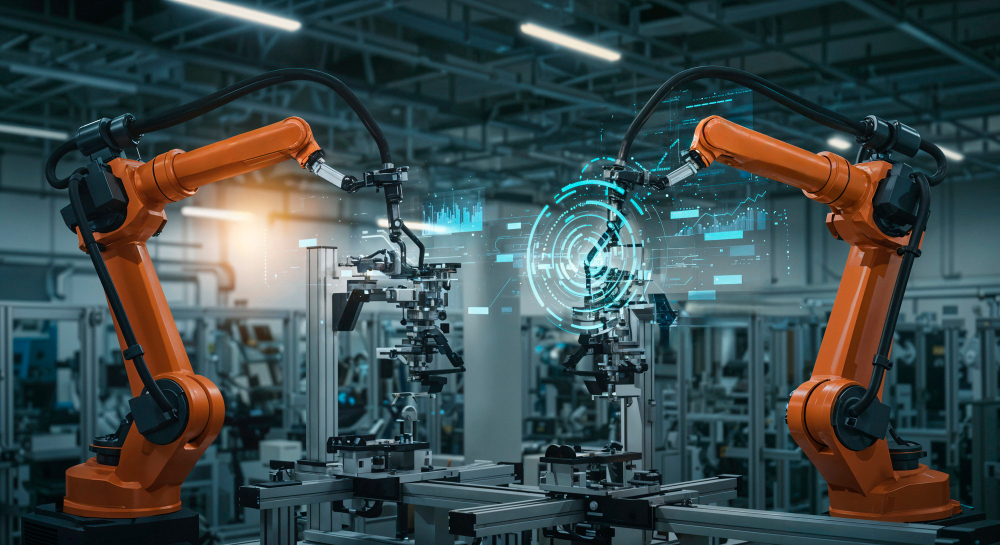
AI in manufacturing is no longer a futuristic concept—it’s a present-day reality reshaping how factories operate. With the rise of Industry 4.0, artificial intelligence has become central to industrial automation, driving efficiencies, reducing downtime, and delivering real-time insights. This blog explores how AI is transforming manufacturing and what that means for the future of the industry.
1. Understanding AI in Manufacturing
AI in manufacturing refers to the application of machine learning, computer vision, natural language processing, and data analytics to improve operations across the production lifecycle. These technologies allow machines to learn from data, recognize patterns, and make autonomous decisions, thereby optimizing workflows.
Related Keyword Clusters:
-
Industrial AI solutions
-
AI-powered automation
-
Smart manufacturing technologies
2. How AI Is Revolutionizing Manufacturing Automation
AI transforms traditional manufacturing by integrating intelligent systems into machines, equipment, and production lines. This leads to:
-
Autonomous decision-making: AI can analyze sensor data to make real-time decisions, minimizing the need for human intervention.
-
Predictive maintenance: By analyzing machine health data, AI systems can predict equipment failures before they occur, reducing costly downtime.
-
Process optimization: AI continuously improves operations by identifying bottlenecks and inefficiencies.
Example:
General Motors uses AI-powered robots to perform repetitive assembly tasks, leading to higher consistency and fewer errors.
3. Key Benefits of AI in Manufacturing
Increased Operational Efficiency
AI improves throughput by optimizing machine usage and production scheduling.
Enhanced Product Quality
Machine vision and real-time analytics reduce defects and enhance quality assurance.
Cost Savings
Through predictive maintenance and energy optimization, AI reduces operational costs significantly.
Safer Work Environments
AI-powered robots can take over dangerous tasks, reducing human exposure to hazardous conditions.
Data-Driven Decisions
AI provides actionable insights from large datasets, enabling better strategic decisions.
4. Real-World Applications of AI in Manufacturing
Predictive Maintenance
Companies like Siemens use AI algorithms to monitor machine conditions and predict failures before they happen.
Quality Inspection
AI-driven computer vision systems inspect products faster and more accurately than humans.
Inventory Management
AI helps optimize inventory levels and reduce waste by analyzing demand patterns.
Supply Chain Optimization
AI forecasts demand and adjusts production planning accordingly.
Human-Robot Collaboration (Cobots)
Collaborative robots equipped with AI work alongside humans, enhancing productivity.
5. Challenges in Adopting AI in Manufacturing
Despite its benefits, manufacturers face several challenges:
-
Data Silos: Legacy systems often lack integration, making data collection and processing difficult.
-
High Initial Costs: AI implementation requires investment in infrastructure, hardware, and talent.
-
Skills Gap: There’s a shortage of professionals skilled in both AI and manufacturing.
-
Security Concerns: Increased connectivity introduces cybersecurity risks.
6. Future of AI in Manufacturing
The future of manufacturing is closely tied to advances in AI. Here’s what to expect:
-
Hyper-personalized production lines
-
Self-healing factories
-
Decentralized decision-making with edge AI
-
Greater energy efficiency using AI analytics
-
Real-time quality control powered by computer vision
With the growing adoption of digital twins and generative AI, manufacturers will be able to simulate entire production systems and optimize them virtually before physical implementation.
Conclusion
AI in manufacturing is ushering in a new era of industrial automation, bringing efficiency, flexibility, and intelligence to factory floors. As technology matures, manufacturers that adopt AI early will gain a competitive edge through smarter operations and better resource management. If you’re not thinking about AI in your manufacturing strategy yet, now is the time to start.