
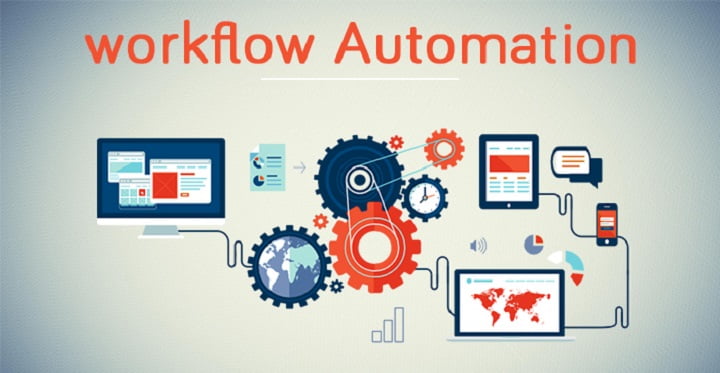
Mid-market companies today are caught between the challenges of large and small enterprises. While simple, low-cost tools fail to handle the rapidly growing workload, mid-sized companies also face budget and infrastructure limitations that prevent them from affording complex enterprise-grade systems. This is exactly where AI-driven workflow automation has started to redefine the economics of how teams operate.
Companies are no longer relying solely on headcount growth to scale operations. They are shifting their focus to AI-driven workflow automation that streamlines repetitive tasks, reduces errors, and supports better decision-making. The outcome is not limited to improved efficiency but scalable cost reductions across primary business functions.
Why Operational Costs Rise for Mid-Market Teams
Business development carries with it an increased risk of operational complexities. Teams are managing heavier workloads using outdated systems and disconnected tools.
The main factors that increase operational costs are:
- Repetitive workflows and manual data entry
- Workflow bottlenecks and delayed approvals
- Expensive manual errors
- Strong dependency on bigger support teams
- Slow reporting and disjointed visibility
- Growing demands across customer support
- Time-consuming compliance processes
Earlier, automation resolved only the basic rule-centric tasks. This is why most mid-sized companies are using AI-integration services for automating their workflows to analyze patterns, support real-time decisions, and process unstructured data.
Why Mid-Market Teams Are Adopting AI Automation Faster
For years, automation has been just a strict, rule-based system or costly enterprise software rollouts. The model today is witnessing a significant change.
Modern AI has the capability to handle unstructured data, interpret context, and handle everything that traditional automation failed to manage. This emphasizes their importance across mid-sized firms dealing with regular workflows such as customer requests, invoices, reporting, and HR onboarding.
Typically, this includes:
- Automated routing of intent-based customer support tickets
- Triggering approvals and notification-focused behavior patterns
- Extraction and structuring of data from forms, emails, and documents
- Workflow outcome predictions and suggestions for next steps
Deloitte highlighted in its State of AI in the enterprise report that workflow adoption of AI tools has risen by 50% in just one year. This showcased how fast companies are shifting from mere experimentation to real operational deployment.
This is the main reason why mid-market teams are no longer experimenting with AI. They are implementing it right into their regular workflows to reduce scalable operational costs.
Benefits of AI-Driven Workflow Automation to Reduce Operational Costs
AI-driven workflow automation proves effective in reducing operational costs. Let us find out the other ways automation can support cost-efficiency.
Reduced Manual Labor Dependency
One major outcome of AI-driven workflow automation is less time spent on repetitive tasks. Instead of having an additional team that manually categorizes invoices or updates CRM records, AI systems manage a huge chunk of that workflow automatically.
An AI-driven workflow helps in:
- Data entry or validation
- Processing and reconciliation of invoices
- Generating and reconciling reports
- Classifying customer queries and routing
- CRM updates and lead enrichment
Cost impact:
- No additional staff requirements with increasing workflows
- Less reliance on outsourced back-office teams
- Reduced overtime or peak-load staff costings
This helps mid-market firms to keep their hiring costs in control while giving them scope to grow their revenue.
Faster Cycle Times Across Departments
Delays in workflows can prove expensive. A slow approval process or delayed data handoff disrupts the entire sales cycle and cash flow.
AI streamlines:
- Automating urgent tasks
- Predicting delays in workflow before they happen
- Reducing circles of communications
Cost impact:
- Less wastage of time across meetings and follow-ups
- Less reliance on operations coordinators
- Faster workflow completion without expending management overhead
This helps firms remove what is known as “invisible labor costs,” leading to financial gains.
Reducing Software and Tool Overlap Costs
Mid-market firms start accumulating tools over time. With tools, we mean CRM systems, analytics platforms, support tools, automation plugins, and finance software.
The result is:
- Overlapping functionality
- High subscription costs
- Integration maintenance overhead
- Data silos requiring manual reconciliation
Platforms supporting AI workflow automation unify these layers using smart integrations and bespoke software development. This helps in bringing several processes together into a unified system for seamless operations.
Cost impact:
- Fewer redundant SaaS subscriptions
- Reduced integration engineering effort
- Lower maintenance and vendor management overhead
Companies no longer have to pay for multiple isolated tools this way.
Fewer Operational Errors
Errors in operations are costly since they multiply workflows, besides delaying them.
Common issues include:
- Duplicate invoices
- Incorrect data entry
- Misrouted customer requests
- Compliance documentation errors
Through automation, this eliminates the risk of errors as it enforces real-time validation and consistency checks.
So, instead of finding mistakes after they happen, AI systems help in preventing them at the point of execution.
Cost impact:
- Reduced rework hours
- Fewer financial discrepancies and write-offs
- Lower compliance and audit costs
- Reduced customer support load
Smarter Resource Allocation
Advanced workflow automation tools can help evaluate workload distribution and suggest optimal task assignments. Instead of teams being left underutilized or overutilized, AI assists in adding a balance between the systems.
This leads to:
- Higher productivity per employee
- Reduced burnout and turnover
- Better forecasting of staffing needs
Cost impact:
- Slower headcount growth relative to revenue
- Reduced hiring, onboarding, and training costs
- Lower long-term fixed payroll expansion
This is one of the major structural savings mid-market teams can make as growth no longer forces a rise in linear staffing.
Shortening Process Time = Lower Operating Cost per Task
Time is a direct cost driver in operations-heavy environments. Every delayed approval, manual review, or handoff increases the cost per workflow.
AI reduces cycle time by:
- Automatically prioritizing tasks
- Triggering actions based on real-time data
- Eliminating waiting time between steps
- Running processes 24/7 without human dependency
Cost impact:
- More transactions processed per unit of labor
- Lower cost per order, per ticket, or per transaction
- Faster revenue realization cycle
Even without reducing headcount, faster throughput reduces the cost of each operational unit.
Final Thought
AI-driven workflow automation is cutting operational costs not by trimming around the edges, but by removing entire layers of repetitive, coordination-heavy, and error-prone work.
The result is a new operating model where mid-market teams can scale output faster than they scale cost. And in today’s competitive environment, that shift is becoming less of an advantage and more of a requirement.
*****
Author Bio:
Dr. Thomas Kwon, Founder & CEO of Idea Maker, is a technology leader and entrepreneur with a distinguished career in electrical engineering and business innovation. He has led the delivery of more than 250 projects in custom software and AI solutions. Previously, he advanced semiconductor technologies at Mobius Semiconductor and Broadcom Corporation, contributing to breakthroughs in ADCs, HDTV, and satellite systems. Dr. Kwon holds a Ph.D. in Electrical Engineering from UCLA, specializes in integrated circuits, and holds multiple patents. His work embodies technical expertise, visionary leadership, and innovation.