
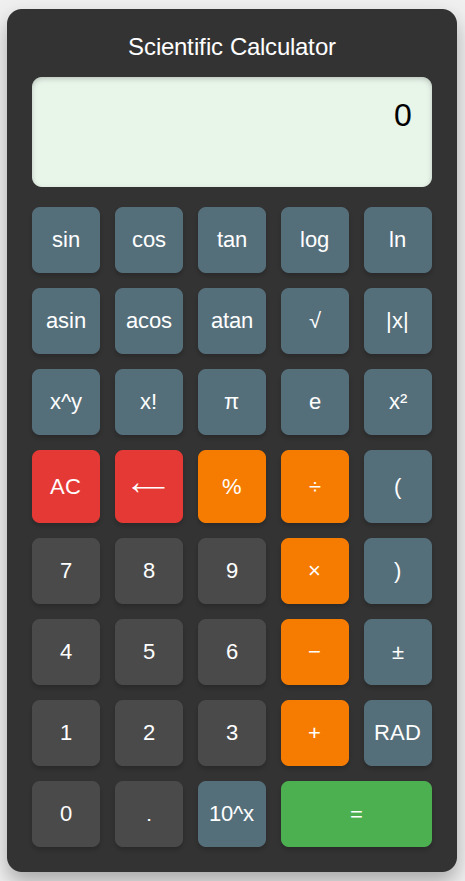
Technology has changed the way people perform everyday calculations. Tasks that once required manual formulas, mathematical knowledge, and considerable time can now be completed within seconds using online calculators. From calculating percentages and financial estimates to determining exact ages and date differences, digital tools have become an essential part of modern life.
Artificial intelligence (AI) and automation are taking these tools to another level. Modern online calculators are becoming more accessible, efficient, and user-friendly. They help individuals, students, professionals, and businesses solve calculation problems without complicated manual processes.
For example, someone who wants to Alter berechnen (calculate age) can use an online age calculator to determine their exact age in years, months, and days by entering a date of birth.
Let’s explore how AI and automation are transforming online calculators and making everyday calculations easier.
1. Making Everyday Calculations Faster
One of the biggest advantages of automated online calculators is speed. Traditional calculations often require users to remember formulas, perform multiple mathematical operations, or manually check their answers.
Online calculators eliminate much of this effort.
Users can simply enter the required information and receive results almost instantly. Whether calculating an age, converting measurements, determining percentages, or estimating expenses, digital tools make the process straightforward.
AI-powered interfaces can make this experience even easier by understanding natural-language questions. Instead of navigating complicated calculator menus, users may simply describe what they want to calculate.
This saves time and makes mathematical tools accessible to a wider audience.
2. Improving Accuracy and Reducing Human Errors
Accuracy is essential when performing calculations. Even a small mathematical mistake can create problems, especially when dealing with financial information, professional reports, or important dates.
Automated calculators reduce the likelihood of common human errors by using predefined mathematical formulas and programmed calculation rules.
For example, age calculations involve several factors, including:
- Date of birth.
- Current or selected reference date.
- Different numbers of days in each month.
- Leap years.
- Whether the birthday has already occurred during the year.
An online age calculator processes these details automatically and provides a clear result.
AI can also help users understand their input requirements and identify potential inconsistencies. However, the accuracy of any calculator still depends on reliable algorithms and correct information.
3. Simplifying Age and Date Calculations
Age and date calculations are among the most common reasons people use online calculators.
Determining an exact age manually can become confusing when someone needs the result in years, months, and days rather than simply years.
An online tool makes this process easier.
For example, users looking to Alter berechnen can enter their birth date and select a reference date to determine their exact age. Depending on the calculator, they may also receive additional information, such as their total age in days or the time remaining until their next birthday.
Date calculators also help users calculate the duration between two events, identify future dates, and determine how many days remain before important deadlines.
These features are useful for personal planning, education, professional activities, and event management.
4. Making Calculators More User-Friendly With AI
Traditional calculators generally require users to understand which inputs and formulas are necessary.
AI is helping make digital calculation tools more interactive.
With natural-language processing, AI-powered systems can interpret questions written in everyday language. For instance, a user might ask, “How old will I be on January 1, 2030?” An AI assistant can interpret the question and help calculate the answer using the relevant dates.
This approach removes unnecessary complexity and makes calculations easier for people who are unfamiliar with mathematical formulas.
AI-powered interfaces can also provide explanations alongside results, helping users understand how a particular answer was reached.
5. Supporting Students and Educational Activities
Online calculators are valuable educational resources. Students use them to check mathematical answers, understand numerical relationships, and solve problems more efficiently.
Automation makes these tools particularly useful for calculations involving percentages, fractions, measurements, and dates.
AI introduces additional learning opportunities by explaining calculation methods instead of simply displaying final answers.
For example, students learning about calendars can use age calculators to understand how years, months, days, and leap years work together.
Teachers can also use digital calculators to create practical exercises and demonstrate real-world mathematical applications.
However, calculators should support learning rather than replace the development of basic mathematical skills.
6. Helping Businesses Improve Productivity
Businesses regularly perform calculations involving employee records, project timelines, budgets, financial estimates, and customer information.
Automated calculators help reduce repetitive work and improve productivity.
For example, human resource departments may need to calculate employee ages or employment durations. Project managers may calculate the number of days remaining before deadlines, while financial teams use digital tools to estimate costs and percentages.
When integrated into business applications, automated calculation features can reduce manual data entry and make routine processes more efficient.
AI can further improve these workflows by interpreting requests, organizing information, and assisting with data analysis.
Organizations should still verify important calculations and protect sensitive information when using digital systems.
7. Expanding the Range of Available Online Calculators
Online calculators are no longer limited to basic addition, subtraction, multiplication, and division.
Today, users can find specialized tools for a wide range of everyday and professional needs.
Some popular categories include:
Age Calculators: Determine exact ages based on dates of birth.
Date Calculators: Calculate the number of days, weeks, or months between two dates.
Percentage Calculators: Calculate discounts, increases, and percentage differences.
Financial Calculators: Estimate loan payments, interest, savings, and other financial values.
Unit Conversion Calculators: Convert measurements such as distance, weight, temperature, and volume.
Health and Fitness Calculators: Estimate values such as body mass index and daily calorie requirements.
AI and automation can make these tools easier to navigate while helping users understand their results.
8. Improving Accessibility Across Devices
Modern online calculators are designed to work across different devices, including smartphones, tablets, and desktop computers.
This accessibility allows users to perform calculations whenever they need them.
For example, someone can calculate their exact age on a smartphone while completing an online application. A student can check a mathematical result on a tablet, while a professional can calculate project timelines using a desktop computer.
AI-powered interfaces can further improve accessibility through conversational interaction and simplified instructions.
As more people rely on mobile technology, responsive and easy-to-use calculators will continue to play an important role in everyday digital activities.
9. Privacy and Security in Automated Calculators
Although online calculators provide convenience, privacy should not be overlooked.
Some calculations involve personal information, such as dates of birth, financial details, or health-related data.
Users should understand how a calculator collects, processes, and stores information before entering sensitive details.
Reliable platforms should provide clear privacy policies and avoid requesting unnecessary personal information.
For simple age and date calculations, users should prefer tools that do not require account registration or unrelated personal details.
AI-powered calculators should also follow responsible data-handling practices to protect user information.
10. What the Future Holds for AI-Powered Calculators
The future of online calculators will likely involve greater integration with AI assistants, mobile applications, productivity software, and other digital services.
Instead of entering information into separate calculator fields, users may increasingly perform calculations through conversational commands.
For example, they could ask an AI assistant to calculate their age on a future date, determine the duration of a project, or estimate how much time remains before an important event.
AI may also make calculators more personalized by adapting explanations and recommendations to individual user requirements.
However, traditional mathematical algorithms will remain essential because accurate results depend on reliable calculation methods.
The combination of automation, intelligent interfaces, and dependable mathematical processing will make future calculators even more useful.
Conclusion
AI and automation are transforming online calculators by making everyday calculations faster, more accurate, and easier to understand. From basic mathematical operations to specialized age and date calculations, these tools are helping people save time and simplify routine tasks.
An online age calculator is a practical example of this transformation. People who want to Alter berechnen can simply enter their date of birth and receive an accurate age calculation without manually working through calendar formulas.
As AI technology continues to develop, online calculators will become more interactive, accessible, and integrated into everyday digital experiences.
Ultimately, the goal of these innovations is simple: to make calculations easier, reduce unnecessary effort, and help users get reliable answers whenever they need them.