
Urban mobility is set for a revolution with the support of artificial intelligence and sustainable transport. Among the transport that has been featured in this revolutionary phase of mobility, one of the most outstanding is the Three-Wheel Electric Scooter.
These are mobility scooters designed for people with mobility challenges since they have controls that allow individuals to move within the town independently.
However, many other AI features are also involved in determining the future of mobility and transport in urban areas while providing transport for the physically challenged.
Read on to learn more about the top eight AI trends shaping the three-wheel electric scooter.
1. Integration with Smart City Infrastructure
The smooth integration of transportation modes with smart city infrastructure is the key to the future of urban transportation. To connect 3 wheel electric scooter with different parts of the city, artificial intelligence (AI) is at the forefront of this integration.
For instance, scooters can communicate with intelligent traffic lights for permission at crossings, making the wait time shorter and increasing the number of vehicles passing through the intersections.
2. Personalized User Experience
AI is enhancing the functionality of the 3-wheel electric scooters through the provision of personal services that are client-centered. Such scooters are enabled by machine learning to learn user habits and suggest recommendations.
For example, AI can suggest speed and acceleration according to rider actions and road conditions, respectively.
3. Predictive Maintenance

Another AI-related trend that significantly affects three-wheel electric scooters is called ‘predictive maintenance.’
AI applied in predictive maintenance offers data in real-time collected from sensors mounted on the scooters. Furthermore, with respect to characteristics such as battery health, AI can predict potential defects before they happen, which can help prolong the lifespan of scooters.
When implementing predictive maintenance, which helps maintain the scooters in the most optimal state, both customer satisfaction and reliability are increased.
4. Data-Driven Urban Planning
Large amounts of data can be collected using three-wheel electric scooters, which in turn can be used to create urban cities with the help of AI.
By analyzing data such as how often scooters are ridden, the specific routes, and the time of day, scooter owners and rental companies are better equipped to determine where to invest in infrastructure going forward.
It can lead to the installation of scooter lanes, charging points, and parking spaces in places frequently used by these devices.
5. Integration of Traffic Data
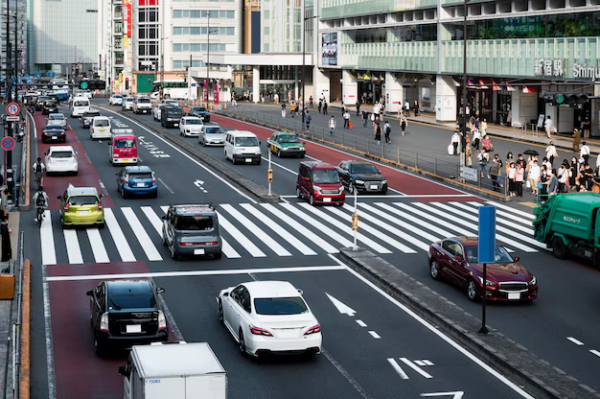
Urban transportation is a complex puzzle, with numerous roads leading to longer travel times and higher emissions. However, the integration of an Intelligent Traffic Management System powered by AI offers a beacon of hope. This system can effectively manage traffic flow, reducing travel times and emissions and paving the way for a more efficient and sustainable urban transportation system.
When connected to three-wheel electric scooters, these systems can also deliver information about traffic conditions and, potentially, suitable routes.
For instance, such a system can also decrease the time required to travel across certain regions by directing scooters to other zones with moderate traffic.
6. Voice and Gesture Control
Technologies such as voice and gesture controls utilizing artificial intelligence are integrated into three-wheel electric scooters, which will allow their users to perform various actions without having to touch the scooter directly.
This can be from powering the scooter, adjusting speed, turning on indicators, or operating the maps.
Hand-free controls are ideal as they help increase comfort and safety in crowded areas.
7. Enhanced Battery Management

Battery plays a pivotal role in electric mobility, and implementing AI in three-wheel electric scooters has been immensely valuable for enhancing the battery section. Most importantly, battery management is one of those factors that define the scooter’s overall range and performance level.
Depending on the territory, riding style, and weather conditions, AI algorithms can effectively control the battery.
A notable innovation in this area is the advent of intelligent battery management systems (BMS). These systems use an AI algorithm to control the charging and discharging of the battery.
The BMS assists the batteries by preventing them from being overcharged, hence keeping the battery life and discharge capability high.
Also, it helps to determine the remaining battery time and allows users to optimize their travel time accordingly.
8. Enhanced Safety Features

When it comes to mobility, safety is the most important factor, and artificial intelligence is doing a great job of improving the safety features of three-wheel electric scooters.
AI technology installed in these scooters interprets data collected from sensors to identify any impending danger, in turn providing the rider with adequate warning.
For example, if there is a sudden intruder, like a pedestrian in front of the scooter, the system can apply the brakes and avoid the intruding object.
Bottomline
AI advancements are designing the future of urban mobility, and these three-wheel electric scooters are at the forefront of the industry.
As these advancements are happening rapidly, three-wheel electric scooters will undoubtedly become more intelligent and efficient than they are today.