
Most individuals believe AI models are advanced processing machines that turn simple raw material into a greater output. They are slightly mistaken.
Though AI machine algorithms indeed produce meaningful data, great models can’t fix flawed data. This means the processed results depend on the quality of data you feed.
AI algorithms require structured and clean data. When you train them on poor-quality data, even the most sophisticated AI machines can’t fix underlying data issues. As a result, the unreliable output data mirrors the inconsistent input data.
So, how can this problem be prevented? The solution is that data scientists should focus on data preparation rather than upgrading to more advanced AI models. This guide will help you understand how data preparation reduces risks and improves company performance.
What Data Preparation Really Means
Preparing data means turning messy and raw information into clear, usable data for analytical processes. The entire purpose of this process is to ensure AI algorithms receive precise and credible data to produce better insights.
How Data is Prepared:
Data preparation is not simple. It takes several crucial steps to get standardized information.
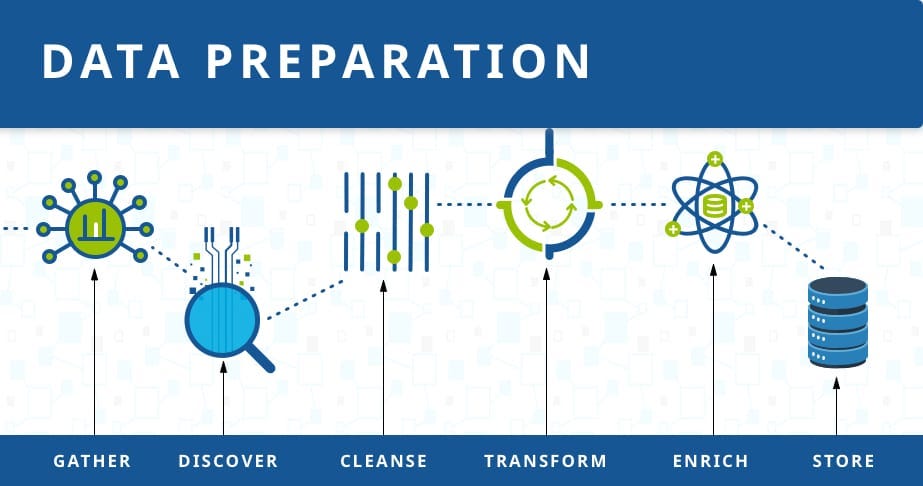
Here are the key steps of data preparation:
- Cleansing Data: It involves identifying and removing duplicate entries in your information. Analysts are also required to spot missing values and fill them with correct values. Lastly, errors or repetitive values are corrected.
- Data Collection and Integration: You need to bring all the data into one place. This requires gathering data from reliable sources and combining the information into a unified source.
- Standardize Formats: It is essential to verify that all dates, numbers, texts, and measurement units have a consistent format.
- Handle Outliers: Outliers are data points, numbers, or behaviors that are very different from the rest of the pattern in a data set. It is important to highlight these odd values and decide whether to delete or adjust them.
- Select Useful Features: This is where you choose the best data columns and change them to fit your AI models so they work faster. It includes removing extra data that may slow down processing. You get maximum predictions that correlate to your raw input.
The table below gives a quick comparison between the two types of data:
| Raw Data | Prepared Data |
| Incomplete or missing values | Complete or carefully chosen values |
| Duplicate information | Unique observations and patterns |
| Inconsistency in behaviors and formats | Standardized structure |
| Noisy variables that are overfitting | Clean, structured, and valid features |
Why Data Preparation is More Important than Development
Most organizations don’t understand the reason why data preparation matters the most. AI models produce powerful outputs only when the input data is good. As AI becomes more advanced, the need for high-quality data grows too.
When data experts ignore preparation, they face several organizational challenges that are as follows:
1. Fragmented Sources:
Most companies gather data from several sources: websites, mobile applications, sales dashboards, and social media. The data in these sources is usually stored in different formats. This inconsistency makes the information “fragmented.” Therefore, professionals must consolidate all the information into organized and structured data. For example, an individual’s name might appear as “Cynthia Jacob” in one source and “Cynthia J” in another. You must fix these errors before analyzing data.
2. Massive AI Scales:
Advanced AI algorithms can handle massive data at once. Data experts must ensure the input data is free from errors or inaccuracies. This is because if the data contains even minor mistakes, those mistakes can sweep away thousands of records and produce unreliable results. Thus, cleaning the data allows AI to carry out better predictions and take meaningful decisions.
3. Real-Time Needs:
Most businesses operate using live dashboards that keep updating on their own. This includes systems like bank apps or food delivery apps. These systems require clear and accurate data all the time. In case of delayed or incorrect data, users won’t get genuine information.
4. Strict Regulations:
In many countries, data is protected under the General Data Protection Regulation (GDPR). Therefore, companies become liable to answer where and how they collected their data. They must also prove their data is accurate, secure, and gathered through legal means. Preparing your data with legal strategies helps your businesses maintain proper records and comply with strict laws.
5. Bad Business Choices:
Businesses need data to make wise decisions. If the data is inaccurate or incomplete, business leaders make poor decisions that consume time and waste money on investments. With high-quality data, companies make smarter choices and bring change with better ideas.
Take an example of a convenience store. Due to incorrect sales data that suggests high demand for a specific product, the store owner may stock more than necessary. This may lead to huge financial losses.
How Data Preparation Improves Data Science Outcomes
There are four unique ways polished data improves your results:
1. Produces Accurate Predictions:
Well-prepared data allows AI models to make better predictions. When you remove errors and duplicates, you get reliable output.
2. Reduces Bias Before It Reaches AI Models:
When we spot missed values, unbalanced categories, and biased samples before AI training, we have fair data analysis.
3. Saves Time Across the Entire Project:
When you solve problems early, you save yourself from problem-solving later. The entire project becomes easier to manage.
4. Teams Collaborate More:
Well-organized datasets allow researchers, engineers, and business leaders to continue work with uniform and precise information. Students who work on assignments related to data science also benefit as documented data makes learning and understanding much easier. They can also seek assignment help in Malaysia from expert data analysts to learn more about data preparation.
Final Words!
The key takeaways from this guide:
- Advanced AI works better with a high-quality fuel. Here, the fuel is powerful and structured data.
- No matter how expensive or heavy-duty the AI model is, if you put garbage in, you will get garbage out.
- Flawless data training ensures your AI model is safe and useful.