
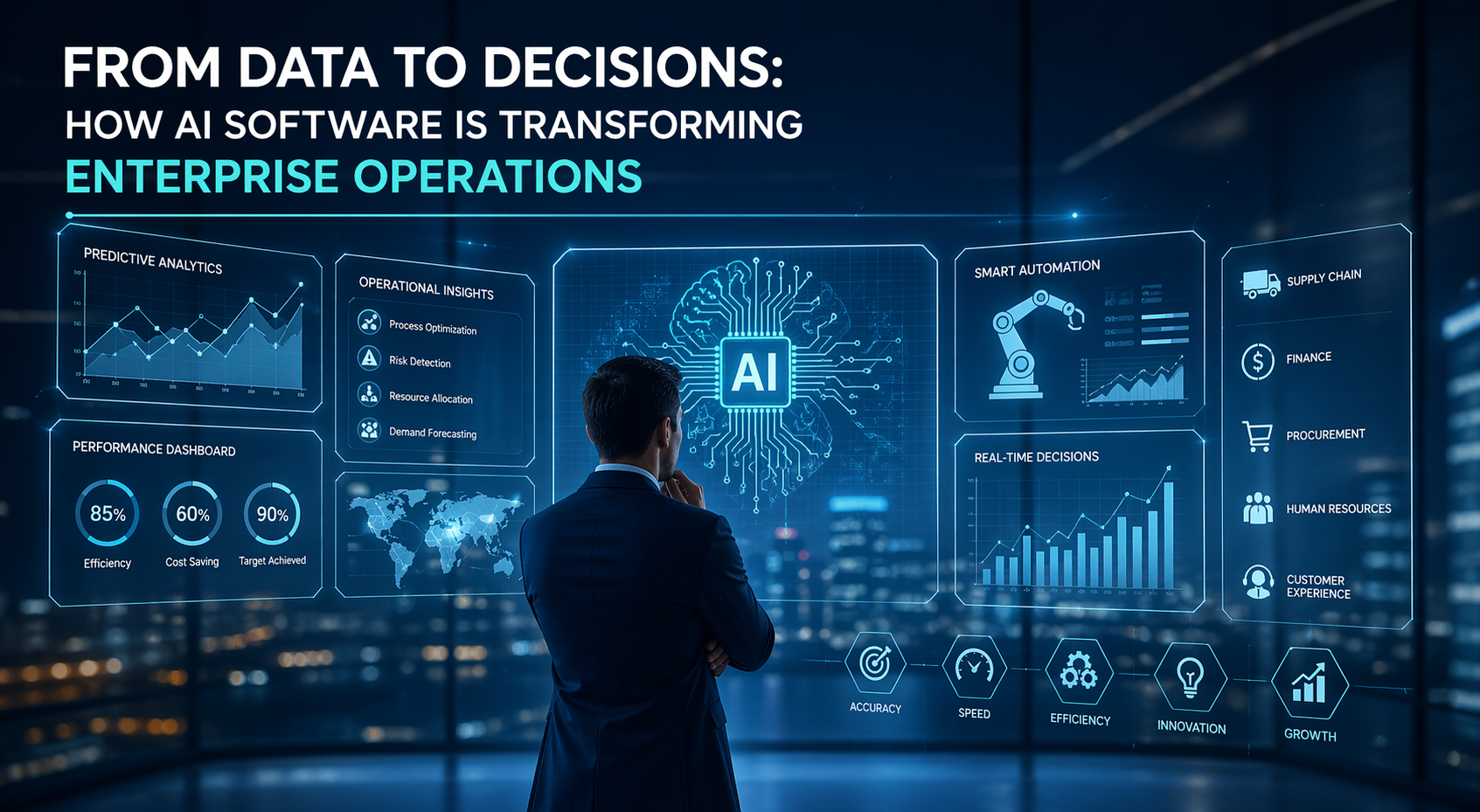
In today’s fast-moving digital landscape, organizations are no longer struggling with a lack of data—they’re overwhelmed by it. Every interaction, transaction, and system generates streams of information, yet many businesses still rely on outdated methods to interpret and act on it. The result is often slower decision-making, missed opportunities, and inefficient workflows.
Artificial intelligence (AI) software is changing that dynamic. Instead of simply collecting data, modern AI systems transform raw information into actionable insights in real time. This shift is not just about automation—it’s about empowering organizations to make smarter, faster, and more consistent decisions across every level of operation.
The Evolution of AI in Enterprise Environments
AI in business has evolved far beyond simple rule-based automation. Early systems could only follow predefined instructions, limiting their usefulness in complex environments. Today’s AI software leverages machine learning, natural language processing, and predictive analytics to continuously improve its performance.
This evolution has enabled organizations to:
-
Anticipate customer needs before they arise
-
Detect inefficiencies in operational processes
-
Improve safety and compliance standards
-
Optimize resource allocation in real time
More importantly, AI systems now integrate seamlessly with existing enterprise tools, making adoption more practical than ever.
Bridging the Gap Between Insight and Action
One of the biggest challenges organizations face is the delay between identifying a problem and taking action. Traditional analytics tools often require human interpretation, which slows down response times and introduces inconsistency.
AI software closes this gap by:
-
Automatically analyzing large datasets
-
Identifying patterns that humans might miss
-
Recommending or executing actions based on insights
For example, in facility management environments, AI can detect unusual equipment behavior and trigger maintenance workflows before failures occur. This proactive approach reduces downtime, lowers costs, and enhances safety.
Enhancing Operational Efficiency Across Departments
AI software is not limited to a single function within an organization. Its versatility allows it to improve efficiency across multiple departments simultaneously.
1. Customer Experience
AI-driven chatbots and virtual assistants provide instant responses to customer inquiries, improving satisfaction while reducing the workload on support teams. These systems can also analyze customer sentiment and tailor responses accordingly.
2. Human Resources
AI tools streamline recruitment by screening resumes, identifying top candidates, and even predicting employee retention risks. This allows HR teams to focus on strategic initiatives rather than administrative tasks.
3. Finance and Risk Management
AI models can analyze financial data to detect anomalies, flag potential fraud, and forecast future trends. This enhances both accuracy and compliance in financial operations.
4. Operations and Logistics
From supply chain optimization to predictive maintenance, AI software ensures that operations run smoothly and efficiently, even in complex environments.
Smarter Procurement Through Intelligent Systems
Procurement is an area where AI software is delivering significant value. Traditionally, procurement processes have been manual, time-consuming, and prone to inefficiencies. Organizations often struggle with vendor selection, cost analysis, and contract management.
AI procurement software introduces a new level of intelligence into these processes by:
-
Automating supplier evaluations based on performance data
-
Predicting price fluctuations and market trends
-
Identifying cost-saving opportunities across procurement cycles
-
Reducing risks associated with vendor selection
By leveraging AI, organizations can make more informed procurement decisions while minimizing delays and errors.
Driving Strategic Growth with Advanced AI Capabilities
Beyond operational improvements, AI software plays a critical role in driving long-term strategic growth. Organizations that embrace AI are better positioned to adapt to changing market conditions and maintain a competitive edge.
Advanced enterprise ai solutions enable businesses to:
-
Develop data-driven strategies with greater accuracy
-
Identify emerging market opportunities
-
Optimize product development cycles
-
Enhance collaboration across teams through intelligent insights
These capabilities allow organizations to move from reactive decision-making to proactive strategy execution.
Overcoming Implementation Challenges
Despite its benefits, adopting AI software is not without challenges. Organizations must address several key factors to ensure successful implementation:
Data Quality and Integration
AI systems rely on high-quality data. Inconsistent or incomplete data can lead to inaccurate insights. Organizations must invest in data governance and integration to maximize AI effectiveness.
Change Management
Introducing AI often requires a cultural shift within the organization. Employees may be hesitant to trust automated systems or fear job displacement. Clear communication and training are essential to build confidence and encourage adoption.
Scalability
AI solutions should be scalable to accommodate future growth. Organizations must choose platforms that can evolve alongside their needs.
Security and Compliance
With increased reliance on data, ensuring security and compliance becomes even more critical. AI systems must adhere to industry regulations and protect sensitive information.
The Human-AI Collaboration Model
A common misconception is that AI will replace human workers. In reality, the most successful implementations involve collaboration between humans and AI systems.
AI excels at processing large volumes of data and identifying patterns, while humans bring creativity, judgment, and contextual understanding. Together, they create a powerful combination that enhances decision-making and innovation.
For example:
-
AI can recommend actions based on data analysis
-
Humans can evaluate those recommendations within a broader strategic context
-
The result is more balanced and effective decision-making
Real-World Applications of AI Software
Organizations across industries are already seeing tangible benefits from AI software adoption.
Healthcare
AI systems analyze patient data to improve diagnosis accuracy and personalize treatment plans. This leads to better outcomes and more efficient healthcare delivery.
Manufacturing
Predictive maintenance powered by AI reduces equipment downtime and extends asset lifespan. Manufacturers can also optimize production schedules based on demand forecasts.
Retail
AI-driven recommendation engines enhance customer experiences by suggesting relevant products, increasing sales and customer loyalty.
Facilities and Emergency Systems
In environments where safety is critical, AI can monitor systems in real time, detect anomalies, and trigger immediate responses. This ensures faster reaction times and improved safety outcomes.
The Future of AI in Enterprise Operations
As AI technology continues to evolve, its impact on enterprise operations will only grow. Future advancements are likely to include:
-
Greater integration with Internet of Things (IoT) devices
-
Enhanced real-time decision-making capabilities
-
More intuitive human-AI interfaces
-
Increased personalization across business processes
Organizations that invest in AI today are laying the foundation for future innovation and success.
Building a Roadmap for AI Adoption
To fully leverage the potential of AI software, organizations should take a strategic approach to implementation:
-
Identify Key Use Cases
Focus on areas where AI can deliver the most value, such as procurement, customer experience, or operations. -
Start Small and Scale
Pilot projects allow organizations to test AI solutions and refine their approach before scaling. -
Invest in Training
Equip employees with the skills needed to work alongside AI systems effectively. -
Measure Success
Establish clear metrics to evaluate the impact of AI on performance and efficiency. -
Continuously Improve
AI systems learn over time, so ongoing optimization is essential to maximize benefits.
Conclusion
AI software is no longer a futuristic concept—it is a practical tool that is transforming how organizations operate, compete, and grow. By turning data into actionable insights, AI enables businesses to make smarter decisions, improve efficiency, and stay ahead in an increasingly complex world.
The organizations that succeed in this new era will be those that embrace AI not just as a technology, but as a strategic partner in their journey toward innovation and excellence.