
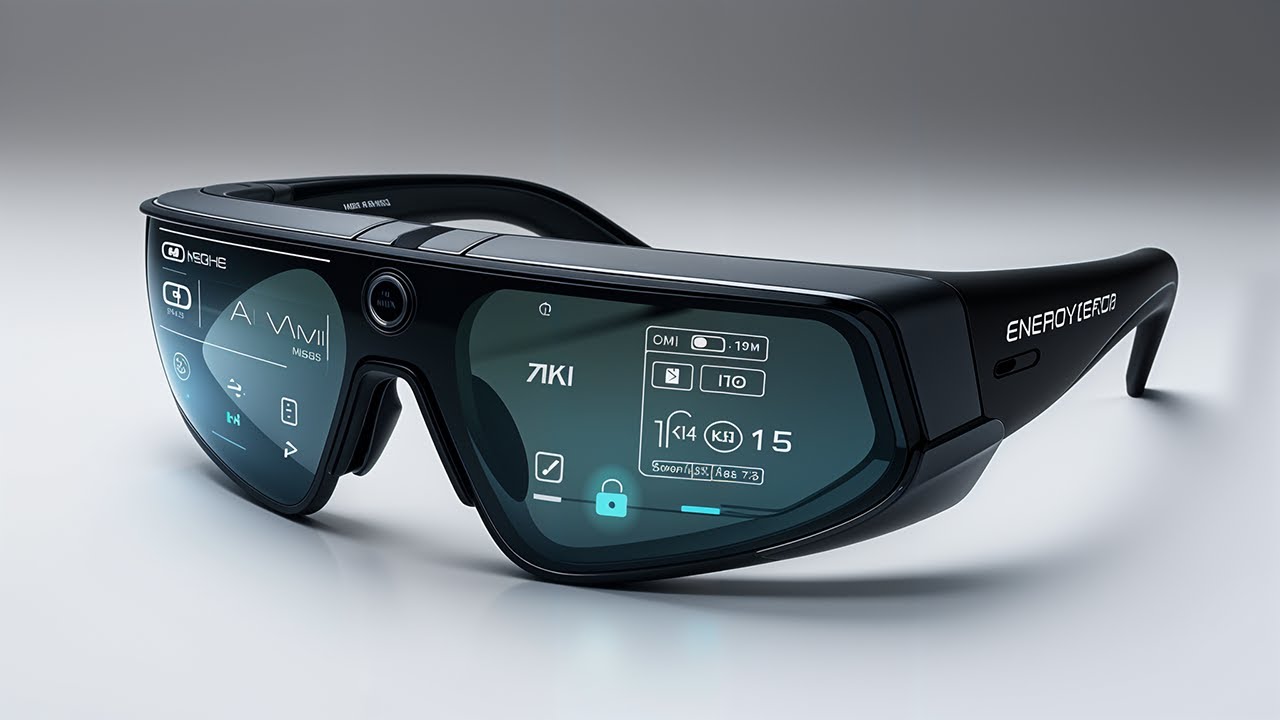
In the last 20 years, the main exchange between humans and artificial intelligence and data science models has been flat. The handheld smartphone and the desktop workstation have shaped the way datasets are collected, the way models are queried, and the way inferences are visualized. But from the vantage point of spatial computing and data engineering, this paradigm introduces severe friction. Looking down at a glass display removes the user from visual presence, isolates them from physical surroundings, and limits ambient data collection to deliberate, manual inputs.
As edge computing architectures, compressed neural networks, and real-time computer vision algorithms mature, a fundamental shift is happening across the hardware landscape. We are shifting from reactive apps locked behind screen glass to ambient, multimodal artificial intelligence at natural eye level.
At the core of this transformation is smart eyewear, a wearable spatial computer that translates first-person computer vision and ambient audio into real-time computational feedback.
First-Person Vision Meets Multimodal AI: A Convergence
Existing data science pipelines for computer vision are based on static datasets, fixed surveillance angles, or images collected on purpose. These pipelines are great for batch classification and offline object detection, but they don’t give contextual, real-time intelligence to a live human user.
This limitation is overcome by wearable smart frames, which place optical camera sensors directly in the natural line of sight of the user. Lightweight neural networks running on local edge chips can process visual spatial data in real time by capturing high-definition video feeds from a true first-person Point-of-View (POV).
This eyes-up interaction model supports a set of basic data processing functionalities:
- Real-Time Visual Question Answering (VQA): Multimodal deep learning models can evaluate incoming visual frames along with natural language prompts. You can look at a plant species, engine part, or architectural blueprint and ask the model a question aloud to get an instant analysis, all without touching a screen.
- Low-Latency Edge Inference: Smart glasses avoid cloud round-trips by running quantized neural network models on ultra-low power systems-on-chip (SoC). This provides sub-second voice and visual feedback critical for active environments.
- Open-Ear Directional Audio: The frame temples house micro-speaker arrays that beam synthesized voice responses to the wearer’s temples. The ear canal is left fully open, allowing the user to maintain 100% of their environmental situational awareness.
- Continuous Spatial Context: While handheld devices are confined to taking snapshots of the environment, wearable vision sensors produce a continuous data stream which allows spatial AI models to track the movement of objects, spatial depth, and changes in the environment itself.
To better understand how core algorithms and data architectures drive these real-time pipelines, explore how data science and artificial intelligence create a unified framework for modern intelligent systems.
Hardware Ergonomics and Integration with Active Lifestyle
Early versions of augmented reality headsets and smart glasses could not find a mass market due to serious limitations in their industrial design. The last generation was bulky, ran hot, had poor battery life, and had a clunky, industrial look that didn’t really fit in everyday life.
An entire redesign of micro-component integration, thermal dissipation, and weight distribution overcame these engineering barriers. State-of-the-art hardware manufacturing integrates high-performance micro-batteries, custom logic boards, microphone arrays, and optical sensors directly into traditional high-performance frame silhouettes.
Engineers removed nose-bridge pressure points by evenly distributing component mass across the temple arms, resulting in lightweight frames you won’t mind wearing all day on an outdoor run, cycling, or your daily commute.
Athletes and outdoor enthusiasts can harness high-performance activewear optics with spatial AI to develop a powerful hands-free assistant. With performance-focused AI sunglasses, runners, bikers, and explorers can record first-person perspective route video, get real-time audio directional cues, and request performance data on the fly, all while maintaining total optical clarity and impact resistance.
| Architectural Dimension | Traditional Handheld Mobile Device | Ambient AI Smart Glasses |
| Main Interaction Interface | Touch/Type flat glass screen | Queries: touch, voice ambient, visual |
| Ergonomics & User Posture | Gaze down on screen | Physical presence eyes up natural |
| Camera Perspective | Third-person staged perspective | First-person immersion POV |
| Audio Architecture | Isolated in-ear or open speakerphone | Open-ear directional micro-speakers |
| Cognitive Friction | High physical interaction barrier | Zero friction contextual cues |
| Environmental Consciousness | Visual and acoustic isolation | Open-ear awareness of surroundings |
Ergonomics of Vision and Protection of Ocular Health
Although computational hardware integrated into wearable frames opens up new frontiers for data science, protecting the user’s physical vision remains paramount. When outdoors, eye muscles are forced to constantly switch between harsh solar ambient light and dark glass screens, leading to digital eye strain, fatigue, and headaches.
According to the American Optometric Association‘s clinical visual health guidelines, controlling environmental glare and limiting continuous focusing on near-distances (such as computer screens) are important factors in preventing ocular fatigue.
Smart eyewear with premium polarized lenses solves both problems at the same time: it protects the wearer’s eyes from strong UV radiation and specular water reflections, and it delivers digital prompts through ambient directional audio. That means no need to look down at a display, maintaining visual comfort and physical safety.
Edge Security, Privacy Architecture, and Ethical AI
The use of wearable cameras and directional microphones in public spaces, corporate offices, and research environments poses substantial privacy and governance obligations. To earn society’s trust over the long term, hardware developers and data engineers need to build privacy safeguards into the physical architecture of the device for face-worn AI.
Smart eyewear manufacturers meet these ethics requirements through hardwired protocols:
- Privacy Indicator Integrated LEDs: High-visibility indicator LEDs are wired directly to the camera sensor’s power circuit at the hardware level. As soon as an optical sensor fires or a video recording begins, the LED lights up brightly. It is tied to the physical power circuit and cannot be bypassed or disabled with software hacks or custom firmware.
- On-Device Cryptographic Encryption: Visual inputs and audio logs are encrypted in the local secure element of the hardware before they are synced to cloud storage or processing pipelines, so they can’t be intercepted by unauthorized parties on public networks.
- Physical Hardware Isolation: Intuitive touch controls and physical kill switches allow wearers to completely power down microphone arrays and camera sensors when entering private spaces, confidential meetings, or research facilities.
Digital civil liberty advocates, such as the Electronic Frontier Foundation, often argue that mandatory physical indicator lights, localized data encryption, and hardware kill switches are baseline standards that must be met to maintain public trust as ambient computing becomes ubiquitous in everyday life.
The Future of Ambient Data Science and Real-Time Analytics
As artificial intelligence shifts from isolated chat windows and cloud servers to the physical, spatial world, smart eyewear is set to be a leading hardware interface for edge data collection and real-time decision making.
Data scientists and developers are able to move computational queries from handheld displays to intuitive frames worn on the face to build applications that assist technicians with complex repairs, medical professionals with field procedures, and athletes with high-speed training.
Discover more about the future of AI and data science technology and see how real-time data pipelines, standard ML models, and automated analytics continue to transform tech ecosystems.
That’s a huge milestone in human-computer interaction: breaking down the physical barrier of the glass display. The future of data-driven intelligence isn’t about more hours spent staring down at the glowing rectangle in our palms. It’s about stepping out into the physical world with uncompromised vision, complete situational awareness, and eye-level ambient intelligence.