
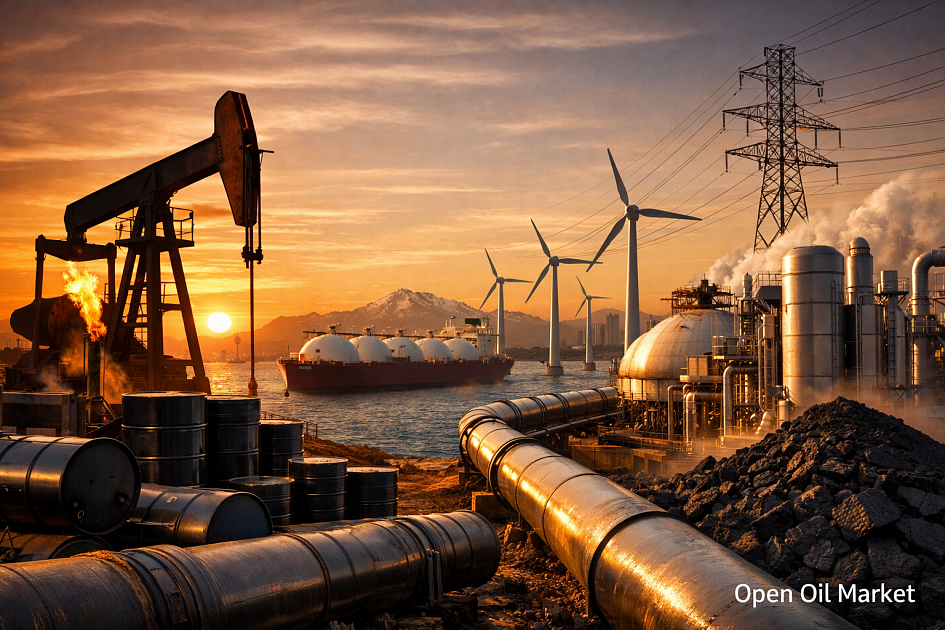
For most of its history, the oil and gas industry ran on hard-won experience, paper logs, and equipment that got serviced on a fixed schedule whether it needed it or not. That world is fading fast. Operators are now sitting on decades of sensor data, satellite feeds, and maintenance records, and the companies figuring out what to do with all of it are pulling ahead of the ones still running things the old way. This shift has a name — digital transformation — and at its center sits a technology getting a disproportionate share of the attention: AI in oil and gas industry applications, from predictive maintenance to production forecasting, are quickly becoming the connective tissue that ties everything else together.
What Digital Transformation Actually Means in This Industry
Digital transformation in oil and gas isn’t a single software purchase or a dashboard rollout. It’s the move from operations that were largely manual and reactive to ones that are connected, measured, and increasingly self-correcting. A traditional rig or refinery generates plenty of data, but most of it used to disappear into logbooks nobody revisited. A connected operation captures that same data continuously, routes it somewhere useful, and lets automated systems act on it in near real time. Three things make this possible: sensors that turn physical equipment into a constant stream of data, computing infrastructure (cloud and edge) that can process that stream fast enough to matter, and AI models that turn raw numbers into decisions a human or a machine can actually act on.
Why AI in Oil and Gas Industry Is Becoming a Strategic Priority
Operational complexity is the honest answer here. Fields are getting harder to produce economically, assets are aging, and the workforce that used to carry decades of tribal knowledge is retiring faster than it’s being replaced. At the same time, regulators and investors are asking harder questions about safety and emissions, and margins don’t leave much room for guesswork. Against that backdrop, AI in oil and gas industry deployments aren’t a novelty project anymore — they’re how companies compensate for thinner staffing, tighter environmental scrutiny, and equipment that’s simply older and less forgiving than it used to be. The priority isn’t AI for its own sake; it’s faster, better-informed decisions in an environment where a wrong one is expensive.
How AI, IoT, and Data Work Together
None of these technologies does much on its own. IoT sensors are the collection layer — pressure gauges, vibration monitors, flow meters, and cameras that turn a wellhead or a pipeline segment into something measurable. That data has to go somewhere, which is where cloud and edge computing come in: edge processing handles the urgent, split-second decisions on-site, while cloud platforms handle the heavier historical analysis and cross-asset comparisons. AI and machine learning sit on top of both, spotting patterns a human reviewing spreadsheets would miss — a compressor vibrating slightly differently than it did last month, a well’s production curve bending earlier than the model expected. The output isn’t just a chart; it’s operational intelligence that tells someone (or something) what to do next, ideally before a small deviation becomes a costly failure.
Where This Is Actually Showing Up
The reshaping isn’t confined to one part of the value chain. In exploration and production, machine learning models are helping geoscientists narrow down where to drill by processing seismic data far faster than manual interpretation ever could. Drilling operations use real-time analytics to adjust parameters mid-well rather than waiting for a post-job review. Asset management teams are moving from calendar-based maintenance to condition-based maintenance, servicing equipment when the data says it needs it, not just because six months have passed. Pipeline operators use sensor networks and analytics to catch leaks and pressure anomalies earlier, refiners use process optimization models to squeeze more yield out of the same feedstock, and environmental teams use continuous monitoring instead of periodic manual checks to track emissions and flaring.
From Data to Intelligent Decisions
This is where AI in oil and gas industry work earns its keep. Predictive analytics flag equipment likely to fail before it does, which turns an unplanned shutdown into a scheduled repair. Production optimization models suggest adjustments to keep output near its practical ceiling without over-stressing equipment. Risk models weigh dozens of variables at once to flag wells or facilities that need closer attention, and forecasting tools give planners a clearer read on what the next quarter is likely to look like. None of this replaces engineering judgment — it narrows the field of things a human needs to look at closely, which matters a lot when teams are stretched thin.
Digital Twins and the Next Layer of Automation
Digital twins — live virtual replicas of physical assets — are where a lot of this converges. Instead of inspecting a platform or a refinery unit in person to test a scenario, engineers can run that scenario against its digital counterpart first. Paired with AI-powered simulation, this lets teams stress-test changes before touching real equipment, and it’s a natural stepping stone toward more automated and eventually semi-autonomous operations, where routine adjustments happen without someone manually approving every step.
The Payoff, and the Real Obstacles
The business case is straightforward on paper: less unplanned downtime, better asset performance, lower operating costs, and stronger safety and environmental outcomes. Getting there is the hard part. Legacy infrastructure wasn’t built to talk to modern analytics platforms. Data quality is inconsistent across decades of records and different vendor systems. Integration work is unglamorous and slow. Cybersecurity risk grows every time more equipment gets connected. And workforce skills haven’t caught up everywhere — plenty of experienced field staff are excellent engineers but have never worked alongside a machine learning model, which creates real adoption friction that no software vendor can solve for you.
Building a Strategy That Actually Sticks
The companies that get this right tend to skip the moonshot pilots and start with a specific, expensive problem — unplanned compressor downtime, say, or inconsistent drilling performance on a particular field. They check whether their data is actually good enough to support a model before promising results, run a contained initiative they can measure, and only then integrate it into existing workflows and scale what worked. It’s a less exciting story than “we deployed AI across the enterprise,” but it’s the version that survives contact with a real budget cycle.
What’s Next for AI in Oil and Gas Industry
The next wave looks less like dashboards and more like agents — systems that don’t just flag an anomaly but recommend, and eventually take, the next action within defined guardrails. Real-time AI is closing the gap between an event happening and a system responding to it. Autonomous and semi-autonomous operations are expanding beyond drilling into areas like pipeline inspection and remote facility monitoring. AI-powered digital twins are getting sophisticated enough to model entire fields, not just single assets. The throughline across all of it is connectivity: assets that don’t just report data but respond to it. Companies curious about where practical use cases stand today can look at Azilen’s breakdown of AI use cases in the oil and gas industry for a closer look at specific applications already in production.
Building the Future of Digital Oil and Gas
Digital transformation in oil and gas was never really about chasing a trend — it’s a response to an industry that’s gotten more complex, more scrutinized, and less forgiving of guesswork. AI, IoT, and data analytics aren’t separate initiatives competing for budget; they’re pieces of the same connected system, and the companies treating them that way are the ones seeing real operational gains instead of another pilot project gathering dust. The shift is already underway. The only real question left is how deliberately each operator chooses to move through it.