
Tech is now changing quicker and quicker, and a lot of people are keen to accept and use it daily life.
There are more than 5 billion mobile users in 2029, 4.388 billion internet users and 3.484 billion active social media users.
Each of these groups has grown by 2 to 9%. The number will continue to grow in the near future.
In addition, the digital age has a broader scope. But we are drowning in a sea of data. The digital age creates an amazing explosion of info each second, turning bytes into our most effective global currency.
To navigate this mess, two driving forces have emerged: data science and data analytics.
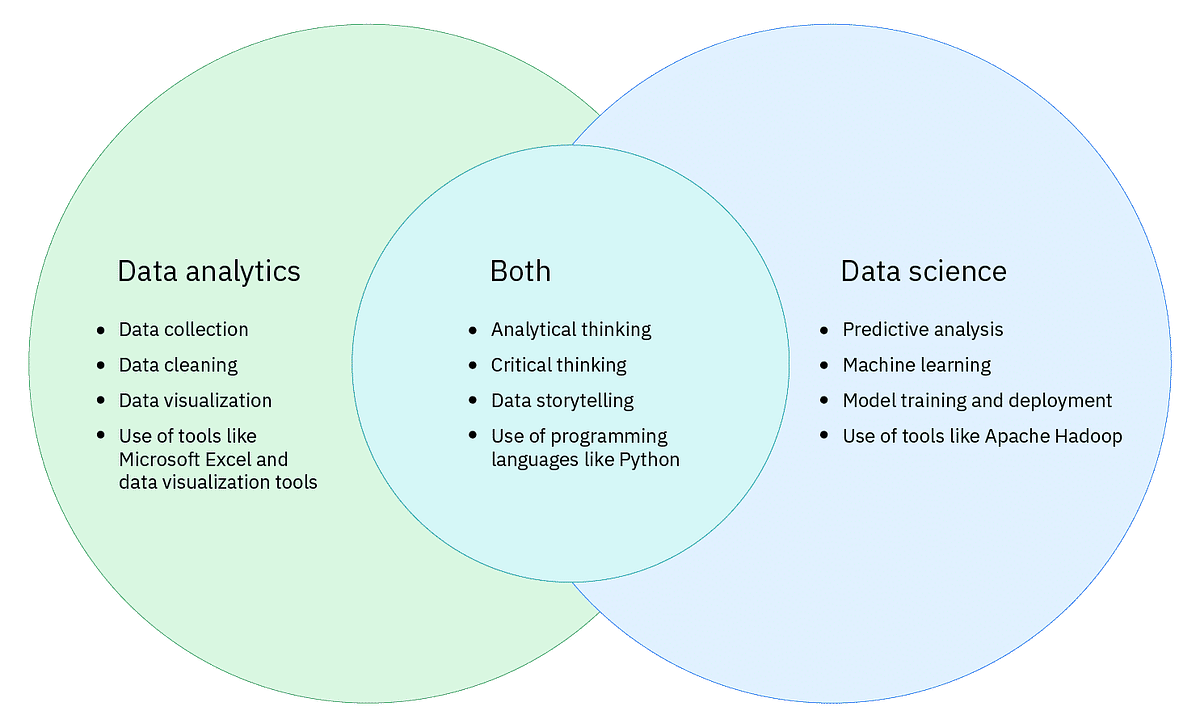
Whereas these two fields look similar, they are not. Hence, using them falsely in a business would be a mistake. They need fully different skill sets, tools and mindsets.
In this guide, I will delve into the key differences between data science and data analytics.
Key Differences Between Data Science and Data Analytics
They are both large data, but they approach it from quite different directions. Data science is like the architect who designs the home. Data analytics is like the inspector who determines if the structure is good.
The Core Mandate: The Future vs. The Past
Data Science (The “What’s Next?”)
Data science is about asking questions and making predictions about what will happen next.
Data scientists provide the heavy-duty frameworks, standard ML models and algorithms that can go through enormous, unstructured pools of data to predict what might happen tomorrow.
Data Analytics (The “What Happened?”)
Whereas the data analytics field is all about addressing specific, pre-existing business queries.
Data analysts specialize in working with organized datasets and cleaning them up. And hunt for useful information to solve present problems or assess past performance.
Practical Life Technical Execution
To observe these contrasts in action, and how both positions are used, check out a colossus like Uber:
- Example of Data Science: A data scientist at Uber uses advanced machine learning algorithms to help determine surge pricing in real time. He predicts traffic patterns based on weather, time of day, and previous city events before they even happen.
- Example of Data Analytics: A data analyst at Uber gets feedback from users after their trips and the ride data for the last quarter. They built a dashboard to explain exactly why customer retention declined in a specific region to corporate leadership. So managers can address the problem at hand.
A Quick Breakdown
- Scope: Data science is global and exploratory; data analytics is micro and targeted.
- The Tools: Python is widely used by scientists, with state-of-the-art machine learning and AI frameworks (like TensorFlow). Moreover, these analysts typically know SQL, Excel, and visualization tools like Tableau or Power BI.
Is data analytics a part of data science?
Yes, indeed, data analytics is a subcategory of data science DS. Whereas DS is a huge, interdisciplinary area that comprises AI, ML and software engineering. On the other hand, data analytics aims mostly to analyse and examine present datasets in order to answer clear questions. And make wise and quick business choices.
If you are an OTHM student, studying in the university or online, and you have an assignment to make about DS, or data analytics. And you are running out of time, well, you must reach out to a maven OTHM assignment helper. The brand owns a team of the best OTHM writers with years of experience, and they will help you write compelling papers.
Which is better, Data Science or Data Analytics
Let’s break it down in the next section: which one is better.
1. Responsibility of DA
- Collecting, cleaning, and organizing data
- Carrying out statistical analysis
- Creating dashboards and reports
- Offering key insights to business teams
2. Responsibilities of DS
- Developing predictive models
- Programming in Python/R
- Creating machine learning pipelines
- Performing deep data exploration
1. Required Skills
Here are the key skills needed to excel in both domains.
Analyst Data Scientist Tools Excel, SQL, Tableau, Power BI, Python, R, SQL, Jupyter Notebooks Concepts Reporting, data cleansing, KPIs Machine learning, statistics, AI Output Reports & dashboards Predictive models, algorithms
2. Salary and Demand in 2026
Both areas will still be in demand in 2026. But data scientists tend to make more because they have more advanced technological expertise compared to data analytics experts.
Average Salary (UK) :
The average overall base salary for a Data Analyst in the UK is around £37,000 to £41,000.
In comparison, a Data Scientist can expect higher earnings, often between £50,000 and £55,000 on average. The duties vary greatly with experience, location, and industry.
3. Career advancement
Many Data Analysts upskill to become Data Scientists or progress into senior analyst positions.
Data Scientists can go on to become senior data scientists, machine learning engineers or AI architects.
Good to know: Many data analysts start out as data analysts, then move into data science as they gain experience and develop new skills.
4. Which Career is Right for You?
Select Data Analytics if:
- You love working with business teams and addressing real-world problems.
- You enjoy organized jobs like reporting, data cleaning and trend analysis.
- You want to go into the field faster and with less coding.
Select Data Science if:
- You love maths, statistics and coding.
- You are keen to construct models and explore machine learning.
- You want long-term growth in AI, automation, and innovation-led jobs.
All in All
In the end, neither field is objectively better; the best choice depends entirely on your professional talents and career goals.
Data Analytics is a straightforward and highly influential option if you like to solve instant business concerns using structured data and visuals.
However, if you are passionate about coding, advanced statistics, and constructing predictive machine learning pipelines that can predict what will happen in the future. In that case, Data Science is the surefire approach to leading to long-term AI innovation.
Start with data analytics gain some experience then move into a DS role.