
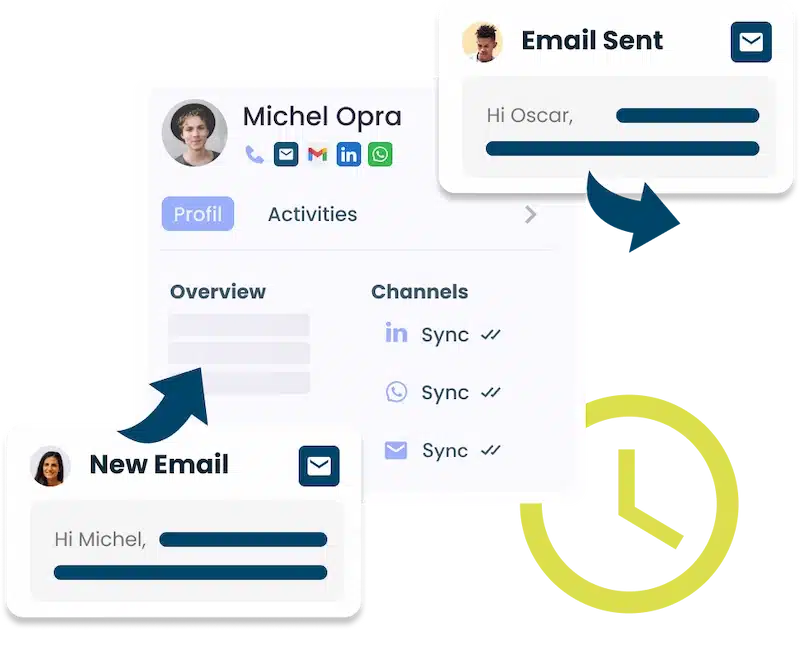
Integrating email functionality into applications remains a critical yet intricate challenge. Email, as a structured communication medium, necessitates secure access mechanisms. The IMAP provides a versatile and standardized method for managing email retrieval and synchronization, yet its implementation introduces significant complexities related to authentication, session management, and security compliance.
For developers and researchers working on large-scale email integrations, secure email access with an IMAP API ensures a seamless and protected connection between traditional IMAP functionality and modern application requirements. This document explores the technical foundations of IMAP, the benefits of IMAP APIs, and best practices for integrating them into secure, scalable systems.

IMAP Fundamentals and the Role of an IMAP API
IMAP enables applications to retrieve and manage emails without downloading them locally. Unlike POP3, which removes emails after retrieval, IMAP ensures persistent synchronization across devices. However, direct IMAP integration requires:
- Establishing and maintaining persistent socket connections.
- Managing complex authentication protocols (OAuth, App Passwords, or Direct Login).
- Handling raw IMAP commands and parsing responses for structured data.
An IMAP API circumvents these challenges by providing:
- Secure Authentication Handling – Eliminates the need for direct credential storage by leveraging secure tokenization.
- Asynchronous Email Synchronization – Ensures near real-time email updates across distributed environments.
- Programmatic Email Management – Streamlined access to email data, optimized for cloud-based applications.
- Enhanced Security Layers – Integrated encryption and compliance with industry standards such as GDPR and SOC 2.
Technical Enhancements with IMAP API Integration
1. Real-Time Email Synchronization and State Management
A key advantage of IMAP API integration is maintaining real-time synchronization across multiple devices. Unlike traditional IMAP implementations that require constant polling, modern IMAP APIs implement webhook-based event-driven mechanisms that notify applications of incoming messages and updates instantly.
2. Robust Authentication Mechanisms
Security is a fundamental concern in email access. An effective IMAP API should support:
- API key and token-based access control to minimize attack surfaces.
- End-to-end encryption (TLS/SSL) ensuring secure transmission of email data.
3. Programmatic Email Retrieval and Parsing
Traditional IMAP retrieval requires managing multiple low-level IMAP commands (FETCH, UID SEARCH, STORE). An IMAP API provides structured data endpoints that allow querying email content via optimized HTTP requests, reducing processing overhead and simplifying integration.
4. Simplified Email Sending via API Abstraction
Instead of configuring an SMTP relay separately, an IMAP API facilitates sending emails through an abstracted HTTP interface:
curl –request POST
–url https://{YOUR_DSN}/api/v1/emails
–header ‘Content-Type: multipart/form-data’
–header ‘X-API-KEY: {YOUR_ACCESS_TOKEN}’
–form ‘subject=Research Inquiry’
–form ‘body=Dear Colleague, I would like to discuss our latest findings…’
–form ‘to=[{“display_name”: “Dr. Smith”, “identifier”: “[email protected]”}]’
This abstracts the complexities of SMTP and ensures seamless delivery across multiple email providers.
Implementing an IMAP API: Step-by-Step Guide
Step 1: API Access and Credential Management
Register for IMAP API Access
Developers must register for an API key to authenticate requests securely.
- Sign up on the Unipile Developer Dashboard.
- Generate API credentials (Client ID, Secret, and Access Token).
- Store credentials securely, ensuring compliance with security best practices.
Step 2: Configuring IMAP Connection Parameters
Define the following parameters to establish an IMAP session:
- IMAP User: The associated email address.
- IMAP Password or Token: Authentication credentials.
- IMAP Server: Host address of the email provider.
- Encryption Standard: TLS/SSL protocol support.
Step 3: Authentication and Secure Session Establishment
Use the following API call to authenticate and establish a secure IMAP connection:
curl –request POST
–url https://{YOUR_DSN}/api/v1/accounts
–header ‘X-API-KEY: {YOUR_ACCESS_TOKEN}’
–header ‘content-type: application/json’
–data ‘{“provider”: “MAIL”,”imap_user”: “[email protected]”,”imap_password”: “your_password”,”imap_host”: “imap.university.edu”,”imap_port”: 993,”imap_encryption”: “SSL”}’
Upon successful authentication, an active session ID is returned, validating the connection status.
Step 4: Retrieving Emails Programmatically
Once authenticated, emails can be retrieved using a simple API request:
import { UnipileClient } from “unipile-node-sdk”;
const client = new UnipileClient(“your_base_url”, “your_access_token”);
async function fetchEmails() {
try {
const response = await client.account.getAll();
console.log(response);
} catch (error) {
console.error(error);
}
}
fetchEmails();
Common IMAP API Issues and Debugging Strategies
Issue
Solution
401 Unauthorized
Verify API key and credentials. Ensure OAuth token is valid.
Invalid IMAP Configuration
Cross-check server, port, and encryption settings.
High Latency or Timeout
Optimize polling frequency or use webhook-based notifications.
Why Choose an IMAP API Over Direct IMAP Integration?
1. Security and Authentication Advancements
Direct IMAP integration often requires handling user credentials, posing security risks. An IMAP API manages authentication at an abstraction layer, reducing exposure.
2. Reduced Implementation Overhead
Raw IMAP requires developers to manage multiple provider-specific nuances. APIs abstract these details, reducing the learning curve and implementation complexity.
3. Event-Driven Email Processing
Instead of constant polling, IMAP APIs use webhooks for event-driven updates, enhancing efficiency and reducing resource consumption.
4. Scalability for Large-Scale Applications
IMAP server limits often hinder large-scale implementations. An IMAP API ensures optimized request handling, making it suitable for enterprise applications and academic research platforms.
Conclusion
For researchers and developers working on large-scale email integrations, an IMAP API offers a secure, efficient, and scalable solution. By abstracting authentication, synchronization, and data retrieval complexities, IMAP APIs enable seamless integration into modern applications, facilitating secure communication, automated workflows, and compliance adherence.