
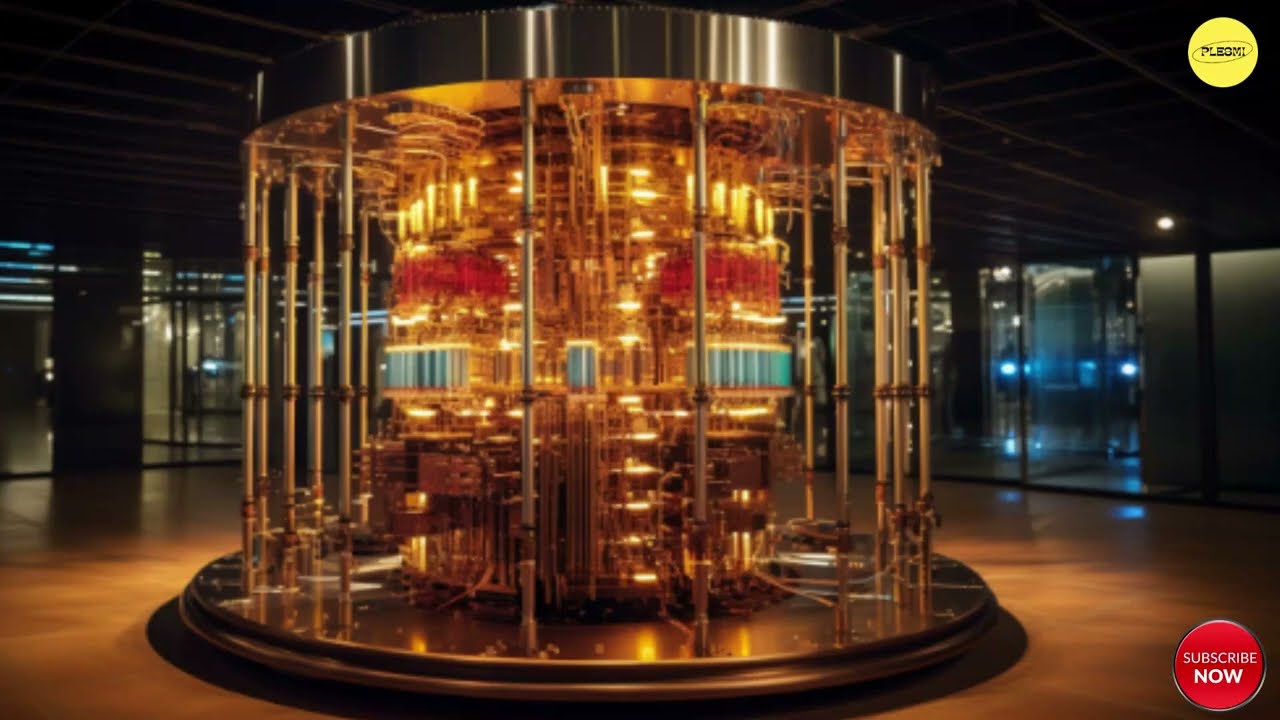
Every day, approximately 402.74 million terabytes of data (created, captured, copied, and consumed) are produced. From training global supply chains to massive AI models, classical computers are being pushed to their absolute limit. Modern supercomputers are engineering marvels, but they struggle with high-dimensional problems and optimisations. For example, modelling individual atoms in a molecule, designing energy-efficient batteries, developing new encryption algorithms, and so on.
The world is now entering quantum computing. It is the technology that promises to reshape our digital world completely. But the question is whether it can transform data science, or is it just another tech buzzword?
Let us get into this guest post to find the groundbreaking opportunities and limitations of quantum computing in the realm of quantum computing.
The Quantum Leap: What Changes?
To understand how quantum computing transforms data science, first understand how it processes data.
Classical computers rely on bits, which represent information in binary (0 or 1). Conversely, quantum computers use quantum bits, or qubits.
Golden Opportunities: How Quantum Computing Empowers Data Science
The synergy between quantum data processing and data analytics opens up massive possibilities across various applications.
1. Unprecedented Speed in Massive Data Processing
Sorting through vast, unstructured databases is a massive computational bottleneck. According to research published by GeeksforGeeks, quantum algorithms like Grover’s algorithm can search through unsorted data exponentially faster than a classical computer. This means that the queries data scientists or genomic professionals face can eventually be solved in a few seconds.
2. Smarter Machine Learning and AI Models
Training large language models or networks demands massive energy and computing resources. Quantum Machine Learning (QML) introduces algorithms that can handle high-dimensional data using fewer parameters.
Data published by the quantum hardware company, Quandela, showed that a quantum convolutional neural network (QCNN) reached 89% accuracy by using just 926 parameters. Conversely, a classical computer requires 3,600 parameters to achieve a similar result. This reduction in parameter count results in terms of more efficient and eco-friendly AI training cycles.
3. Solving Complex Optimisation Problems
Data scientists often deal with optimisation challenges. For example, mapping out the most efficient routes for global logistics or managing a million-dollar investment profile.
Quantum computing excels at traversing massive solution spaces. It easily bypasses the local minima trap where classical algorithms often get stuck.
The Reality Check: Current Limitations of Quantum Technology
Despite the immense promise, we are still living in the Noisy Intermediate-Scale Quantum (NISQ) era. The technology is still undergoing major hurdles, which is one of the reasons why data scientists cannot completely equip it as their toolkit.
1. High Error Rates and Environmental Sensitivity
Qubits are incredibly fragile. Minor temperature fluctuations, electromagnetic interference, or slight physical vibrations can cause decoherence. This is a state where the qubits lose their quantum properties and drop information. It is important to resolve this problem. For that, it requires massive error-correction codes, which in turn require thousands of additional physical qubits just to maintain a few stable logical qubits.
It is incredibly challenging to understand these complex physics principles. While academic professionals and students try to understand this, they often overlap between quantum mechanics and machine learning. This is when they prefer to connect with research paper writing help to structure and articulate these multi-dimensional concepts clearly.
2. The “Data Loading” Bottleneck
ArXiv research papers have recently highlighted a fundamental issue, which is the data loading challenge. Quantum computers process data incredibly fast once it is in its quantum state. However, when it converts a large classical dataset into quantum states (quantum encoding), it remains highly inefficient. The quantum advantage becomes ineffective for large data sets if it takes longer to load the data than to process it.
3. High Cost and Security
A quantum computer requires a specialised environment to function. It needs colder temperatures and a deeper space. As highlighted by IBM, building and maintaining this space is incredibly expensive. Organisations that are transitioning from classical data pipelines to quantum-hybrid solutions need to analyse the feasibility, which requires technical business reporting. Industry analysts often look for professional research writing help to properly frame these technical trade-offs into practical strategies for corporate stakeholders.
The Road Ahead: The Hybrid Future
Quantum computing is not going to fully replace classical computers or smart laptops. Instead, the immediate future belongs to hybrid quantum-classical systems.
In this system, the classical computer first handles data ingestion, cleaning, and basic processing. They then hand off the complex subroutines to a quantum processor before finalising the results. This approach maximises the strengths of both technologies while mitigating hardware limitations.
Final Words
Quantum computing has the distinct potential to completely transform data science by supercharging machine learning models. It resolves impossible optimisation tasks and processes high-dimensional data efficiently.
However, it has severe hardware limitations. High error rates and data-loading challenges mean a complete paradigm change, which professionals are still trying to fix. For now, data scientists should keep a close eye on hybrid quantum applications, which prepare for a future where quantum advantages become accessible to all.
FAQs
Which industries will benefit from quantum computing?
Quantum computing will revolutionise industries that rely on complex molecular simulations, massive data processing, and logistical optimisation. Primary beneficiaries include pharmaceuticals, finance, logistics, materials science, and cybersecurity.
How much data is 1 qubit?
A quantum qubit does not have a fixed size because it represents information differently. While 1 qubit can encode 1 bit of standard data, its quantum properties allow it to hold massive amounts of theoretical information depending on the system.
What are the 4 principles of quantum?
The four fundamental principles that define quantum mechanics are superposition, entanglement, interference, and wave-particle duality. These core behaviours explain how matter and energy act at the subatomic level. They form the foundational basis of quantum computing and modern physics.
What does Elon Musk say about quantum computing?
Elon Musk acknowledges that the technology is finally reaching commercial relevance. He has specifically praised recent breakthroughs from both Google and Microsoft and proposed the bold vision of building quantum clusters on the Moon.
What is quantum decoherence?
Quantum decoherence is the process by which a fragile quantum system loses its unique quantum properties, such as superposition and entanglement. It then interacts with its surrounding environment. It explains why macroscopic everyday objects behave according to classical physics rather than bizarre quantum rules.