
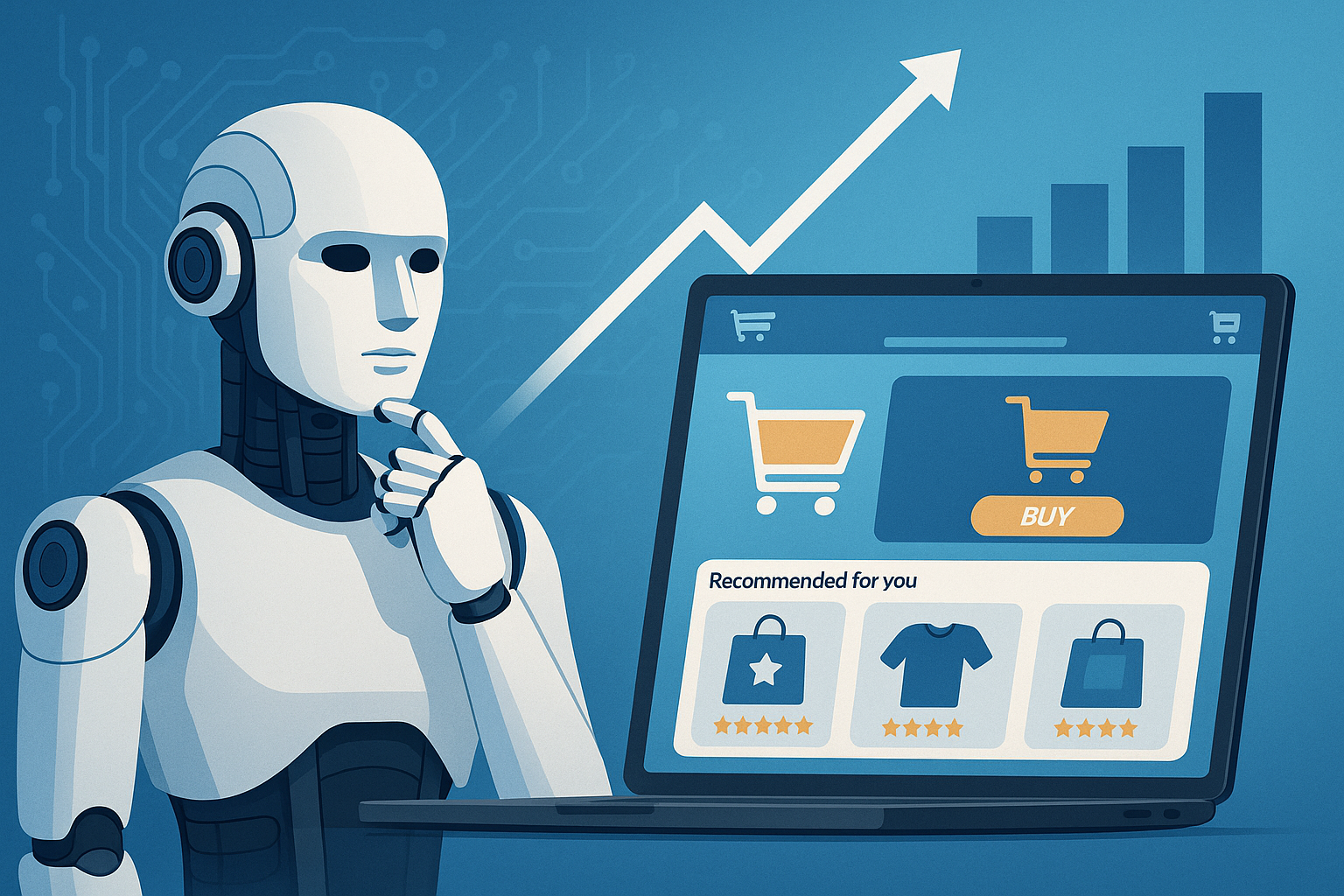
The B2B eCommerce landscape is undergoing a massive shift. Once dominated by static catalogues and bulk order forms, it’s now moving toward intelligent, data-driven systems that anticipate what buyers need before they even ask. At the heart of this transformation lies AI-powered recommendation engines, powered by advanced Machine Learning and AI Automation.
For B2B businesses, the question isn’t if AI can improve customer experiences it’s how effectively it can boost conversions, repeat orders, and overall sales performance.
The Changing Face of B2B eCommerce
The global B2B eCommerce market is projected to surpass $36 trillion by 2030, according to Statista more than six times the size of B2C eCommerce. This massive growth is being driven by enterprises seeking efficiency, personification, and data-backed decisions.
Yet, most B2B portals still rely on outdated systems that treat every buyer the same way. Unlike B2C platforms that deliver tailored experiences, B2B buyers are often met with rigid pricing, irrelevant catalogs, and manual reordering processes.
AI is solving this gap. By leveraging AI Automation, B2B brands can now create adaptive, learning-based experiences transforming traditional digital catalogs into smart, customer-specific storefronts.
Why Personalization Matters More Than Ever in B2B
B2B buyers are no longer satisfied with one-size-fits-all experiences. They expect the same level of personification they enjoy in their personal shopping but scaled for business needs.
A McKinsey study revealed that B2B companies that excel in personification generate 40% more revenue from these activities than their average counterparts.
Unlike B2C, B2B purchases involve multiple stakeholders, longer decision cycles, and complex order patterns. Personalized recommendations can streamline this process by:
- Highlighting frequently ordered items.
- Suggesting alternative suppliers during stock shortages.
- Recommending compatible or complementary products.
In other words, personification is not a luxury it’s a competitive advantage.
Understanding AI-Powered Recommendations
AI-powered recommendation engines use algorithms trained on vast amounts of data from buyer behaviour and transaction history to industry trends and contextual signals.
Through Machine Learning Development, these systems identify patterns and predict what a buyer might need next.
There are several common recommendation methods:
- Collaborative filtering: Suggests items based on similar user behaviors.
- Content-based filtering: Matches product attributes with buyer preferences.
- Hybrid systems: Combine both for greater accuracy.
For example, a B2B supplier selling construction materials could use AI to automatically suggest safety gear or specific tools based on a client’s order history. This not only improves the buyer’s experience but also increases average order value (AOV) a direct revenue impact.
How AI Recommendations Transform B2B eCommerce
Modern B2B buyers value efficiency. They don’t want to search through hundreds of SKUs to find compatible parts or accessories. AI steps in to simplify these journeys.
By integrating AI recommendations within B2B eCommerce Development, businesses can:
- Automate cross-selling and upselling.
- Personalise pricing and offers.
- Predict reorder intervals and send automated restock alerts.
For instance, AI can learn that a manufacturing company orders steel rods every six weeks and automatically prompt a reorder suggestion before inventory runs out. This type of predictive personification transforms eCommerce from a transactional system into a proactive business partner.
Moreover, when combined with eCommerce Marketing, AI-driven insights can personalise campaigns delivering dynamic email recommendations or remarketing ads based on buyer activity.
Real-World Case Studies: Data-Driven B2B Growth
Many enterprises are already proving the potential of AI recommendations:
- Industrial Supplier Case: A global industrial tools supplier integrated AI-driven recommendations into its B2B portal. Within six months, its repeat orders increased by 27%, and AOV grew by 22%.
- Wholesale Distributor: By applying Machine Learning Development models, a wholesale electronics distributor identified buying trends across regions and used them for localized recommendations, boosting sales efficiency by 30%.
- Manufacturing Firm: Leveraging AI Automation Services, a machinery parts provider reduced manual quote requests by 40%, as AI automatically displayed relevant pricing tiers based on order volume and history.
These outcomes underline a simple truth AI doesn’t just make eCommerce smarter; it makes it more profitable and scalable.
Integrating AI Into Existing B2B eCommerce Platforms
Integrating AI into an existing B2B platform isn’t just about installing a plugin. It requires strategic planning, clean data, and seamless integration with CRM and ERP systems.
For example, businesses using Magento, Shopify Plus, or custom frameworks can collaborate with specialized B2B eCommerce Development teams to integrate AI-driven recommendation modules that analyze buyer journeys in real time.
Key integration considerations include:
- Centralized data pipelines for clean, real-time insights.
- Scalability for growing catalog and customer bases.
- API compatibility with AI and analytics tools.
Such integrations often yield exponential ROI because they optimize both customer experience and backend efficiency.
Overcoming Challenges in AI Recommendation Implementation
While the benefits are clear, implementation isn’t always straightforward.
Many B2B companies struggle with:
- Data silos that prevent unified customer insights.
- Legacy infrastructure that limits automation.
- Lack of internal AI expertise.
The solution often involves a phased Digital Transformation strategy starting with data consolidation, followed by pilot AI projects, and scaling based on measurable success. Partnering with a provider that offers AI Automation and Machine Learning expertise can help overcome these barriers.
Transparency is equally crucial. Buyers should always know how and why recommendations are generated, maintaining trust and compliance with ethical AI standards.
The Future: From Recommendations to Intelligent Commerce
AI recommendations are only the beginning. The next phase of B2B eCommerce will involve:
- Predictive demand forecasting for smarter inventory management.
- Dynamic pricing algorithms that adjust in real time based on supply-demand fluctuations.
- Conversational AI that acts as a digital sales assistant, guiding buyers through complex configurations.
In essence, B2B companies will evolve from reactive selling to proactive intelligence where platforms not only recommend products but predict business needs.
Conclusion: From Transactions to Long-Term Relationships
AI-powered recommendations are redefining how B2B companies sell, engage, and grow. By combining AI Automation Services, Machine Learning Development, and B2B eCommerce Development, businesses can deliver the kind of intelligent personalization that fosters loyalty, not just conversions.
The future of B2B eCommerce lies in understanding buyers so well that they never have to ask for what they need the platform already knows.
That’s not just smart eCommerce that’s intelligent relationship building at scale.