
Vulnerabilities don’t discriminate between an SMB or a large enterprise. The difference however, is that SMBs rarely have the same security headcount or time available to investigate every finding.
For the IT teams, the job remains the same. Understand where vulnerabilities exist, identify which ones present meaningful risk, and get the most important issues fixed without creating another operational burden for a lean team.
Choosing the right vulnerability management tool thus becomes dependent on what the business needs to protect with its limited IT resources. Some SMBs may want to focus on managing employee endpoints, while others operate cloud workloads, web applications, servers, or hybrid infrastructure.
Here are nine best vulnerability management tools that address those requirements in different ways.
What are vulnerability management tools?
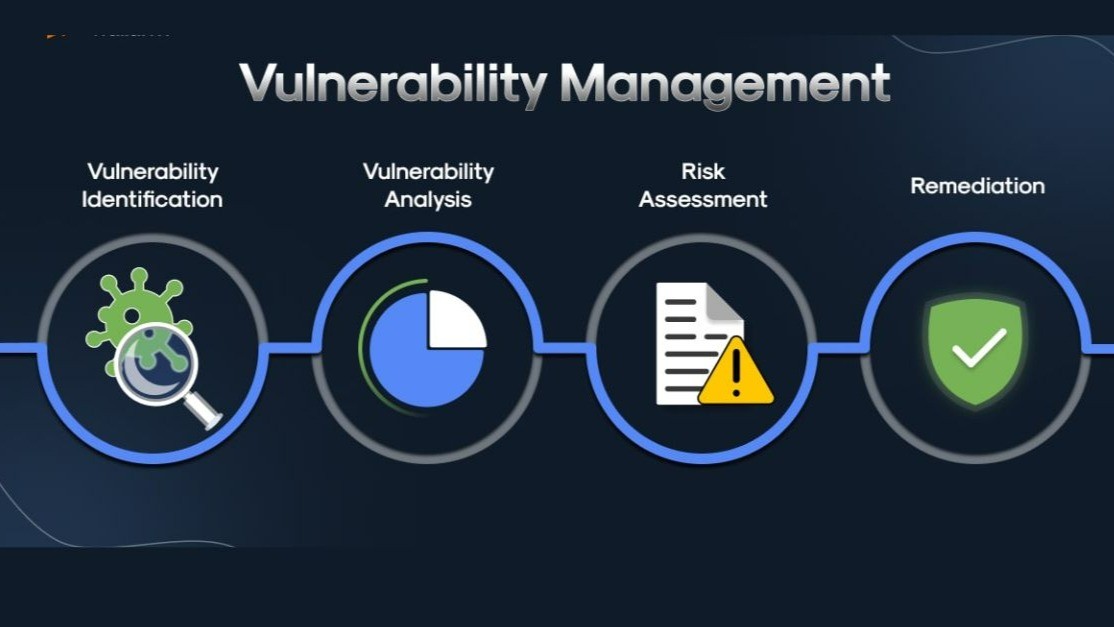
Vulnerability management tools help organizations continuously identify, assess, prioritize, and track security weaknesses across their IT infrastructure.
These can include vulnerable operating systems and applications, missing patches, cloud workload vulnerabilities, misconfigurations, exposed services, and other security gaps.
How do vulnerability management tools work?
Most vulnerability management tools begin by mapping assets and matching software, configurations, or workloads against known vulnerability information. The next step adds context such as severity, exploitability, asset importance, or external exposure to help teams decide what requires attention first.
More comprehensive tools can also connect these findings with remediation guidance, patching, ticketing, automation, or reporting workflows.
9 best vulnerability management tools for SMBs
1. Veltar Vulnerability Management
Veltar provides vulnerability management solution for managed Windows and macOS devices. It identifies known vulnerabilities affecting operating systems and installed applications and maps the findings back to affected devices, application versions, and OS builds. Veltar evaluates the findings against various sources such as CVSS, EPSS, and CISA KEV to help teams prioritize findings. These findings can then be connected with Scalefusion UEM patch-management workflows for centralized remediation.
Best for: SMBs that need centralized vulnerability visibility and remediation workflows across managed endpoints.
2. Tenable Nessus
Tenable Nessus is a dedicated vulnerability assessment solution that scans operating systems, devices, apps, and other IT assets for vulnerabilities, missing patches, and misconfigurations. It includes preconfigured scanning templates, compliance checks, reporting, and prioritization using signals such as CVSS and EPSS.
Best for: SMBs that need an established vulnerability scanner for networks and general IT infrastructure.
3. Qualys VMDR
Qualys Vulnerability Management, Detection and Response (VDMR) combines asset discovery, vulnerability assessment, threat intelligence, risk prioritization, and remediation workflows. Its TruRisk approach adds threat and business context to vulnerability findings, while patching and ITSM integrations can help teams move from identification to remediation within the broader Qualys platform.
Best for: Growing SMBs that need broader risk-based vulnerability management across hybrid environments.
4. Rapid7 InsightVM
Rapid7 InsightVM combines asset scanning with vulnerability research, exploit information, risk scoring, reporting, and remediation management. It utilizes scan engines and agents to assess environments to provide remediation projects and SLAs that help teams organize fixes. Rapid7 also extends these workflows through its broader Exposure Command platform.
Best for: SMB security teams managing a mix of on-premises and distributed IT assets.
5. Orca Security
Orca Security focuses on cloud vulnerability management. Its agentless-first approach assesses cloud workloads and combines vulnerability findings with information about configurations, identities, sensitive data, and relationships between cloud assets. This context helps teams identify vulnerabilities that contribute to higher-risk attack paths.
Best for: SMBs whose infrastructure is primarily hosted across public cloud environments.
6. SentinelOne Singularity Vulnerability Management
SentinelOne provides vulnerability management through the same Singularity agent used on protected endpoints. It scans Windows, macOS, and Linux systems, uses signals including EPSS and CISA KEV for prioritization, and brings vulnerability findings alongside endpoint security information within the same Singularity platform.
Best for: SMBs already using SentinelOne and looking to consolidate endpoint security and vulnerability assessment.
7. Wiz
Wiz Unified Vulnerability Management combines agentless-first cloud assessment with vulnerability information from other tools and environments. Its Security Graph correlates vulnerabilities with factors such as network exposure, identity access, and sensitive data to provide context around which findings could create meaningful attack paths.
Best for: Cloud-heavy SMBs that need contextual vulnerability prioritization across complex cloud environments.
8. Intruder
Intruder provides continuous vulnerability management across infrastructure, cloud environments, web applications, and APIs. It is designed around lean security teams, combining continuous scanning with emerging-threat scans, exploit-focused prioritization, remediation guidance, and integrations with platforms such as Jira, Slack, Drata, and Vanta.
Best for: SMBs with small security teams that want continuous vulnerability monitoring with streamlined workflows.
9. Fortinet FortiCNAPP
Fortinet provides cloud vulnerability management through FortiCNAPP. It continuously assesses hosts, containers, application libraries, and container images and adds cloud context to help teams prioritize vulnerabilities. It also supports build-time scanning and CI/CD integrations for organizations developing and operating cloud-native applications.
Best for: SMBs running cloud-native workloads that want vulnerability management integrated into broader cloud security and DevSecOps workflows.
Choosing the right vulnerability management tool for your SMB
For SMBs, the best vulnerability management tools are usually the ones that match the environment without creating more work than it removes. A cloud-first business may care most about workload context and attack paths, while an endpoint-heavy organization may value closer links between vulnerability data and patching.
Ultimately, the goal remains the same. The IT team should gain enough visibility and context to answer where the vulnerabilities are, what should be fixed first, and if the remediation was carried out successfully. For SMBs, a tool that answers those questions clearly is more valuable than one that simply generates more findings.