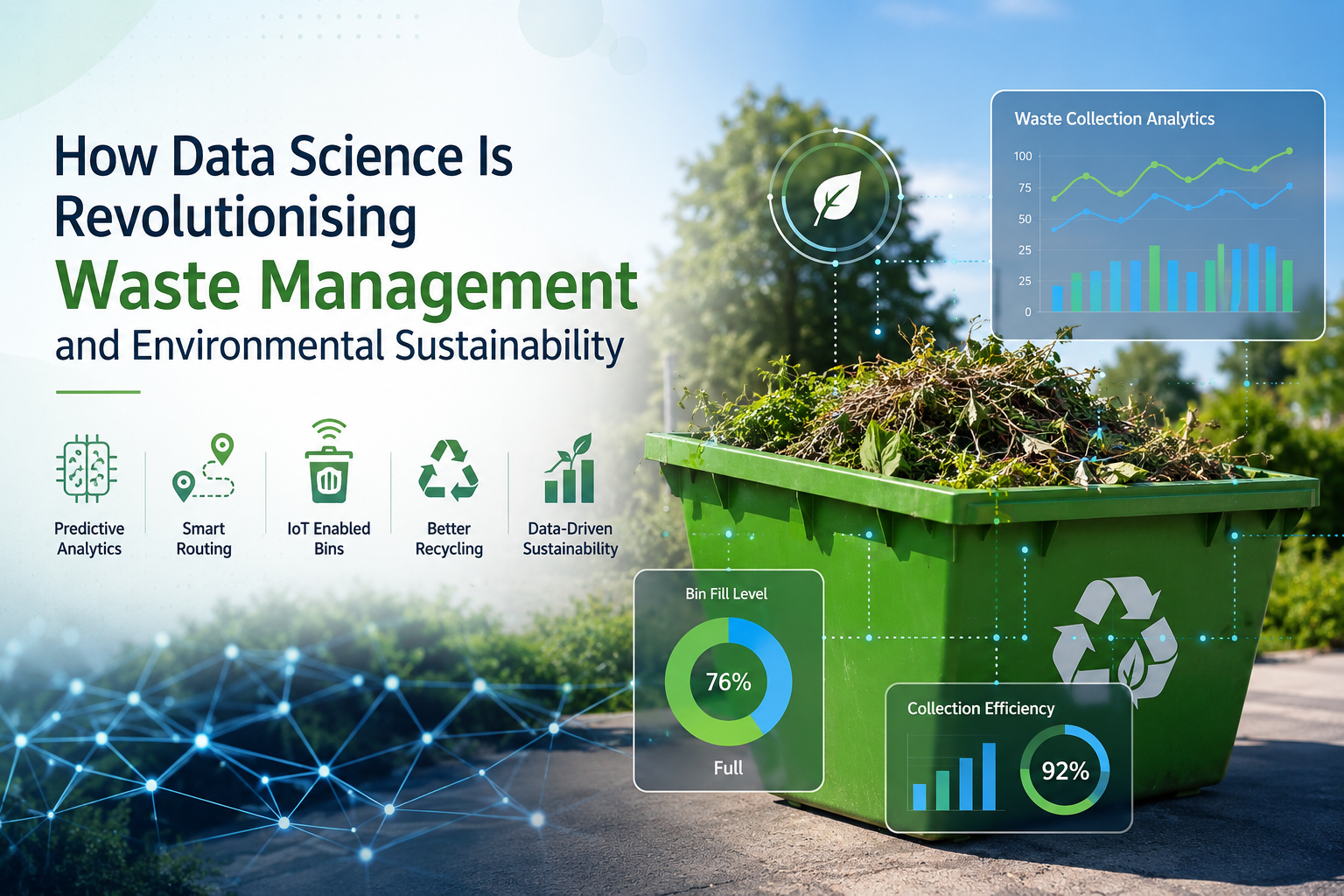
Waste Management and Environmental Sustainability

How Data Science Is Revolutionising Waste Management and Environmental Sustainability

Data science is reshaping waste management by enabling smarter, more sustainable, and cost-effective operations. Through technologies such as predictive analytics, artificial intelligence (AI), the Internet of Things (IoT), and machine learning, waste collection systems can optimise routes, improve recycling efficiency, monitor bin capacity in real time, and reduce environmental impact. This article explores how data-driven solutions are transforming traditional waste management into an intelligent ecosystem that supports cleaner cities and better resource utilisation. It also highlights practical applications, including demand forecasting for green waste skip bins Darwin, demonstrating how analytics can enhance organic waste collection and contribute to environmental sustainability.

How to Retain Employees and Keep Them Satisfied

How to Retain Employees and Keep Them Satisfied

Employee retention is not about keeping people stuck in jobs — it’s about creating environments where they genuinely want to stay. When businesses invest in culture, leadership, communication, and employee well-being, they build teams that are motivated, loyal, and high-performing.

Satisfaction and retention go hand in hand. A satisfied employee is not just a worker; they are a contributor, a problem solver, and often the strongest advocate for the company.

“When employees feel valued, supported, and heard, they’re far more likely to grow with your company instead of looking elsewhere.”

Remote Work

What Is Remote Work and Why Has It Become So Popular?

Remote work has transformed from a temporary necessity into a major force reshaping the global workforce. While the debate around its long-term effectiveness continues, the evidence shows that flexible work arrangements are likely here to stay in some form. Employees value freedom, businesses appreciate wider talent access, and technology continues making remote collaboration easier every year.

That doesn’t mean remote work is perfect. Communication challenges, burnout risks, cybersecurity concerns, and cultural disconnects remain real obstacles. Some industries will always depend heavily on physical presence, while others may become almost entirely location-independent.

The future of work probably won’t be fully remote or fully office-based. Instead, it will revolve around flexibility, adaptability, and smarter ways of balancing productivity with human connection. Businesses willing to evolve will likely gain the biggest advantage in attracting and retaining talented employees in the years ahead.